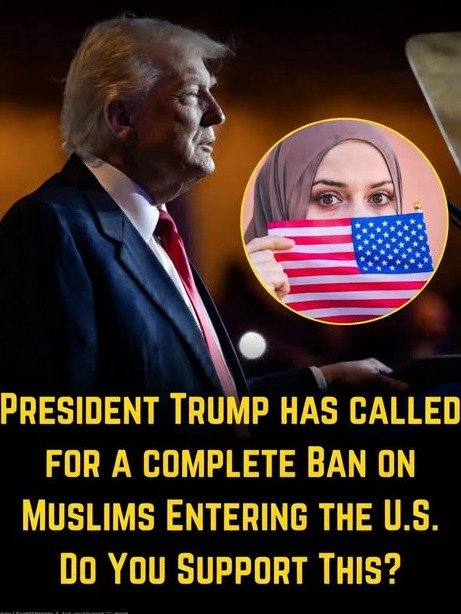
Did President Trump’s temporary travel restriction truly make America safer, or did it spark a deeper, more uncomfortable debate about who belongs? When the executive order, often dubbed the ‘travel ban,’ was first introduced, it ignited a firestorm of controversy, dividing the nation and sparking global outrage.
This policy, framed as a critical national security measure, became one of the most defining and hotly contested actions of the Trump administration. But beyond the headlines and political rhetoric, what was the real story? Let’s peel back the layers and examine the policy’s origins, its impact, and the lasting legacy it left on American society and international relations.
Unpacking the Executive Order: What Was It?
On January 27, 2017, just a week after taking office, President Donald Trump signed Executive Order 13769, officially titled ‘Protecting the Nation from Foreign Terrorist Entry into the United States.’ This order immediately suspended entry for citizens from seven Muslim-majority countries—Iran, Iraq, Libya, Somalia, Sudan, Syria, and Yemen—for 90 days, halted the U.S. Refugee Admissions Program for 120 days, and indefinitely banned Syrian refugees.
The rapid implementation caught many by surprise, leading to chaos at airports across the country as travelers, including green card holders and those with valid visas, were detained or denied entry. This initial rollout was met with immediate legal challenges and widespread protests, setting the stage for a prolonged legal and political battle.
The Stated Goal: National Security Concerns
The Trump administration consistently asserted that the travel restrictions were a necessary measure to protect the United States from terrorism. Officials argued that the targeted countries posed a higher risk due to insufficient vetting procedures, ongoing conflicts, or a significant terrorist presence within their borders.
The stated intention was to provide a ‘pause’ during which the Department of Homeland Security could review and enhance screening procedures for individuals entering the U.S. from these specific regions. The administration maintained that this was not a ‘Muslim ban’ but a targeted effort based on national security intelligence, aimed at preventing potential threats from entering American soil.
A Cascade of Controversy and Legal Battles
From its inception, the travel restriction faced intense scrutiny and a barrage of legal challenges. Federal judges nationwide issued temporary restraining orders and injunctions, arguing that the policy was discriminatory and violated constitutional protections, particularly the Establishment Clause concerning religious freedom and the Due Process Clause.
The administration revised the order multiple times in response to these legal setbacks. The second iteration, Executive Order 13780, removed Iraq from the list of banned countries and clarified that green card holders would not be affected. However, it still faced significant legal opposition.
The Supreme Court’s Verdict: A Pivotal Moment
The legal saga culminated in the Supreme Court’s landmark decision in Trump v. Hawaii in June 2018. In a 5-4 ruling, the Court upheld the third version of the travel ban, which by then included Iran, Libya, Somalia, Syria, Yemen, North Korea, and certain government officials from Venezuela.
“The Proclamation is expressly premised on legitimate national security concerns. We cannot, and will not, second-guess the Executive’s (President’s) ‘sensitive judgment’ on foreign policy and national security issues.” – Chief Justice John Roberts, writing for the majority.
The majority opinion deferred significantly to the President’s authority on national security and immigration matters, finding that the policy had a legitimate national security justification, despite concerns about its origins and the President’s past statements.
The Argument for Protection: Supporters’ Stance
Supporters of the travel ban often pointed to the President’s constitutional duty to protect the nation. They argued that a temporary pause allowed for a critical reassessment of immigration procedures, ensuring that potential threats were thoroughly vetted before entry.
- Enhanced Security: Believed it closed security loopholes and reduced the risk of terrorist attacks.
- Presidential Authority: Emphasized the President’s executive power to control borders and manage immigration in the interest of national security.
- Preventive Measure: Viewed it as a proactive step to prevent future attacks rather than reacting after a tragedy.
- Public Safety: Prioritized the safety of American citizens above all else, even if it meant temporary inconvenience or restrictions for certain groups.
Many believed the policy was a necessary, albeit tough, decision to safeguard American lives and maintain stability in a volatile global landscape.
A Deep Dive into the Criticisms: Opponents’ View
Conversely, opponents argued that the travel ban was discriminatory, ineffective, and fundamentally un-American. Critics, including civil liberties organizations, human rights groups, and many Democratic politicians, highlighted several key concerns.
- Religious Discrimination: Many saw it as a thinly veiled ‘Muslim ban,’ pointing to President Trump’s campaign rhetoric and the disproportionate impact on Muslim-majority countries.
- Humanitarian Impact: The policy separated families, stranded refugees fleeing violence, and caused immense distress to individuals seeking safety and new lives in the U.S.
- Economic Harm: Critics argued it hurt American businesses, universities, and the tourism industry by deterring international talent and visitors.
- Damaged Reputation: Many believed it damaged America’s standing as a welcoming nation and a beacon of freedom and democracy, fueling anti-American sentiment globally.
The debate was not just about security but also about American values, identity, and its role on the world stage.
Did It Actually Make America Safer? The Data Debate
One of the most contentious aspects of the travel ban was its actual effectiveness in enhancing national security. While the administration asserted its necessity, concrete evidence linking the targeted countries to a significant number of terrorist attacks on U.S. soil was often debated.
Critics argued that the policy was a solution in search of a problem, pointing out that no fatal terrorist attacks in the U.S. had been committed by individuals from the original seven banned countries. Furthermore, some intelligence experts suggested that the ban could be counterproductive, potentially fueling radicalization and alienating allies.
Beyond Borders: International Reactions and Diplomatic Fallout
The travel ban sent shockwaves across the globe, drawing condemnation from numerous international organizations, foreign governments, and human rights bodies. Leaders from countries like Canada, Germany, and the United Kingdom expressed concern, while nations on the banned list reacted with anger and disappointment.
The policy complicated diplomatic relations, particularly with Muslim-majority nations, and was seen by many as a retreat from America’s traditional role as a leader in human rights and refugee protection. It created a perception of the U.S. as unwelcoming and isolationist, impacting alliances and global cooperation.
The Human Cost: Stories from Affected Individuals
Beyond the legal and political debates, the travel ban had a profound human cost. Families were torn apart, students faced uncertainty about their education, and individuals seeking medical treatment or asylum found themselves in bureaucratic limbo.
Countless stories emerged of individuals stuck at airports, unable to reunite with loved ones, or refugees whose hopes for a new beginning were cruelly dashed. These personal narratives underscored the real-world implications of a policy implemented in the name of national security, highlighting the deep emotional and practical challenges faced by those directly impacted.
The Lasting Legacy: What Does It Mean Today?
On January 20, 2021, on his first day in office, President Joe Biden revoked the travel ban through a presidential proclamation. However, its legacy continues to resonate. The policy remains a significant touchstone in discussions about immigration, national security, and presidential power.
It sparked critical conversations about religious freedom, xenophobia, and the balance between security measures and civil liberties. The travel ban serves as a powerful reminder of how quickly executive actions can reshape lives and influence a nation’s identity on the global stage, leaving behind a complex tapestry of legal precedents, political divisions, and human experiences.
Conclusion: A Policy That Divided a Nation
President Trump’s temporary travel restriction was undoubtedly one of the most polarizing policies of his administration. Framed as a crucial national security measure, it ignited a fierce debate about its efficacy, legality, and moral implications. While supporters championed it as a necessary defense, critics decried it as discriminatory and harmful.
Ultimately, the question of whether it was ‘correct’ or ‘supported’ depends heavily on individual perspectives, priorities, and values. What is undeniable is that the travel ban left an indelible mark on American history, forcing a national reckoning with its identity, its laws, and its place in a diverse and interconnected world.
About the Author




