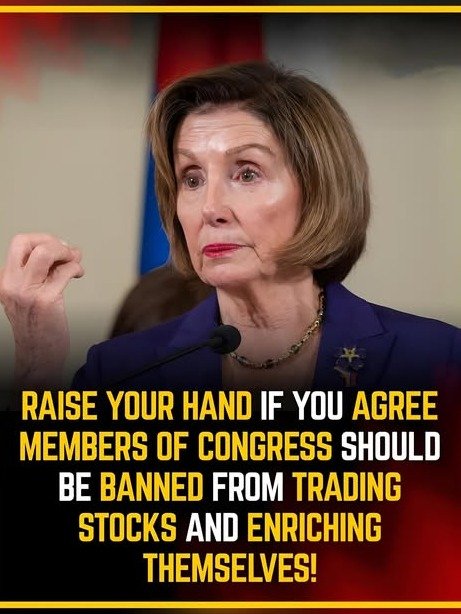
Imagine a world where the very individuals crafting laws that shape our economy are simultaneously making personal investment decisions that could be directly influenced by that legislation. Is this a hypothetical scenario, or the unsettling reality playing out in the halls of power? The contentious issue of stock trading by members of Congress has once again exploded into the public consciousness, sparking a furious debate about ethics, fairness, and the integrity of our democratic institutions.
For years, a simmering concern has brewed beneath the surface: the potential for lawmakers to leverage their privileged access to information for personal financial gain. This isn’t just about optics; it strikes at the heart of public trust and the fundamental principle that public service should be about the common good, not private enrichment. Critics are increasingly vocal, arguing that the current rules are simply not enough to prevent conflicts of interest, demanding far stricter standards for those sworn to serve the American people.
The Unsettling Reality: Power, Policy, and Personal Profit
At its core, the controversy revolves around the inherent conflict of interest. Members of Congress are privy to confidential briefings, participate in drafting legislation, and vote on policies that can significantly impact various industries and the broader economy. When these same individuals, or their immediate family members, are actively buying and selling stocks in companies or sectors affected by these decisions, it raises legitimate questions about fairness and the level playing field.
The public perception is critical here. Even if no explicit insider trading occurs, the mere appearance of impropriety can severely erode trust in government. How can citizens believe their representatives are making decisions solely for their constituents’ benefit when there’s a possibility, however remote, that those decisions could also line their own pockets?
Why Current Regulations Fall Short
In response to previous scandals and public outcry, Congress passed the STOCK Act (Stop Trading on Congressional Knowledge Act) in 2012. This legislation aimed to combat insider trading by members of Congress and their staff by requiring them to report stock trades exceeding $1,000 within 45 days. The act also explicitly affirmed that members of Congress are not exempt from insider trading laws.
While a step in the right direction, many argue the STOCK Act has proven insufficient. The reporting requirements, while increasing transparency, do not prevent lawmakers from making trades that could be influenced by non-public information. The 45-day window for disclosure also means the public often learns about trades long after they’ve occurred, making it difficult to scrutinize potential conflicts in real-time.
“The current system allows for a constant shadow of suspicion to hang over Capitol Hill. It’s not just about proving guilt; it’s about preventing the very appearance of impropriety that undermines faith in our leaders.” – A leading ethics advocate.
Furthermore, enforcement of the STOCK Act has been criticized as lax. The penalties for violations, often just small fines, are seen by many as a slap on the wrist, doing little to deter powerful individuals from exploiting loopholes or taking risks.
The Call for a Total Ban: Why It’s Gaining Traction
A growing chorus of voices, spanning political ideologies, is now advocating for a complete ban on individual stock trading by members of Congress and their spouses. Proponents argue that such a ban is the only way to truly eliminate the potential for conflicts of interest and restore public confidence.
The argument is simple: public service requires a higher standard of ethical conduct. Just as judges recuse themselves from cases where they have a financial stake, lawmakers should be insulated from personal financial incentives that could cloud their judgment or influence their legislative actions. A ban would create an unambiguous boundary, ensuring that lawmakers’ focus remains solely on their duties.
- Eliminates Conflicts of Interest: Removes the direct incentive to legislate for personal gain.
- Restores Public Trust: Shows a commitment to ethical governance and transparency.
- Simplifies Enforcement: A clear ban is easier to monitor and enforce than complex disclosure rules.
- Levels the Playing Field: Ensures no one has an unfair advantage due to privileged information.
This isn’t an unprecedented idea. Several countries have stricter rules in place for their elected officials, and even in the U.S., some high-ranking executive branch officials are required to divest certain assets or place them in blind trusts.
Alternatives to Individual Stock Trading
A ban on individual stock trading doesn’t mean lawmakers would be entirely cut off from investing. Several viable alternatives exist that would allow them to maintain their financial portfolios without creating conflicts of interest:
One popular proposal is the use of blind trusts. In a blind trust, a lawmaker’s assets are managed by an independent third party who makes all investment decisions without the lawmaker’s knowledge or input. This effectively severs the link between legislative action and personal financial outcomes, as the lawmaker has no control over or awareness of specific holdings.
Another option is to restrict investments to broadly diversified assets, such as mutual funds or exchange-traded funds (ETFs). These funds hold a wide array of stocks, bonds, or other securities, making it highly unlikely that a single legislative decision could significantly impact a lawmaker’s personal portfolio. This allows for market participation without the perception of direct influence.
Addressing the Counterarguments
Of course, not everyone agrees with the idea of a complete ban. Opponents often raise several points:
Some argue that a ban infringes on the personal financial freedom of elected officials. They contend that lawmakers, like all citizens, should have the right to manage their own finances and make investment decisions. Restricting this right, they say, could deter qualified individuals from seeking public office, limiting the talent pool in Congress.
Another argument suggests that the current rules, particularly the STOCK Act’s disclosure requirements, are sufficient. Proponents of this view believe that transparency is key, and that public scrutiny of reported trades is enough to hold lawmakers accountable. They might also point out the complexity of enforcing a total ban, especially when it comes to spouses and dependent children.
The Stakes for Democracy and Public Trust
The debate over congressional stock trading is more than just an esoteric policy discussion; it’s a litmus test for the health of our democracy. When the public loses faith in the integrity of its elected representatives, the entire system suffers. Distrust can lead to cynicism, disengagement, and ultimately, a weakening of democratic institutions.
The perception that politicians are enriching themselves while in office, especially during times of economic hardship for ordinary citizens, fuels deep resentment and political polarization. It reinforces the narrative that the system is rigged, benefiting an elite few at the expense of the many. This is a dangerous path for any democracy.
Moving Towards a More Ethical Future
Ultimately, the goal is to ensure that members of Congress are focused entirely on their constituents’ well-being, free from the shadow of personal financial incentive. Whether through a complete ban, mandatory blind trusts, or a combination of stringent new rules, the demand for greater accountability is clear and growing.
The conversation isn’t just about preventing outright corruption; it’s about upholding the highest ethical standards for public service. It’s about demonstrating to every American that their representatives are truly working for them, and not for their own portfolios. The time for stricter standards, and perhaps a total ban, has clearly arrived to restore faith in the institution of Congress and ensure that democracy truly serves its people.
About the Author




