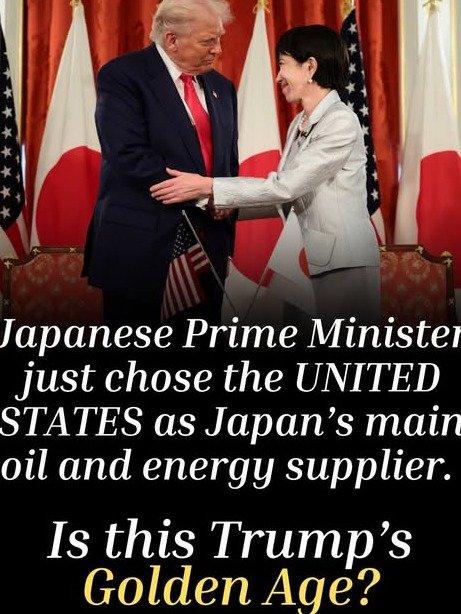
Imagine a nation, historically vulnerable, making a seismic shift in its core energy strategy, turning its back on traditional suppliers to embrace a new, powerful partner. This isn’t just a hypothetical scenario; it’s the game-changing reality unfolding right now between Japan and the United States. Prime Minister Takaichi’s bold move to elevate American resources to the forefront of Japan’s energy security isn’t merely a political decision – it’s a strategic masterstroke with profound implications for global energy markets, international alliances, and potentially, even your own energy future.
For decades, Japan has navigated a precarious energy landscape, heavily reliant on imports from geopolitically volatile regions. Now, a new chapter is being written, one where the vast energy reserves of the United States are set to become the bedrock of Japan’s economic and national security. This isn’t just about fuel; it’s about forging an unbreakable bond, ensuring stability, and reshaping the geopolitical chessboard in the Indo-Pacific and beyond.
Japan’s Enduring Energy Vulnerability: A Historical Perspective
Japan, a technological and economic powerhouse, has always faced a fundamental challenge: a severe lack of indigenous energy resources. The nation imports nearly 90% of its primary energy, making it acutely sensitive to global supply disruptions and price fluctuations. This vulnerability was starkly exposed during the 1970s oil crises and, more recently, by the devastating Fukushima nuclear disaster in 2011.
The aftermath of Fukushima saw Japan dramatically reduce its reliance on nuclear power, forcing a massive increase in imports of fossil fuels, particularly Liquefied Natural Gas (LNG). This shift primarily directed Japan’s energy procurement towards the Middle East and, to a lesser extent, Russia. While these sources provided necessary supply, they came with inherent risks, including long supply lines, geopolitical instability, and a lack of diversified options.
The American Energy Revolution: A New Global Player Emerges
While Japan grappled with its energy dilemma, the United States was undergoing an unprecedented energy revolution. The advent of hydraulic fracturing and horizontal drilling unlocked vast reserves of shale oil and natural gas, transforming the U.S. from a net energy importer into one of the world’s largest energy producers and, crucially, an increasingly significant exporter of LNG and crude oil.
This dramatic shift in the American energy landscape has not only secured domestic supply but has also provided the U.S. with a powerful new tool in its foreign policy arsenal. The ability to offer stable, abundant, and competitively priced energy resources positions the United States as a compelling alternative to traditional suppliers, particularly for energy-hungry nations like Japan seeking greater security and diversification.
Prime Minister Takaichi’s Bold Vision: Securing Japan’s Future
Prime Minister Takaichi’s initiative marks a decisive pivot in Japan’s energy strategy. Her administration recognizes that true national security in the 21st century extends beyond military might to encompass economic resilience and energy independence. By elevating the United States to Japan’s leading energy partner, Takaichi is not just signing new contracts; she is fundamentally reorienting Japan’s strategic compass.
This move reflects a deeper understanding of the geopolitical landscape, where energy security is inextricably linked to national sovereignty and economic stability. It’s a proactive step to insulate Japan from the volatile energy markets often influenced by authoritarian regimes and to align its vital interests with a trusted, democratic ally.
“Our nation’s future prosperity and security depend on a stable, diversified, and reliable energy supply. Partnering with the United States offers not just resources, but a shared commitment to democratic values and long-term stability,” a senior advisor to Prime Minister Takaichi reportedly stated, emphasizing the strategic depth of this new alliance.
The Cornerstone: American LNG and Beyond
At the heart of this burgeoning partnership lies American Liquefied Natural Gas (LNG). The U.S. has rapidly expanded its LNG export capacity, making it a top global supplier. For Japan, American LNG offers several compelling advantages:
- Supply Security: Direct shipments from the U.S. reduce reliance on transit through potentially volatile choke points.
- Diversification: A new, major source of supply reduces dependence on a concentrated pool of suppliers.
- Stable Pricing: Long-term contracts with U.S. suppliers can offer more predictable pricing compared to spot market volatility.
- Environmental Benefits: Natural gas is a cleaner-burning fossil fuel than coal or oil, aligning with Japan’s decarbonization goals as it transitions to renewables.
Beyond LNG, the partnership could extend to other vital resources. American crude oil, though perhaps less central than LNG, could also play a role in diversifying Japan’s crude imports. Furthermore, collaboration in advanced energy technologies, including carbon capture, utilization, and storage (CCUS), hydrogen, and even next-generation nuclear power, represents a significant growth area for this energy alliance.
Economic Winds: Benefits for Both Sides of the Pacific
The economic benefits of this enhanced energy partnership are substantial for both nations. For Japan, a secure and stable energy supply translates directly into industrial stability, predictable operational costs for businesses, and ultimately, sustained economic growth. It reduces the risk premium associated with energy procurement, making Japan a more attractive hub for manufacturing and innovation.
For the United States, this partnership means a significant boost to its energy export sector, creating jobs, stimulating investment in infrastructure, and strengthening its position as a global energy superpower. The long-term contracts with Japan provide a stable market for American energy producers, encouraging further development and innovation within the sector.
Geopolitical Resonance: Strengthening the Indo-Pacific Alliance
This energy alliance is not merely transactional; it carries immense geopolitical weight. It significantly deepens the already robust U.S.-Japan security alliance, transforming it into a comprehensive strategic partnership that encompasses economic and energy dimensions. In an increasingly complex Indo-Pacific region, this move sends a clear signal:
- Reinforcing Alliances: It solidifies the bond between two key democratic allies, critical for regional stability.
- Counterbalancing Influence: It provides an alternative to energy sources from nations that might seek to leverage energy for political gain.
- Promoting Regional Security: A stable and energy-secure Japan contributes to the overall security and economic resilience of the Indo-Pacific.
The move also subtly, yet powerfully, impacts other regional players. By reducing reliance on certain traditional suppliers, Japan is asserting greater autonomy and aligning its energy future with its strategic interests, rather than being beholden to the whims of volatile markets or geopolitical pressures.
Navigating Challenges and the Road Ahead
While the strategic benefits are clear, the implementation of this ambitious partnership will not be without its challenges. Significant infrastructure investments will be required, both in the U.S. for increased export capacity and in Japan for import terminals and distribution networks. Long-term contracts will need careful negotiation to ensure fair pricing and flexibility for both parties.
Environmental considerations will also remain paramount. While natural gas is cleaner than other fossil fuels, the ultimate goal for both nations involves a transition to renewable energy sources. This partnership must be viewed as a crucial bridge, providing energy security during this transition while fostering collaboration on green technologies.
A New Dawn for Global Energy and Alliance Building
Prime Minister Takaichi’s decision to make the United States Japan’s leading energy partner represents more than just a shift in procurement; it heralds a new era of strategic cooperation and energy security. It underscores the evolving nature of global alliances, where economic interdependence and shared values are as critical as military might.
As American resources power the Japanese economy, this partnership will not only secure Japan’s future but also solidify the U.S.’s role as a reliable global leader. It’s a powerful testament to how two nations, through visionary leadership and mutual trust, can forge a future of shared prosperity and enduring stability in a rapidly changing world. Keep an eye on this space – the ripple effects of this monumental decision are just beginning to be felt.
About the Author




