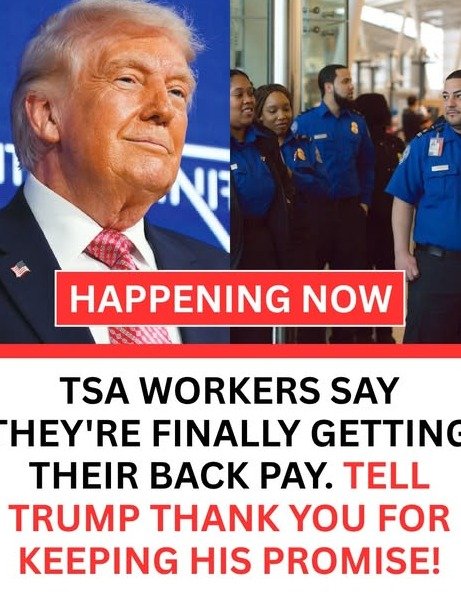
Imagine going to work every single day, dedicating yourself to keeping millions of travelers safe, all while knowing your paycheck isn’t coming. For weeks, this was the heartbreaking reality for thousands of dedicated Transportation Security Administration (TSA) officers across the nation, caught in the crossfire of a contentious government funding standoff. But now, a wave of profound relief is sweeping through their ranks as paychecks are finally being restored, bringing an end to an period of unimaginable stress and financial uncertainty.
The news is official: TSA workers have begun confirming that they are indeed receiving back pay for the missed pay periods during the recent Department of Homeland Security (DHS) funding crisis. This isn’t just about money; it’s about dignity, stability, and the ability for countless families to breathe a collective sigh of relief after enduring an incredibly challenging time. The journey through this financial limbo has been arduous, but the arrival of these long-awaited funds signals a crucial turning point.
The Shadow of the Standoff: Weeks of Uncertainty
The funding standoff that gripped Washington for weeks left critical federal agencies, including the DHS, in a precarious position. While many government functions were shuttered, essential personnel like those at the TSA were mandated to continue working without pay. They were literally putting in full shifts, ensuring the security of our airports and skies, all while their personal bank accounts dwindled.
This wasn’t a voluntary sacrifice; it was a consequence of political gridlock that directly impacted the lives of everyday Americans. The uncertainty wasn’t just about a delayed paycheck; it was about the looming threat of missing rent, defaulting on mortgage payments, struggling to put food on the table, or being unable to afford vital medications. The emotional toll on these dedicated public servants and their families was immense, creating a pervasive sense of anxiety.
Essential Service, Zero Compensation: A Dehumanizing Paradox
The paradox was stark and deeply troubling: TSA officers, deemed essential for national security and public safety, were expected to perform their duties without the basic compensation they earned. These men and women stood at security checkpoints, screened luggage, and managed passenger flow, all while grappling with the very real fear of financial ruin.
Many resorted to desperate measures, from taking out high-interest loans to turning to food banks or crowdfunding campaigns. The stories that emerged during this period highlighted the profound human cost of political impasses, showcasing the resilience of these workers even as they faced immense personal hardship. Their commitment to their jobs, despite the lack of immediate payment, spoke volumes about their dedication.
“It’s hard to focus on scanning bags for threats when you’re worried if you can afford gas to get to work tomorrow, or if your kids will have enough to eat. This back pay isn’t just money; it’s peace of mind.” – A veteran TSA officer, speaking anonymously.
The Turning Tide: A Glimmer of Hope Emerge
As public pressure mounted and the real-world consequences became undeniable, lawmakers eventually reached an agreement, albeit a temporary one, to reopen the government and restore funding. This decision brought an immediate, palpable sense of relief to millions of federal workers, but the wait for actual funds to hit bank accounts still loomed. The process of calculating and distributing back pay for thousands of employees is complex, often taking days, if not weeks, to fully materialize.
For TSA workers, every passing day felt like an eternity. They had done their part, showed up, and performed their duties admirably. Now, the expectation was simple: receive the pay they had rightfully earned. The anticipation built steadily, with daily checks of bank accounts becoming a ritual for many, hoping to see those long-awaited deposits.
The Moment of Relief: Deposits Begin to Land
The first confirmations of back pay hitting accounts started trickling in, quickly spreading like wildfire through internal communication channels and social media groups. For many, it wasn’t just a transaction; it was a moment of profound emotional release. The sight of those numbers appearing in their bank statements signaled the end of a deeply stressful chapter and the ability to begin rebuilding their financial stability.
These deposits mean more than just covering overdue bills. They represent the alleviation of sleepless nights, the lifting of a heavy burden from families, and the restoration of a basic sense of fairness. Finally, the hard work and unwavering commitment of these essential workers are being properly acknowledged and compensated, allowing them to focus on their vital roles without the constant shadow of financial insecurity.
Rebuilding and Recovering: What Back Pay Means Now
With their paychecks restored, TSA employees can now begin the crucial process of financial recovery. This involves a range of immediate and long-term actions:
- Paying Overdue Bills: Rent, mortgages, utility bills, and credit card payments that piled up can now be addressed, avoiding further late fees and potential damage to credit scores.
- Restocking Essentials: Many families had to cut back drastically on groceries and other necessities. This back pay allows them to replenish their homes and ensure their families are well-provided for.
- Addressing Healthcare Needs: Some may have postponed doctor’s appointments or prescription refills due to cost concerns. They can now prioritize these important health needs.
- Rebuilding Savings: For those who dipped into emergency funds or went into debt, the focus will be on slowly rebuilding their financial safety nets.
The impact extends beyond individual households, too. Local businesses, from grocery stores to restaurants, will likely see a boost as federal workers, who are significant contributors to many local economies, regain their spending power. This ripple effect underscores the broader economic importance of stable government funding and reliable paychecks for its workforce.
Preventing Future Crises: Lessons Learned
While the immediate crisis for TSA workers has passed, the experience highlights the urgent need for a more stable and predictable government funding process. The repeated cycle of budget standoffs and potential shutdowns creates immense instability not just for federal employees, but for the entire nation. It undermines morale, disrupts essential services, and creates unnecessary economic uncertainty.
Moving forward, there’s a strong call for bipartisan efforts to establish long-term funding solutions that protect essential workers from becoming bargaining chips in political disputes. The dedication of TSA officers, who continued to serve despite personal hardship, should serve as a powerful reminder of the importance of these roles and the necessity of ensuring their financial security.
The Unsung Heroes: Our Gratitude and Support
The TSA officers are often the first line of defense many travelers encounter, working tirelessly and often thanklessly to ensure our safety. Their professionalism and perseverance during the recent funding crisis are commendable. They stood strong, fulfilled their duties, and navigated an incredibly difficult period with remarkable resilience.
As these dedicated individuals finally receive their rightful compensation, it’s a moment to acknowledge their invaluable contribution to national security and to reflect on the importance of valuing all workers, especially those who serve on the front lines. The restoration of their paychecks is not just good news for them; it’s a testament to the power of advocacy and a hopeful step towards greater stability for all federal employees.
The nightmare of unpaid work is finally over. The relief is real, and the road to recovery has begun for thousands of TSA heroes and their families. It’s a powerful reminder that behind every government function are real people, with real lives, who deserve the stability and respect that comes with fair and timely compensation.
About the Author




