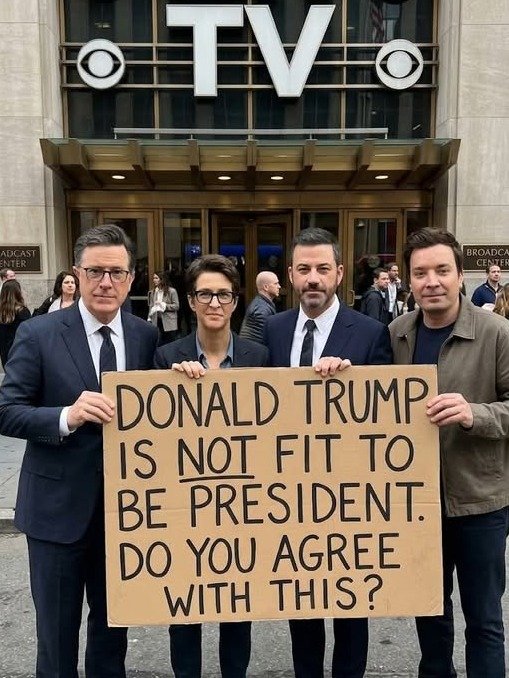
In an era defined by political polarization, the lines between entertainment and pointed commentary have blurred dramatically. Late-night television hosts and prominent news anchors, once seen primarily as entertainers or objective reporters, have increasingly become central figures in America’s culture wars, igniting fervent praise from supporters and absolute fury from detractors. This shift has culminated in a media landscape where even satirical remarks or critical analyses can be perceived as acts of war, sparking widespread outrage that feels nothing short of an explosion across the nation.
Consider the intensely charged rhetoric surrounding figures like Jimmy Kimmel, Stephen Colbert, Jimmy Fallon, and Rachel Maddow. These names, synonymous with late-night humor and in-depth political analysis respectively, are often singled out for their outspoken views. For a significant segment of the population, their commentary isn’t just criticism; it’s seen as a deliberate, almost ritualistic assault on specific political figures and ideologies, leading to reactions so extreme they’re described as a ‘radioactive bloodbath’ unfolding live on television.
The Evolution of Late-Night Political Satire
Historically, late-night television offered a relatively safe space for lighthearted banter and celebrity interviews. While political jokes were always part of the mix, they rarely dominated the conversation or provoked such visceral reactions. Shows like Johnny Carson’s Tonight Show touched on politics, but often with a universal appeal that transcended partisan divides, aiming for a laugh from everyone.
However, the past two decades have witnessed a profound transformation. As media landscapes fragmented and political discourse became increasingly tribal, late-night hosts recognized an opportunity—or perhaps a necessity—to take a more pronounced stance. The Jon Stewart era of The Daily Show proved that satire could be both hilarious and deeply impactful, shaping public opinion and holding power to account with unprecedented directness.
This paved the way for a new generation of hosts who blend comedic timing with sharp political critique. Stephen Colbert, for instance, transitioned from his satirical conservative persona on The Colbert Report to a more direct, yet still comedic, liberal voice on The Late Show. Jimmy Kimmel, initially known for prank videos and celebrity feuds, has increasingly used his platform to advocate for social issues and critique political decisions, often with deeply personal anecdotes.
The Voices at the Center of the Storm
Jimmy Fallon, while often striving for a more apolitical, feel-good atmosphere, has not been immune to political scrutiny, particularly when his interactions with political figures were perceived as too soft or normalizing. His attempts to remain neutral often draw criticism from both sides, illustrating the difficulty of navigating today’s polarized environment without taking a perceived side.
Rachel Maddow, on the other hand, operates in a different sphere entirely. As a highly influential MSNBC host, her role is explicitly that of a political commentator and analyst. Her in-depth, often prosecutorial style of reporting and her clear liberal perspective make her a lightning rod for criticism from the right, who often view her as a partisan attack dog rather than a journalist.
Together, these figures represent a powerful bloc within the media, each contributing to a narrative that resonates strongly with their respective audiences. For those who feel represented by their views, they are truth-tellers, courageous voices challenging injustice. For those who vehemently disagree, they are propagandists, actively working to undermine opposing viewpoints and political leaders, especially those on the conservative side.
Understanding the ‘Satanic Execution Ritual’ Metaphor
The original, explosive claim of a ‘midnight Satanic execution ritual’ is, of course, a metaphor—an extreme one, but a powerful indicator of how certain audiences perceive the actions of these media personalities. It speaks to a profound sense of grievance, of feeling targeted and demonized by what is seen as a coordinated, malevolent force.
“When political commentary is perceived as a systematic, relentless attack, it can evoke language of spiritual warfare and existential threat. For some, the consistent criticism leveled against a figure like Donald Trump by these hosts feels less like satire and more like a deliberate, almost ritualistic effort to destroy his image and influence.”
This hyperbolic language reflects a deep-seated belief among some that these media figures are not simply expressing opinions or engaging in satire, but are actively participating in a darker, more sinister agenda. The term ‘execution’ implies a deliberate attempt to politically or reputationally ‘kill’ a target, while ‘Satanic’ imbues it with moral condemnation and an accusation of pure evil.
The Target: ‘Trump’s He…’ and the Culture War
While the original post cut off, the implication was clear: the ‘ritual’ was aimed at ‘Trump’s He…’ — presumably his policies, his character, his administration, or even his very supporters. Donald Trump’s presidency, in particular, became a focal point for late-night satire and cable news commentary, often serving as a daily wellspring of material.
For many of these hosts, Trump’s actions and rhetoric presented an undeniable target for critique, often framed as defending democratic norms, social justice, or basic decency. This consistent, often scathing, commentary resonated deeply with anti-Trump audiences, who felt validated and empowered by seeing their own frustrations articulated by popular figures.
Conversely, for Trump’s supporters, this relentless criticism was seen as unfair, biased, and part of a broader ‘deep state’ or ‘liberal media’ conspiracy to undermine a democratically elected president. The perception was that these hosts were not merely satirizing, but actively campaigning against a political leader, using their powerful platforms to sway public opinion and incite animosity.
The ‘Radioactive Bloodbath’ of Public Reaction
The phrase ‘exploded like a radioactive bloodbath across America’ vividly captures the intense, often toxic, public reaction to this political media. When a segment or commentary goes viral, it doesn’t just spread; it detonates a chain reaction of outrage, debate, and further polarization across social media, news channels, and dinner tables.
Social Media Firestorms: Clips of controversial segments are shared relentlessly, accompanied by furious denunciations or passionate defenses, quickly becoming trending topics.
Echo Chambers Reinforced: Audiences retreat further into their ideological bubbles, consuming content that confirms their existing biases and demonizes opposing viewpoints.
Personal Attacks: The intense political climate often devolves into personal attacks against the hosts themselves, their families, and anyone who agrees with them, mirroring the ‘execution’ rhetoric.
Erosion of Trust: For those who disagree, trust in these media institutions further erodes, leading to accusations of fake news and partisan propaganda, deepening societal divisions.
This ‘bloodbath’ isn’t literal, but it describes the emotional and psychological toll of constant, high-stakes political conflict playing out in the public sphere. Every perceived slight, every sharp joke, every critical analysis becomes another battleground in an ongoing, exhausting war of narratives.
Navigating the Hyper-Polarized Media Landscape
The phenomenon highlighted by the original post underscores a critical challenge for modern democracy: how do we engage in robust political discourse without descending into such extreme, dehumanizing rhetoric? The responsibility lies not only with the media figures but also with the consumers of news and entertainment.
While satire and critical commentary are vital components of a healthy democracy, the language used by both critics and supporters often pushes the boundaries of civil discourse. When every political disagreement is framed as an existential struggle between good and evil, the possibility of finding common ground or engaging in constructive dialogue diminishes rapidly.
Ultimately, the ‘midnight media war’ continues, with Kimmel, Colbert, Fallon, and Maddow remaining central figures in a deeply divided nation’s ongoing struggle for identity and direction. The ‘radioactive bloodbath’ of outrage they sometimes spark is not just a reaction to their words, but a powerful reflection of America’s own internal conflicts, played out nightly on our screens.