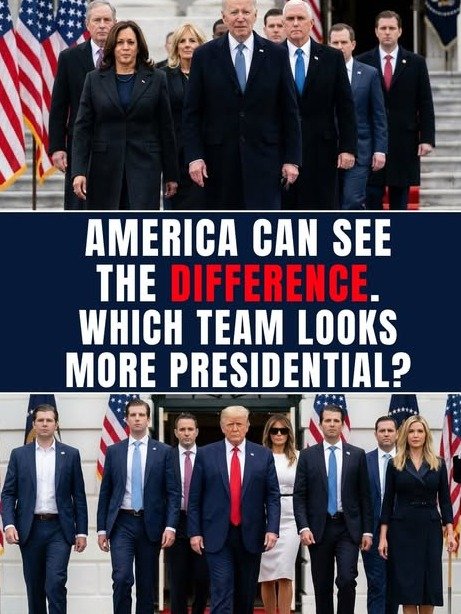
Have you ever found yourself making an instant judgment about a political leader, even before they utter a single word? That gut feeling, that immediate sense of trust or skepticism, isn’t accidental. It’s a powerful, often subconscious reaction to something far more fundamental than policy debates: their presentation.
In the high-stakes arena of American politics, where every gesture, every outfit, and every public appearance is dissected, the way a leader presents themselves has become an undeniable force. This isn’t mere superficiality; it’s a profound psychological connection voters make between visual cues and core leadership qualities like confidence and order.
The Unspoken Language of Leadership
Long before a candidate delivers their stump speech or unveils their detailed policy platform, they communicate volumes through their presence. From the crispness of a suit to the steadiness of their gaze, from their posture to their command of a room, these non-verbal signals create an immediate impression that can either open the door to voter engagement or slam it shut.
This isn’t about being “fake” or inauthentic; it’s about understanding the profound impact of perception. Voters aren’t just looking for someone to lead; they’re looking for someone who looks like they can lead. They seek a visual reassurance that the individual possesses the gravitas, composure, and capability to steer the ship of state through turbulent waters.
Confidence: The Invisible Crown
When we talk about presentation, confidence is perhaps the most critical attribute conveyed. A leader who appears self-assured, calm under pressure, and in control of their surroundings projects an aura of competence that resonates deeply with the electorate. This isn’t just bravado; it’s a visible manifestation of inner strength.
Think about the subtle cues: a firm handshake, direct eye contact, a steady speaking voice, deliberate movements. These aren’t just polite gestures; they are powerful psychological signals that tell us, “I know what I’m doing.” In moments of national uncertainty or crisis, voters instinctively gravitate towards figures who exude this unwavering self-possession.
Conversely, a leader who appears hesitant, flustered, or unsure in their presentation can inadvertently erode public trust. Even if their policies are sound, a lack of perceived confidence can lead voters to question their ability to execute those policies effectively or to handle unforeseen challenges.
Order: The Promise of Stability
Beyond confidence, presentation is intrinsically linked to the perception of order. In a world often characterized by chaos and unpredictability, voters yearn for stability and a sense that someone is in charge, bringing structure to complexity. A leader’s presentation can powerfully convey this sense of control and organization.
Consider the visual metaphor: a well-organized office, a meticulously planned event, a composed public appearance. These elements suggest a mind that is equally organized and capable of bringing discipline to governance. Voters often project these external signs of order onto a leader’s ability to manage complex national issues, from the economy to foreign policy.
When a leader projects an image of discipline and precision, it reassures the public that they are not only capable but also committed to maintaining a stable and predictable environment. This can be particularly impactful during times of social unrest or economic instability, where the public craves a steady hand at the helm.
The Stark Contrast: Shaping Perceptions
The concept of “leadership contrast” highlights how different leaders deliberately (or inadvertently) position themselves against their opponents through their presentation. One candidate might emphasize a polished, presidential demeanor, while another might lean into a more “everyman” or “disruptor” image. Each approach aims to tap into specific voter desires.
These contrasts aren’t just about personal style; they’re strategic choices that aim to define the narrative. A candidate seeking to project stability might focus on formal attire, measured speech, and a composed presence. Their opponent, perhaps aiming to energize a base tired of the status quo, might opt for a more casual, passionate, or even confrontational presentation.
The effectiveness of each approach depends heavily on the political climate and what voters are seeking at a particular moment. In times of crisis, an “ordered” presentation might be preferred. In times of perceived stagnation, a “disruptive” presentation might gain traction. The contrast becomes a powerful tool in framing the choice for the electorate.
A Historical Lens: From Radio to TikTok
The importance of presentation is not a new phenomenon, but its impact has been dramatically amplified by media evolution. Think back to the 1960 presidential debate between John F. Kennedy and Richard Nixon. Those who listened on radio often thought Nixon won, but those who watched on television overwhelmingly favored Kennedy.
“It was the first televised presidential debate, and it fundamentally changed how we perceive political leadership. Kennedy’s youthful vigor and poised demeanor contrasted sharply with Nixon’s somewhat tired appearance, setting a new standard for visual presentation in politics.”
This pivotal moment underscored that what voters see can be as, if not more, influential than what they hear. As media has become increasingly visual—from 24/7 cable news to the ubiquitous presence of social media—the scrutiny on a leader’s presentation has only intensified.
Today, a single viral image or a short video clip can define a candidate for millions, instantly shaping perceptions of their confidence, composure, and ability to lead. The curated image on a campaign poster is just one piece of the puzzle; unscripted moments, live debates, and even candid snapshots contribute to the ever-evolving public persona.
The Psychology of Visual Influence
Why are we so susceptible to visual cues? Our brains are hardwired for rapid assessment. We make split-second judgments about trustworthiness, competence, and even threat based on non-verbal signals. This evolutionary trait, once vital for survival, now plays a significant role in our political decision-making.
- Heuristics: Voters often rely on mental shortcuts or “heuristics” to make decisions, especially when faced with complex information. A leader’s confident and orderly presentation can act as a powerful heuristic, signaling competence without requiring deep policy analysis.
- Halo Effect: This cognitive bias suggests that our overall impression of a person influences how we feel and think about their character. If a leader projects an image of confidence, we might automatically assume they are also intelligent, capable, and trustworthy, even without direct evidence.
- Emotional Resonance: Visuals evoke emotion much more quickly and powerfully than text or abstract ideas. A leader who can visually connect with voters on an emotional level—projecting strength, empathy, or resolve—can build a stronger bond than one who relies solely on rational arguments.
Understanding these psychological underpinnings reveals that voters are not always making purely rational choices. Their emotional and subconscious responses to a leader’s presentation are a significant, often overlooked, factor in how they perceive and ultimately support a candidate.
Navigating Authenticity vs. Strategy
For modern leaders, the challenge lies in striking a delicate balance. How does one cultivate an image that projects confidence and order without appearing inauthentic or overly manufactured? Voters, especially in the age of constant media scrutiny, are increasingly adept at sniffing out what feels disingenuous.
The most successful leaders are often those who can integrate their natural personality with a strategic understanding of how their presentation impacts public perception. They don’t just “put on a show”; they refine and enhance their natural leadership qualities to communicate effectively through both words and visuals.
This requires self-awareness, media training, and an astute grasp of the cultural zeitgeist. A leader must understand not only what they want to convey but also how their audience is likely to interpret those signals, ensuring that their visual message aligns with their intended political message.
The Lasting Impact on American Politics
The theme that presentation matters, that voters connect it deeply to confidence and order, remains one of the clearest and most enduring truths in American politics. It shapes how campaigns are run, how debates are prepared, and ultimately, how leaders are chosen.
While policy debates, economic performance, and legislative achievements are undeniably crucial, the visual narrative a leader crafts for themselves often serves as the gateway to public engagement. It’s the first impression, the subconscious filter through which all other information is processed.
As citizens, recognizing this powerful influence allows us to become more discerning voters. We can consciously separate the “packaging” from the “product,” even while acknowledging that the packaging itself is a significant part of the political product. Understanding this dynamic is key to truly comprehending the forces that shape our leadership and our nation’s future.
About the Author




