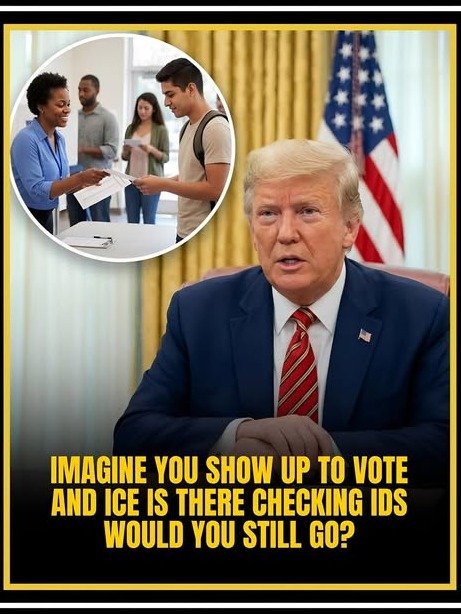
Imagine a fundamental right, one that underpins the very foundation of your democracy, suddenly becoming a battleground. That’s precisely what’s happening across the United States with voter identification requirements. What appears, on the surface, to be a simple request for proof of identity has ignited one of the most polarizing and persistent debates in modern American politics, touching on everything from election integrity to the very accessibility of the ballot box.
This isn’t just a squabble over policy; it’s a profound ideological clash. On one side, proponents argue that voter ID laws are essential safeguards against fraud, ensuring that every legitimate vote is counted and public trust in elections remains unshaken. On the other, opponents contend that these laws are a thinly veiled attempt at voter suppression, disproportionately disenfranchising marginalized communities and erecting unnecessary barriers to participation. The stakes couldn’t be higher, as the outcome of this debate will shape the future of American democracy.
The Battleground: Why Voter ID Divides a Nation
The discussion around voter identification isn’t new, but it gained significant momentum in the early 2000s, particularly in the wake of the contested 2000 presidential election. States began to explore ways to prevent perceived vulnerabilities in the electoral system, and requiring voters to show ID at the polls emerged as a primary solution. The underlying philosophy for advocates is simple: if you need an ID to board a plane, cash a check, or even buy alcohol, why wouldn’t you need one to perform the most critical civic duty?
However, this seemingly logical premise quickly runs into a wall of deeply held beliefs about voting rights and access. Critics argue that voting is not a commercial transaction or a privilege, but a fundamental right enshrined in the Constitution. Therefore, any requirement that potentially hinders this right, especially without clear evidence of widespread fraud, is seen as an attack on democratic principles. This fundamental disagreement — whether voting is a right that should be maximally accessible or a civic duty that requires strict verification — is what fuels the relentless tug-of-war.
The Case for Voter Identification: Securing Our Ballots
Proponents of stricter voter ID laws often center their arguments on the imperative of election integrity. They believe that requiring voters to present identification is a crucial step in preventing various forms of voter fraud, thereby ensuring that election results accurately reflect the will of the people. The most commonly cited concern is voter impersonation, where an individual pretends to be another registered voter to cast an illegal ballot.
While statistically rare, the mere possibility of such fraud, advocates argue, erodes public confidence in the electoral process. A secure system, they contend, is one where every citizen can trust that their vote won’t be diluted by illegal ballots. By making it harder for ineligible individuals to vote, voter ID laws aim to bolster the legitimacy of elections and foster greater faith in democratic institutions.
- Preventing Impersonation: Ensures the person casting the ballot is the registered voter.
- Boosting Public Confidence: Reassures citizens that elections are fair and secure.
- Modernizing Elections: Aligns voting with other identity-verified transactions in daily life.
- Deterring Fraud: Creates a perception that illegal voting attempts will be caught.
The Alarming Reality: Is Voter ID Suppressing the Vote?
On the other side of the aisle, a powerful coalition of civil rights groups, voting rights advocates, and many Democratic lawmakers vehemently oppose strict voter ID laws. Their primary concern is voter suppression, arguing that these requirements disproportionately impact specific demographics, making it harder for them to exercise their constitutional right to vote. They point out that millions of eligible American citizens do not possess government-issued photo identification.
Obtaining these IDs can be a significant hurdle for many. It often involves costs for birth certificates or other underlying documents, transportation to government offices, and taking time off work – burdens that disproportionately affect low-income individuals, the elderly, students, people with disabilities, and racial and ethnic minorities. For these groups, a seemingly minor requirement can become an insurmountable obstacle, effectively disenfranchising them.
“The right to vote is the most sacred right in our democracy, and any law that makes it harder for eligible citizens to cast their ballot, without clear justification, is a threat to the very principles we hold dear.” – A common sentiment from voting rights advocates.
- Voter Suppression: Disproportionately impacts marginalized communities.
- Burden of Access: Costs, time, and logistical challenges of obtaining ID.
- Lack of Widespread Fraud: Critics argue the type of fraud voter ID prevents is exceedingly rare.
- Disenfranchisement: Millions of eligible voters lack required IDs.
A Spectrum of Laws: How States Approach Voter ID
The landscape of voter ID laws across the United States is far from uniform. There isn’t a single, national standard, leading to a patchwork of regulations that vary significantly from state to state. This diversity reflects the ongoing debate and the differing priorities of state legislatures, often along partisan lines. Understanding these variations is key to grasping the complexity of the issue.
Some states implement what are known as ‘strict photo ID’ laws, meaning voters must present a government-issued photo ID to cast a regular ballot. If they don’t have one, they may be required to cast a provisional ballot, which is only counted if they return with the proper ID within a specified timeframe. Other states have ‘non-strict photo ID’ laws, where a photo ID is requested, but alternatives are provided if a voter doesn’t have one, such as signing an affidavit or showing a non-photo document.
Further along the spectrum, some states require a non-photo ID, like a utility bill, bank statement, or government check. And finally, a handful of states require no identification at all, relying instead on signature verification or other methods to confirm a voter’s identity. This wide range of approaches highlights the lack of consensus and the ongoing experimentation in election administration.
Legal Showdowns: Voter ID in the Courts
Given the profound implications for voting rights, it’s no surprise that voter ID laws have been a constant fixture in federal and state courts. These legal battles often hinge on interpretations of the Voting Rights Act of 1965, which prohibits racial discrimination in voting, and the Fourteenth Amendment’s Equal Protection Clause. Landmark Supreme Court cases have shaped the legal framework, though challenges continue.
One of the most significant Supreme Court decisions was Crawford v. Marion County Election Board (2008), which upheld Indiana’s strict photo ID law, finding that the state’s interest in preventing voter fraud outweighed the burden on voters. However, the Court also left the door open for future challenges if specific voters could demonstrate that the law imposed an unconstitutional burden on them. This ruling set a precedent that states could implement photo ID laws, but it did not end the legal skirmishes.
Since Crawford, numerous state-level challenges have been filed, with varying outcomes. Courts have struck down some voter ID laws, finding them discriminatory or overly burdensome, while upholding others. The ongoing litigation underscores the contentious nature of these laws and the persistent efforts by both proponents and opponents to shape their implementation and legality.
The Human Cost: Who is Affected Most?
While the debate often focuses on statistics and legal precedents, the true impact of strict voter ID laws is felt by individual citizens. Consider the elderly voter who no longer drives and whose driver’s license expired years ago, now facing a complicated and costly process to obtain a new ID just to vote. Or the low-income worker who cannot afford the fees for a birth certificate and a state ID, let alone take time off their hourly job to visit government offices that may be miles away.
Students, particularly those attending college out of state, often face challenges because their student IDs may not be accepted, and obtaining a new state ID can be complicated by residency requirements. People with disabilities may face mobility issues or struggle with the administrative processes required. These are not isolated incidents; they represent millions of eligible Americans who, through no fault of their own, lack the specific forms of identification demanded by increasingly strict laws.
For these individuals, the “burden” of voter ID is not theoretical; it’s a very real barrier that can silence their voice in the democratic process. This is the core of the voter suppression argument: even if unintended, the practical effect of these laws is to reduce participation among vulnerable populations.
Finding Common Ground? Potential Paths Forward
Given the deeply entrenched positions, finding a middle ground in the voter ID debate is challenging, but not impossible. Some solutions have been proposed that aim to reconcile the goals of election integrity and voter access. One common suggestion is to provide free, easily accessible government-issued photo IDs to all eligible voters who need them, coupled with robust public education campaigns about the requirements.
Other proposals include expanding the types of identification accepted at the polls, allowing for same-day voter registration with ID verification, or implementing mobile ID units that can travel to communities. The idea is to maintain a level of verification while simultaneously removing the financial and logistical barriers that prevent eligible citizens from voting. Achieving such compromises would likely require bipartisan cooperation and a shared commitment to both secure and accessible elections.
The Future of American Democracy Hinges on This Debate
The debate over voter identification requirements is far more than a technical discussion about election administration. It is a fundamental struggle over the character of American democracy itself. It forces us to confront difficult questions about who gets to participate, how we balance security with access, and what level of trust we place in our fellow citizens.
As states continue to adjust their laws and courts continue to weigh in, the issue will remain at the forefront of political discourse. The ultimate resolution will profoundly impact the integrity of our elections and the democratic participation of millions of Americans. Ensuring that every eligible voice can be heard, while simultaneously safeguarding the sanctity of the ballot, remains one of the most critical challenges facing the United States today.
Understanding the nuances of this debate is essential for every citizen. It’s not just about what kind of ID is needed; it’s about the very soul of our democratic process and the future of our collective voice.
About the Author




