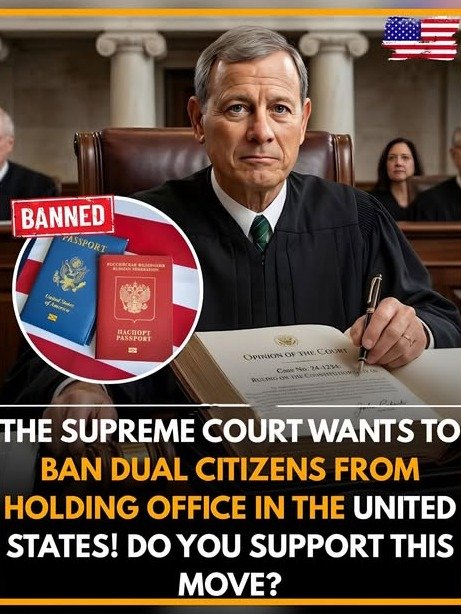
Imagine a world where your deepest loyalties are constantly under scrutiny, where the very act of holding citizenship in more than one nation sparks a fervent national debate. This isn’t a dystopian novel; it’s the reality unfolding across America right now, as recent headlines reignite a centuries-old question: can one truly pledge allegiance to two flags?
For decades, dual citizenship has been a quiet, often overlooked aspect of American life, embraced by millions who maintain ties to their ancestral homelands while fully participating in the fabric of the United States. Yet, a growing chorus of voices is now questioning the very foundation of this practice, prompting a national conversation about what it truly means to be an American in an increasingly interconnected, yet fractured, world.
A Shifting Stance: America’s Complex History with Dual Allegiance
The concept of dual citizenship wasn’t always openly embraced in the United States. Historically, early American jurisprudence leaned heavily towards the idea of singular allegiance, rooted in the foundational belief that one could not serve two masters. To renounce one’s original citizenship upon naturalization was seen as a vital, unequivocal act of commitment to the new nation.
However, as the nation grew and its population diversified through waves of immigration, this rigid stance began to soften. Landmark court cases and evolving societal norms gradually reshaped the legal landscape. By the late 20th century, the U.S. government largely adopted a policy of acquiescence, meaning it generally permits dual nationality without actively encouraging it, as long as there is no intent to renounce U.S. citizenship.
Today, millions of Americans hold dual citizenship, a testament to the nation’s diverse heritage and its role as a global melting pot. This status allows individuals to maintain cultural, economic, and familial ties to their countries of origin, often facilitating international travel, property ownership, and business ventures across borders.
The Allure and Advantages of Holding Two Passports
For many, dual citizenship offers a compelling array of practical and personal benefits. It can simplify international travel, eliminating the need for visas and offering greater freedom of movement. For business professionals, it can unlock opportunities in foreign markets, fostering economic growth and cross-cultural collaboration.
“Dual citizenship isn’t just about having two passports; it’s about bridging worlds, maintaining deep cultural roots, and leveraging global opportunities for both personal and national benefit,” explains Dr. Anya Sharma, a leading expert on immigration law. “It allows individuals to be truly global citizens while remaining committed to their American identity.”
Furthermore, dual nationality often provides a safety net, offering individuals and their families a potential haven or alternative residence during times of political instability or economic uncertainty in one country. It represents a tangible link to heritage, enabling people to connect more deeply with their ancestral cultures and pass on a rich, multi-faceted identity to future generations.
Unpacking the Renewed Debate: Why Now?
Despite the long-standing acceptance and numerous benefits, the debate over dual citizenship has resurfaced with unprecedented intensity. Several factors are fueling this renewed scrutiny, creating a complex tapestry of concerns that touch upon national security, economic loyalty, and the very definition of American identity.
One significant driver is the increasingly volatile geopolitical landscape. As global tensions rise and international allegiances are tested, questions about divided loyalties for individuals holding citizenship in both the U.S. and a rival nation become more pronounced. There’s a heightened sensitivity, particularly concerning those in sensitive government positions or with access to classified information.
Another factor is the ongoing discourse around immigration and national borders. As nations grapple with complex migration patterns and challenges to sovereignty, the concept of a singular, undivided national identity gains traction. This perspective often views dual citizenship as potentially diluting national cohesion or creating ambiguities in times of crisis.
The Core Question: Can Loyalty Be Divided?
At the heart of the renewed debate lies a fundamental question: can an individual truly be loyal to two nations, especially when their interests diverge? Critics argue that while cultural ties are understandable, political and civic allegiance should be singular and unequivocal. They raise concerns that in a conflict of interest, a dual citizen might face an impossible choice, potentially compromising national security or American interests.
Proponents, however, counter that loyalty is not a finite resource that must be split. They argue that one can deeply appreciate and contribute to multiple cultures and nations without diminishing their commitment to the United States. Many dual citizens demonstrate unwavering patriotism and civic engagement, viewing their multiple allegiances as additive rather than subtractive.
They often highlight that their ties to other nations can actually serve U.S. interests, acting as informal ambassadors, fostering international understanding, and strengthening diplomatic and economic bonds. The ability to navigate different cultural contexts can be a significant asset in a globalized world, offering unique perspectives and connections that benefit America.
National Security and Public Service Concerns
The debate takes on particular urgency when considering individuals in positions of public trust or national security. For those seeking high-level government roles, military service, or access to classified information, the question of dual allegiance becomes paramount. While existing protocols often require renunciation of foreign citizenship for certain sensitive positions, the very existence of dual nationality can still raise eyebrows and fuel public skepticism.
This isn’t just about espionage, but about the perception of potential influence or conflict of interest. The public expects absolute, undivided loyalty from its leaders and security personnel. This concern often leads to calls for stricter rules or even a complete ban on dual citizenship for certain government roles, sparking fierce debate about individual rights versus national security imperatives.
Economic Implications and Taxation
Beyond loyalty, dual citizenship also brings complex economic and tax considerations into the spotlight. The United States is one of only two countries in the world that taxes its citizens on their worldwide income, regardless of where they reside. This means that U.S. dual citizens living abroad are still subject to U.S. tax laws, which can lead to intricate compliance challenges and, for some, a sense of unfair burden.
The Foreign Account Tax Compliance Act (FATCA) further complicates matters, requiring foreign financial institutions to report information about U.S. account holders to the IRS. While designed to combat tax evasion, these regulations have inadvertently created significant headaches for many innocent dual citizens, leading some to even renounce their U.S. citizenship to avoid the complexities.
The Future of American Identity: A Call for Dialogue
As the world continues to shrink and populations become more mobile, the discussion around dual citizenship is unlikely to fade. It forces America to confront fundamental questions about its identity, its values, and its place in a globalized world. Is
About the Author




