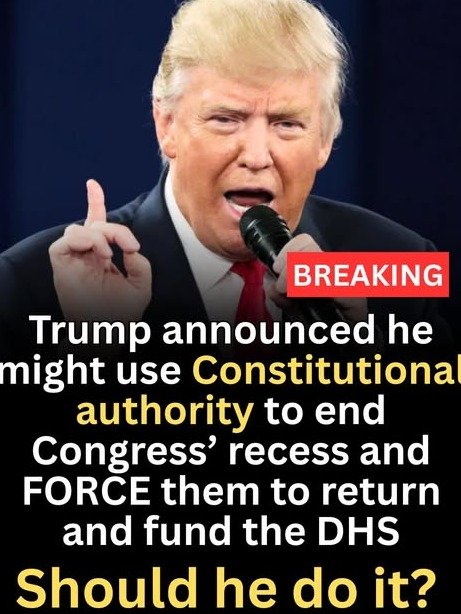
Imagine a President, frustrated by a gridlocked Congress, wielding a rarely-used constitutional power to yank lawmakers back to Washington, D.C., cutting short their vacation. It sounds like something out of a political thriller, but it’s a very real authority President Trump reportedly considered during his time in office. This isn’t just a historical footnote; it’s a fascinating look into the dynamic tension between the executive and legislative branches, and a reminder of the potent, sometimes overlooked, powers enshrined in the U.S. Constitution.
During periods of significant national crisis or legislative urgency, the idea of a President unilaterally recalling Congress can become a tempting option. For President Trump, this consideration reportedly stemmed from a desire to accelerate legislative action or push through stalled nominations, particularly during moments when Congress was in recess. But what exactly is this power, and what are its implications for American democracy?
Unpacking Article II, Section 3: The President’s Power to Convene
The authority President Trump reportedly weighed comes directly from Article II, Section 3 of the U.S. Constitution. This section outlines several presidential duties and powers, including the duty to inform Congress on the State of the Union and recommend measures. Crucially, it also states:
“He shall from time to time give to the Congress Information of the State of the Union, and recommend to their Consideration such Measures as he shall judge necessary and expedient; he may, on extraordinary Occasions, convene both Houses, or either of them, and in Case of Disagreement between them, with Respect to the Time of Adjournment, he may adjourn them to such Time as he shall think proper; he shall receive Ambassadors and other public Ministers; he shall take Care that the Laws be faithfully executed, and shall Commission all the Officers of the United States.”
The key phrase here is, “he may, on extraordinary Occasions, convene both Houses, or either of them.” This grants the President the power to call Congress back into session even if they are in recess, provided there is an
About the Author




