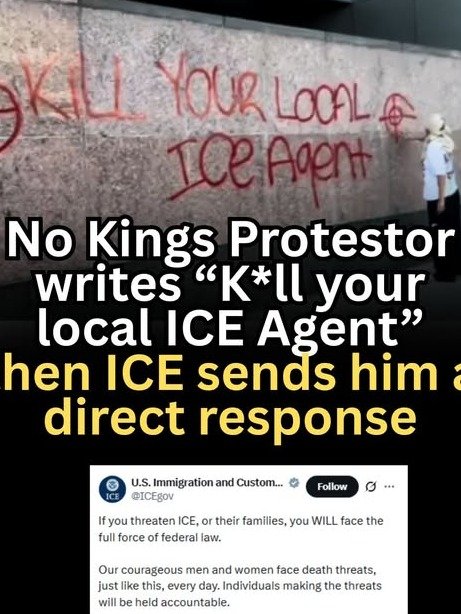
What happens when a federal agency, tasked with upholding the nation’s laws, receives a direct threat against its personnel or their loved ones? The answer, as recently articulated by U.S. Immigration and Customs Enforcement (ICE), is a swift and uncompromising application of federal law. This isn’t just a warning; it’s a stark declaration that menacing federal agents or their families will trigger the full, formidable power of the justice system.
Imagine the daily reality for agents who put their lives on the line, only to find their families targeted. This chilling possibility is not a hypothetical scenario for the brave men and women of ICE, who routinely face threats of violence and intimidation, sometimes extending to their spouses and children. Such actions cross a critical line, transforming dissent into a criminal act with severe consequences.
The Unseen Dangers Faced by Federal Agents
The work of federal agents, particularly those within agencies like ICE, is inherently dangerous and often misunderstood. These dedicated individuals are on the front lines, enforcing complex immigration laws, investigating transnational crime, and combating human trafficking. Their roles frequently place them in confrontational situations, requiring immense courage and unwavering commitment.
Beyond the visible risks of arrests and investigations, there’s a constant undercurrent of potential threats. Agents deal with individuals who may have a history of violence, ties to criminal organizations, or a deep-seated animosity towards law enforcement. This exposure means that their safety, and by extension, the safety of their families, is perpetually at risk, even when they are off duty.
When Words Become Weapons: The Gravity of Threats
In today’s digital age, a threat can be delivered with a few keystrokes, but its impact is anything but trivial. While free speech is a cornerstone of democracy, it has clear legal limits, especially when it veers into direct threats of violence or intimidation against individuals, particularly federal officers and their families. These aren’t merely angry words; they are deliberate attempts to obstruct justice, instill fear, and disrupt the lives of those sworn to protect us.
Law enforcement agencies, including ICE, take every threat seriously. They understand that a credible threat can escalate into real-world harm, and they are obligated to protect their personnel. When threats target family members, the psychological toll on agents is immense, creating a climate of fear that undermines their ability to perform their duties effectively and without undue personal burden.
The Law Strikes Back: Federal Penalties
The U.S. legal system is unequivocal when it comes to protecting federal officers and their families. Federal statutes explicitly criminalize threats against federal officials. One of the primary laws addressing this is 18 U.S. Code § 115, titled “Influencing, impeding, or retaliating against a federal official by threat or injury.” This statute makes it a serious felony to threaten to assault, kidnap, or murder a federal official or a member of their immediate family.
“Whoever threatens to assault, kidnap, or murder a United States official or a member of the immediate family of a United States official, or attempts to do so, shall be punished by a fine under this title or imprisonment for not more than 10 years, or both.” – 18 U.S. Code § 115(a)(1)(B)
The penalties for violating this law are severe, reflecting the gravity with which the federal government views such acts. A conviction can result in significant prison sentences, substantial fines, or both. The intent behind these laws is not only to punish offenders but also to deter others from engaging in similar dangerous and unlawful behavior.
Protecting the Protectors: ICE’s Stance
ICE’s resolute statement – “If you threaten ICE, or their families, you WILL face the full force of federal law” – is a clear articulation of its commitment to safeguarding its workforce. This isn’t just rhetoric; it’s a promise backed by dedicated investigative resources and a close working relationship with federal prosecutors. The agency employs specialized units to track, investigate, and apprehend individuals who make such threats.
The agency’s proactive approach ensures that any credible threat is met with a thorough investigation, aiming to prevent harm before it occurs. This commitment extends beyond physical protection to providing support for agents and their families who may be affected by intimidation or harassment. The message is clear: attacking the integrity or safety of ICE personnel will not be tolerated.
Beyond the Agent: The Impact on Families
When threats extend to the families of federal agents, the consequences ripple far beyond the intended target. Spouses, children, and other loved ones become unwitting victims, living under a cloud of fear and anxiety. This can lead to significant psychological distress, changes in daily routines for safety, and a pervasive sense of vulnerability. It transforms a professional duty into a deeply personal burden.
Imagine explaining to a child why a federal agent’s job could put them in danger, or why they might need to be more cautious in public. This added layer of stress can impact family dynamics, mental health, and overall well-being. Law enforcement agencies recognize this profound impact and strive to provide resources and support, but the emotional scars can run deep.
A Line in the Sand: Free Speech vs. Criminal Threat
It is crucial to distinguish between protected free speech and criminal threats. The First Amendment protects the right to express dissent, criticize government policies, and protest peacefully. However, this protection does not extend to speech that constitutes a true threat – a serious expression of an intent to commit an act of unlawful violence to a particular individual or group of individuals.
- Protected Speech: Criticizing ICE policies, protesting their actions, advocating for legislative change.
- Criminal Threat: Explicitly stating an intention to harm an ICE agent or their family, or making statements that a reasonable person would interpret as a serious intent to inflict bodily harm.
The legal distinction hinges on the intent of the speaker and how a reasonable person would perceive the statement. Courts have consistently upheld that threats of violence fall outside the scope of First Amendment protection because they inflict fear, disrupt public order, and can incite unlawful action.
The Ripple Effect: Society’s Stake
The protection of federal law enforcement agents and their families is not just an internal agency concern; it is a fundamental aspect of maintaining a stable and lawful society. When those tasked with upholding the law are themselves targeted with threats, it undermines the rule of law and can create an environment where intimidation becomes an acceptable form of opposition. This erosion of respect for law enforcement poses a threat to the entire community.
Allowing threats against federal agents to go unpunished would set a dangerous precedent, potentially emboldening others to use similar tactics against any authority figure or public servant. It is imperative that society, through its legal system, sends a clear message that such behavior will not be tolerated, ensuring that those who serve the public can do so without fear for their lives or the lives of their loved ones.
Conclusion: An Unwavering Commitment to Justice
ICE’s firm response to threats against its personnel and their families serves as a powerful reminder of the serious legal ramifications involved. It underscores the federal government’s unwavering commitment to protecting its agents and upholding the rule of law. For those who consider crossing this line, the message is unambiguous: the federal justice system will respond with its full and formidable force.
The courageous men and women of ICE, like all law enforcement officers, deserve to perform their duties without facing death threats or fear for their families’ safety. Their dedication to national security and public safety is a cornerstone of our society, and any attempt to undermine it through intimidation will be met with the full weight of federal law.
About the Author




