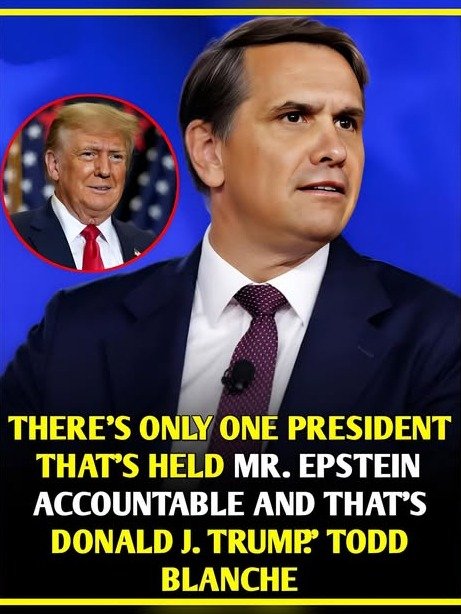
The name Jeffrey Epstein still sends shivers down the spine of anyone familiar with his heinous crimes. It’s a name synonymous with unimaginable abuse and a network of powerful, influential figures. So, when comments from Todd Blanche, former President Donald Trump’s defense attorney, recently surfaced regarding Trump’s past associations with Epstein, the reaction was immediate and intense.
A fresh and fervent debate has erupted, drawing widespread attention across media outlets and social platforms. This isn’t just another political skirmish; it delves into the murky waters of guilt by association, legal defense strategies, and the enduring public fascination with the dark underbelly of power. What exactly did Blanche say, and why has it sent such ripples through the political and legal landscape?
The Lingering Shadow of Jeffrey Epstein
To understand the gravity of any discussion involving Jeffrey Epstein, one must first recall the magnitude of his crimes. Epstein, a financier, was convicted of sex offenses and later arrested on federal sex trafficking charges. His death in jail, ruled a suicide, only fueled further speculation and conspiracy theories about the extent of his network and the powerful individuals who might have been implicated.
The sheer depravity of Epstein’s actions, coupled with the high-profile nature of his alleged associates, has created an environment where any past connection, however tangential, becomes a potent point of scrutiny. For public figures, merely being seen in Epstein’s orbit, even years before his crimes became widely known, can carry a significant reputational cost.
Donald Trump’s Known Associations with Epstein
It is well-documented that Donald Trump and Jeffrey Epstein moved in similar social circles in New York and Palm Beach during the 1990s and early 2000s. They were photographed together at various social events, and Epstein was known to have visited Trump’s Mar-a-Lago estate. Trump himself has spoken about their past acquaintance, often trying to downplay the extent of their relationship.
In interviews prior to Epstein’s conviction and subsequent scandal, Trump had described Epstein as a “terrific guy” who enjoyed “beautiful women.” However, after Epstein’s crimes came to light, Trump quickly distanced himself, stating he “was not a fan” and that he “knew him like everybody in Palm Beach knew him.” This shift in narrative is crucial to understanding the current debate.
Todd Blanche’s Strategic Maneuver
Todd Blanche, as a key member of Donald Trump’s legal defense team, operates in an incredibly high-stakes environment. Every statement, every public comment, is meticulously calculated. His recent remarks concerning Trump and Epstein were not made in a vacuum; they were part of a broader legal strategy to manage public perception and, potentially, preempt future attacks.
While the exact phrasing of Blanche’s comments that sparked this particular debate hasn’t been widely disseminated in a singular, definitive quote, the essence likely revolved around an attempt to contextualize or minimize Trump’s past interactions with Epstein. A defense lawyer’s job is to protect their client, and in cases involving public figures, this extends beyond the courtroom into the realm of public opinion.
The debate likely centers on whether Blanche’s statements adequately addressed the concerns, or if they inadvertently opened new avenues for critics to exploit. Did he suggest the interactions were purely social and innocuous, or did he attempt to draw a sharper line between a casual acquaintance and any deeper involvement? The nuance of such statements is often lost in the ensuing media frenzy.
The “New Debate”: Guilt by Association vs. Contextual Understanding
At the heart of this renewed discussion lies the complex ethical and legal question of “guilt by association.” Is it fair to hold someone accountable for the actions of an acquaintance, especially if those actions were not known or committed at the time of their interaction? Or does the sheer depravity of Epstein’s crimes mandate a more stringent standard for anyone connected to him?
Opponents of Donald Trump are quick to seize upon any past connection, using it as a tool to undermine his credibility and character. They argue that even a casual association with Epstein reflects poor judgment or, worse, hints at a darker complicity. This perspective often disregards the timeline, focusing instead on the optics of the connection in hindsight.
Conversely, Trump’s defenders argue that judging someone solely on their past acquaintances, particularly before those acquaintances were exposed as criminals, is an unfair and politically motivated tactic. They emphasize that many influential people interacted with Epstein before his monstrous acts became public knowledge, and that Trump’s interactions were purely social and ceased once the truth emerged.
“The challenge for any public figure associated with a notorious individual like Epstein is to distinguish between a casual, pre-scandal acquaintance and any form of endorsement or complicity. The public rarely makes such fine distinctions easily.”
Legal Implications and Public Perception
From a purely legal standpoint, a casual social acquaintance with Epstein, without any evidence of involvement in his crimes, typically carries no criminal liability. Todd Blanche’s role is to ensure that this legal distinction is clearly understood, especially as Trump faces numerous other legal battles.
However, public perception operates on a different set of rules. In the court of public opinion, optics often outweigh legal technicalities. The mere mention of “Trump” and “Epstein” in the same breath can trigger strong negative reactions, regardless of factual context. This is the tightrope Blanche and Trump’s team must walk: addressing legal concerns while simultaneously managing a deeply emotional public narrative.
Political Weaponization and Media Scrutiny
In today’s hyper-partisan political climate, every detail, every past interaction, and every carefully worded statement can be weaponized. The Epstein connection is particularly potent because it taps into deep-seated public outrage and moral indignation. For political rivals, it’s an opportunity to paint a picture of questionable character and judgment.
Media outlets, recognizing the clickability and public interest surrounding the Epstein saga, often amplify these debates. The sensational nature of the topic guarantees high engagement, further fueling the discussion. This creates a feedback loop where legal commentary becomes political fodder, and political attacks are then dissected by legal analysts, all under the intense glare of public scrutiny.
The “new debate” isn’t just about what Todd Blanche said; it’s about the ecosystem in which those words are uttered. It’s about how a single comment can open a Pandora’s Box of historical connections, moral judgments, and political opportunism, all playing out on a global stage.
Historical Precedents and the Cost of Association
Donald Trump is not the only public figure whose past associations with Jeffrey Epstein have come under intense scrutiny. Prince Andrew of the British Royal Family, for instance, faced immense public pressure and legal challenges due to his close friendship with Epstein, ultimately stepping back from public duties.
Bill Clinton, another former U.S. President, also faced questions regarding his flights on Epstein’s private jet. While no evidence has ever linked these high-profile individuals to Epstein’s crimes, the reputational damage and the relentless public questioning illustrate the profound cost of such associations, regardless of their innocence.
These precedents highlight the unique challenge faced by anyone connected to Epstein. The public’s desire for justice and accountability for Epstein’s victims often translates into a demand for accountability from anyone who might have facilitated or ignored his activities, even inadvertently.
The Impact on Trump’s Current Legal and Political Standing
This rekindled debate, while not directly tied to any of Donald Trump’s ongoing legal cases (such as those involving classified documents, election interference, or hush-money payments), undoubtedly adds another layer of complexity to his public image. It serves as a persistent background hum of controversy.
For a candidate seeking re-election, managing such narratives is critical. Every accusation, every debated past connection, chips away at public trust and provides ammunition for opponents. Todd Blanche’s comments, therefore, were not merely legal clarifications; they were part of a broader effort to contain potential damage in the court of public opinion, which is often as important as a legal court for a political figure.
The challenge is immense: how do you address a past association with one of the most reviled figures of our time without inadvertently drawing more attention to it or appearing defensive? It’s a delicate dance between transparency, denial, and strategic silence, all under the watchful eye of a highly polarized electorate.
The Unfolding Saga: What’s Next?
The “new debate” surrounding Todd Blanche’s comments on Donald Trump and Jeffrey Epstein is unlikely to fade quickly. It taps into enduring questions about power, accountability, and the moral responsibilities of public figures. As long as the Epstein case continues to reveal new details or spark new inquiries, any past association with him will remain a potent point of contention.
This discussion serves as a stark reminder of how deeply intertwined legal defense, public relations, and political strategy have become in the modern era. For Donald Trump and his legal team, navigating these treacherous waters means not only fighting legal battles but also constantly battling for control of the narrative in the court of public opinion. The fallout from a single comment can sometimes be more impactful than a courtroom verdict.
The public, meanwhile, remains hungry for answers, justice, and clarity, making any mention of the Epstein network a guaranteed headline. This debate is far from over, and its implications for Trump’s political future and the broader discourse around accountability will continue to unfold.
About the Author




