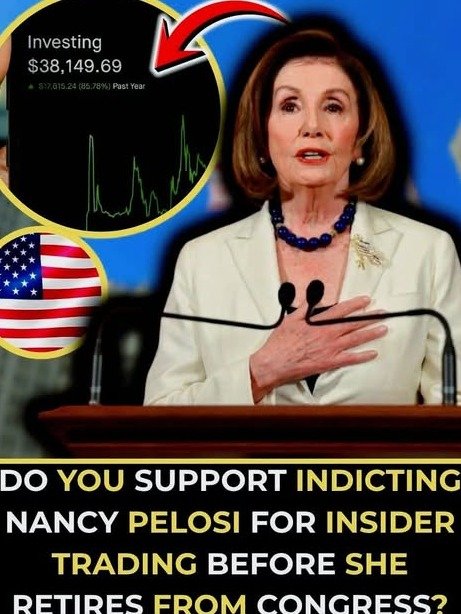
Imagine a world where the very people crafting our laws could personally profit from their privileged information, making financial decisions that could impact your investments. This isn’t a dystopian fantasy; it’s the heart of a rapidly intensifying national debate surrounding stock trading by members of Congress, including high-profile figures like Nancy Pelosi. The concerns are mounting, fueling widespread calls for greater ethics, transparency, and accountability in Washington.
For years, the financial activities of our elected officials have been a quiet undercurrent of public suspicion. Now, these concerns have erupted into a full-blown national conversation, challenging the very foundation of public trust. The question isn’t just about individual wealth; it’s about the integrity of our democratic institutions and the fairness of our economic system.
The Alarming Rise of Public Distrust
The core of the issue lies in the perception—and sometimes the reality—of an unfair advantage. When lawmakers, privy to classified briefings, upcoming legislation, or confidential economic data, trade stocks, it raises immediate red flags. This isn’t just about a ‘bad apple’; it’s about a systemic vulnerability that allows for potential conflicts of interest to flourish, eroding the public’s faith in their representatives.
Many Americans feel that while they struggle to keep pace with the market, those in power might be playing by a different set of rules. This sentiment is particularly potent when the economy faces challenges, and ordinary citizens are making tough financial choices, while congressional portfolios seem to outperform the market consistently. The idea that public service could be a pathway to personal enrichment, rather than a commitment to constituents, is deeply unsettling.
A Glimpse into the Controversy: High-Profile Cases
The debate gained significant traction partly due to the trading activities associated with high-profile figures. While Nancy Pelosi herself doesn’t directly trade individual stocks, her husband, Paul Pelosi, has been a prolific investor, with his trades often drawing intense scrutiny. His significant and often timely investments in tech giants and other sectors have led many to question whether access to insider information, even indirectly, played a role.
These instances, regardless of legality, fuel public cynicism. They create an image of a political elite disconnected from the everyday financial realities of their constituents, seemingly immune to the ethical quandaries that would plague a private citizen in a similar position. The sheer volume and success of some of these trades, especially around critical legislative moments, only amplify the calls for reform.
“The perception of impropriety is just as damaging as actual impropriety when it comes to public trust. Our leaders must be above reproach, not just legally, but ethically.” – A political ethics expert
The STOCK Act: A Step, But Not Enough?
In response to earlier controversies, Congress passed the Stop Trading on Congressional Knowledge (STOCK) Act in 2012. This bipartisan legislation aimed to combat insider trading by members of Congress and their staff, explicitly affirming that they are not exempt from insider trading laws. Crucially, it also mandated timely disclosure of stock transactions exceeding $1,000 within 45 days of the trade.
While the STOCK Act was a significant step towards transparency, many argue it hasn’t gone far enough. The disclosure requirements, while helpful, don’t prevent potential conflicts of interest; they merely reveal them after the fact. Critics point out that the penalties for non-compliance are often minor, and enforcement can be inconsistent, leading to a perception that the law lacks real teeth to deter unethical behavior.
The Arguments FOR Congressional Stock Trading
Proponents of allowing members of Congress to trade stocks often raise several points. They argue that elected officials are private citizens with the right to manage their personal finances, just like anyone else. Restricting their investment choices could be seen as an infringement on their personal liberties and could potentially deter qualified individuals from seeking public office.
Furthermore, some argue that creating complex blind trusts or divesting all individual stocks could be an administrative burden, especially for those with diverse portfolios. They maintain that existing laws, like the STOCK Act and broader insider trading prohibitions, are sufficient to prevent abuse, and that the focus should be on stricter enforcement rather than blanket bans.
The Overwhelming Case AGAINST It
Despite these arguments, the case against congressional stock trading is compelling and growing stronger. The fundamental principle of public service demands that personal gain never overshadow the public good. The potential for even the appearance of a conflict of interest can severely undermine public confidence in government.
Key arguments against allowing members of Congress to trade individual stocks include:
- Information Asymmetry: Lawmakers often possess non-public information about legislative actions, government contracts, and economic trends that could directly impact stock prices.
- Conflict of Interest: A member of Congress might be incentivized to vote on legislation or allocate resources in a way that benefits their personal financial holdings, rather than their constituents.
- Erosion of Public Trust: The perception that politicians are using their positions for personal enrichment fosters cynicism and distrust in the democratic process.
- Uneven Playing Field: It creates an unfair advantage for those in power, suggesting a rigged system where the rules are different for the political elite.
- Distraction from Public Duty: Managing a complex stock portfolio can divert attention and resources that should be dedicated to legislative responsibilities.
Proposed Solutions: From Disclosure to Outright Ban
The burgeoning debate has led to a flurry of proposed reforms, ranging from enhanced transparency to outright prohibitions. The most popular and stringent proposal is a complete ban on individual stock trading for members of Congress and their immediate families, often advocating for investments to be held in diversified mutual funds or government-approved blind trusts.
Other suggestions include:
- Mandatory Blind Trusts: Requiring all assets to be managed by an independent third party without the knowledge or input of the officeholder.
- Expanded Disclosure: Shortening the disclosure window, increasing penalties for late filings, and making the data more accessible to the public.
- Focus on Index Funds: Allowing investments only in broad-based index funds that track the overall market, removing the ability to profit from specific company-related information.
- Stricter Enforcement: Empowering ethics committees with more resources and clearer mandates to investigate and penalize violations.
Public Sentiment: A Clear Mandate for Change
Public opinion on this issue is remarkably unified. Polls consistently show overwhelming bipartisan support for banning individual stock trading by members of Congress. A significant majority of Americans believe that lawmakers should not be allowed to buy or sell individual stocks while in office, viewing it as a fundamental ethical breach.
This strong public mandate underscores the urgency of the issue. Citizens across the political spectrum are demanding accountability and a level playing field, sending a clear message that integrity in public service is non-negotiable. The pressure on Congress to act is immense, reflecting a deep-seated desire for ethical governance.
The Stakes Are High: Protecting Democracy and Market Integrity
The debate over congressional stock trading is more than just a political skirmish; it touches upon the very health of our democracy and the fairness of our economic markets. When the public believes that their elected representatives are prioritizing personal profit over their constituents’ well-being, it can lead to widespread disillusionment and disengagement from the political process.
Moreover, the potential for market manipulation or the exploitation of non-public information undermines the principle of a free and fair market. Maintaining public trust in both our political system and our financial markets is paramount for a stable and prosperous society.
What’s Next? The Path to Reform
Several legislative proposals are currently circulating in Congress, attempting to address this issue. However, passing comprehensive reform faces significant hurdles, often due to resistance from within the very institution it seeks to regulate. The path forward will likely require sustained public pressure, advocacy from ethics watchdogs, and a genuine commitment from lawmakers to prioritize integrity over personal financial gain.
The current state of affairs, where the potential for conflicts of interest looms large, is unsustainable. For a healthy democracy, the perception of fairness and the reality of ethical conduct must align. The conversation around congressional stock trading is not just about rules; it’s about restoring faith in the people we elect to serve us.
Ultimately, the discussion around congressional stock trading forces us to confront fundamental questions about ethics, accountability, and the nature of public service in a representative democracy. The growing national debate is a clear signal: the American people are demanding change, and they expect their elected officials to lead by example, putting the public’s interest unequivocally before their own.
About the Author




