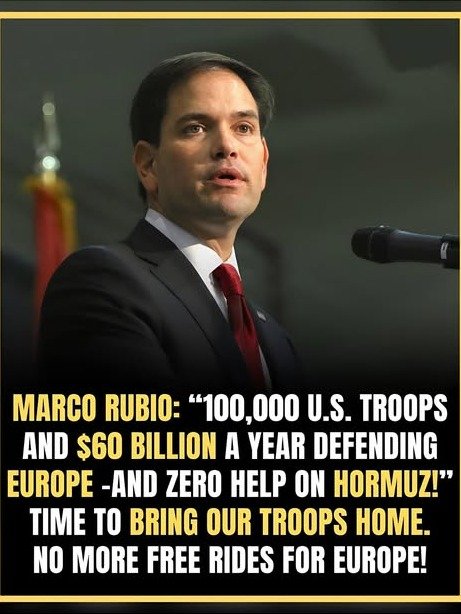
Imagine a hidden bill, arriving every year, totaling billions of taxpayer dollars dedicated to maintaining a massive military footprint across the globe. This isn’t a hypothetical scenario; it’s the reality of U.S. defense spending and troop deployments, a reality that has caught the attention of prominent voices like Senator Marco Rubio.
Senator Rubio recently highlighted significant concerns regarding America’s defense expenditures and the sheer scale of its troop deployments, particularly in Europe. With estimates suggesting that the U.S. stations anywhere from 80,000 to 100,000 troops on the European continent, the financial and strategic implications are immense, sparking a crucial national conversation.
The Staggering Cost of Global Leadership
The United States shoulders a defense budget that dwarfs that of any other nation, a testament to its role as a global superpower. However, this immense spending isn’t just for domestic defense; a substantial portion is allocated to maintaining a robust international presence, including military bases and personnel stationed far from American shores.
This global footprint comes with an astronomical price tag. Beyond the direct costs of personnel salaries, equipment maintenance, and operational expenses, there are the indirect costs of logistics, infrastructure, and the geopolitical complexities that arise from such extensive commitments. Many, including Senator Rubio, are questioning whether the current allocation of these vast resources truly aligns with America’s evolving strategic interests and domestic needs.
A Legacy of Presence: U.S. Troops in Europe
The deployment of tens of thousands of American troops in Europe is a legacy of the Cold War, a deliberate strategy to deter Soviet aggression and assure allies. For decades, this robust presence, primarily through NATO, served as the bedrock of transatlantic security, fostering stability and economic prosperity across the continent.
Today, while the Soviet Union is long gone, the rationale for this substantial presence has shifted but remains hotly debated. From deterring a resurgent Russia to participating in multinational exercises and providing rapid response capabilities, U.S. forces in Europe continue to play a critical role in maintaining regional stability. Yet, the question persists: is the current scale still necessary, or has it become an outdated and overly expensive commitment?
Senator Rubio’s Core Arguments: A Call for Reassessment
Senator Marco Rubio’s concerns stem from a comprehensive look at America’s strategic priorities and the burden-sharing dynamics within alliances. He argues that while alliances are crucial, the U.S. cannot indefinitely bear a disproportionate share of the defense burden, especially when allies possess robust economies and military capabilities of their own.
About the Author




