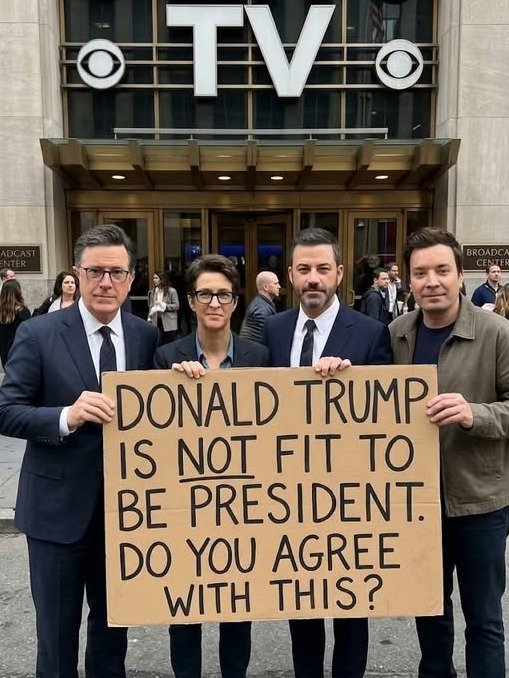
Did you feel it? A seismic shift in the media landscape, a tremor that ran through living rooms across America, as some of the nation’s most influential voices seemed to coalesce into a singular, undeniable force. What some described as a ‘midnight ritual’ unfolded on our screens, a relentless narrative that captivated and divided, forever altering how we viewed a polarizing presidency.
For many, the coverage of Donald Trump by titans like Jimmy Kimmel, Stephen Colbert, Jimmy Fallon, and Rachel Maddow transcended mere commentary. It became a perceived phenomenon, an almost synchronized effort that critics on one side hailed as vital accountability and, on the other, condemned as a targeted, relentless media ‘takedown’. This article delves into the very heart of that controversy, exploring how these powerful figures shaped public perception and sparked a national debate.
The Unprecedented Media Offensive
The Trump era ushered in a new, intensely politicized chapter for late-night television and cable news. Traditionally, late-night hosts might offer lighthearted jabs, but the political climate of the mid-to-late 2010s transformed their segments into potent platforms for political discourse, often deeply critical of the then-President. This shift wasn’t subtle; it was a dramatic departure from past norms, setting the stage for what many saw as an all-out media offensive.
Audiences across the country found themselves either glued to their screens, cheering on every satirical punch, or recoiling in disbelief, feeling that the line between entertainment and partisan activism had been irrevocably blurred. The sheer volume and consistency of the critical coverage from these prominent figures created an echo chamber for some, while others felt increasingly alienated from mainstream media narratives.
Kimmel, Colbert, Fallon: The Late-Night Front
Stephen Colbert, host of The Late Show, quickly became a leading voice of late-night political satire. His biting monologues and sharp critiques of the Trump administration resonated deeply with viewers seeking a cathartic outlet for their frustrations. Colbert’s background in political comedy, honed during his time on The Colbert Report, made him uniquely suited to dissecting the daily political drama with a blend of humor and outrage.
Jimmy Kimmel, of Jimmy Kimmel Live!, also pivoted his show to a more politically charged format, especially after his impassioned monologues on healthcare and gun control went viral. His often emotional appeals and direct condemnations of Trump’s policies and rhetoric marked a significant shift for his previously more apolitical brand. Kimmel’s personal stories often intertwined with his political commentary, creating a powerful, relatable narrative for many viewers.
While Jimmy Fallon of The Tonight Show initially faced criticism for his ‘softer’ approach, particularly after his infamous hair-ruffling incident with Trump, his show eventually joined the chorus of late-night criticism, albeit with a slightly gentler touch. This evolution underscored the pervasive nature of the political climate, where even traditionally less confrontational hosts found it increasingly difficult to remain neutral amidst the escalating political tensions.
Rachel Maddow: The Cable News Catalyst
On the cable news front, Rachel Maddow of MSNBC’s The Rachel Maddow Show emerged as a formidable analytical force. Her deep dives into complex political narratives, often connecting seemingly disparate events, provided a detailed, critical perspective on the Trump administration. Maddow’s meticulous, evidence-based approach, combined with her compelling storytelling, positioned her as a central figure for viewers seeking in-depth opposition analysis.
Her segments often focused on investigations, alleged wrongdoings, and the broader implications of political decisions, reinforcing a narrative of a presidency under intense scrutiny. For her audience, Maddow was a trusted guide through what they perceived as unprecedented political turmoil, offering clarity and context to the unfolding events.
“The media’s role isn’t just to report facts, but to interpret them, and during the Trump years, that interpretation became a battleground.” – A media analyst reflecting on the era.
The ‘Midnight Ritual’ Perception: Coordinated or Coincidental?
The term ‘midnight ritual,’ as hyperbolic as it sounds, captures a specific sentiment among some observers: the belief that the critical coverage wasn’t merely coincidental but rather a coordinated, almost ceremonial, effort to undermine a political figure. This perception was fueled by the often-similar talking points, comedic angles, and news narratives that seemed to emerge concurrently across these different platforms.
Was it truly a coordinated ‘ritual’? Or was it a natural convergence of media figures reacting to the same daily news cycle, reflecting similar public sentiments, and exercising their editorial freedom? Critics argued the former, pointing to the consistency of the negative framing as evidence of a deliberate campaign. Supporters, however, maintained that it was simply the media doing its job: holding power accountable, albeit with varying degrees of satire and seriousness.
The ‘Execution’ of Image: A Battle for Public Opinion
The idea of an ‘execution ritual’ speaks to the perceived intensity and goal of this media barrage. From a certain viewpoint, the relentless criticism felt like a systematic attempt to ‘execute’ or destroy Trump’s public image and political viability. Every gaffe, every controversial statement, every policy decision became fodder for sharp commentary and scathing satire.
This wasn’t just about reporting; it was about shaping perception, influencing public discourse, and, for many, delivering a verdict on the administration’s actions. The sheer volume of negative portrayal, particularly from figures with such broad reach, undoubtedly played a significant role in solidifying opinions and deepening political divides across the nation.
- Impact on Public Discourse: The constant stream of commentary dominated conversations, both online and offline.
- Polarization: It galvanized opposition while simultaneously entrenching support among Trump’s base, who felt their leader was unfairly targeted.
- Media Trust: It further eroded trust in mainstream media for those who felt the coverage was biased or excessive.
The ‘Radioactive Bloodbath’: An Explosive Impact
The phrase ‘exploded like a radioactive bloodbath’ vividly captures the widespread, intense, and often destructive impact of this media phenomenon. The coverage wasn’t just watched; it was debated, amplified, and fiercely defended or attacked across social media and traditional news outlets. It created a highly charged atmosphere, where every segment and every tweet felt like a high-stakes battle.
The ‘radioactive’ aspect suggests a pervasive, long-lasting effect, contaminating the political landscape with deep divisions and an enduring sense of animosity. The ‘bloodbath’ metaphor underscores the perceived brutality and damage inflicted, not just on the political figure in question, but on the fabric of national unity and civil discourse.
This explosive reaction manifested in record viewership for some shows, viral clips dominating social media, and a constant churn of articles and think pieces analyzing the media’s role. It was a period of unprecedented media engagement, where the lines between news, entertainment, and political activism blurred into a potent, often volatile, mix.
Satire, Scrutiny, and the Shifting Sands of Media
What does this period tell us about the role of media in a highly polarized society? It highlights the immense power of influential personalities to shape narratives and mobilize public opinion. It also underscores the ongoing debate about the boundaries of satire, the responsibilities of news organizations, and the expectations audiences have for their media consumption.
For some, the aggressive critique was a necessary defense of democratic norms and a vital check on power. For others, it represented a dangerous abandonment of journalistic objectivity and a descent into partisan warfare. Regardless of one’s perspective, the impact was undeniable and far-reaching, leaving an indelible mark on America’s political and media landscape.
The Lingering Legacy
The legacy of this intense media scrutiny continues to reverberate. It has reshaped how political figures are covered, how late-night comedy is perceived, and how audiences engage with information. The ‘midnight ritual’ – whether a coordinated effort or a natural confluence of events – undeniably played a pivotal role in the national conversation surrounding Donald Trump.
Ultimately, the saga involving Kimmel, Colbert, Fallon, and Maddow’s coverage of Trump serves as a powerful case study in the intersection of media, politics, and public perception. It demonstrated the profound influence these figures wield and the explosive reactions their commentary can ignite, forever changing the expectations and realities of political media in America.
The ‘radioactive bloodbath’ wasn’t a literal event, but a powerful metaphor for a period of intense media scrutiny that left an undeniable mark on the nation’s psyche. It forced us to confront uncomfortable questions about media bias, the role of entertainment in politics, and the very nature of truth in a fragmented information ecosystem.
As we move forward, the lessons learned from this era remain crucial. Understanding the dynamics of media influence, the power of narrative, and the diverse ways audiences interpret information is more important than ever in navigating our complex world. The ‘midnight ritual’ may be over, but its echoes continue to shape our political discourse.
About the Author




