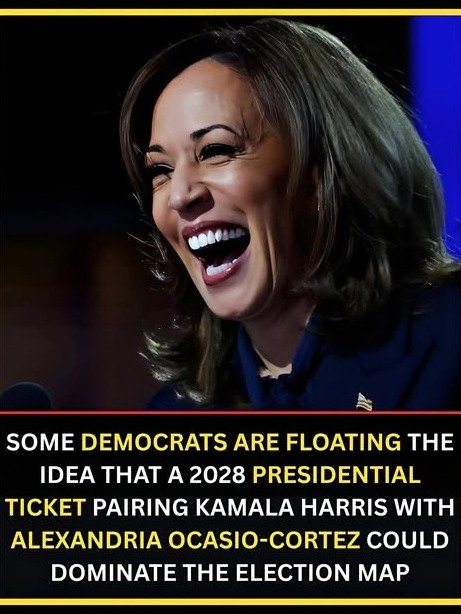
Imagine a political earthquake shaking the foundations of American politics. What if two of the Democratic Party’s most prominent and dynamic figures, Vice President Kamala Harris and Congresswoman Alexandria Ocasio-Cortez, joined forces for a presidential run in 2028? This once-whispered possibility is now sparking fervent discussions across social media, political forums, and dinner tables, igniting both fervent hope and intense debate about the future of the nation.
The sheer idea of a Harris-AOC ticket conjures a potent image: a blend of seasoned executive experience with fiery progressive grassroots energy. This hypothetical alliance represents a fascinating intersection of the Democratic Party’s establishment and its burgeoning progressive wing, promising a campaign that would undoubtedly be unlike any other in recent memory. But what exactly fuels this growing curiosity, and what could such a partnership truly mean for the political landscape?
The Genesis of a Speculative Super-Ticket
The murmurs began subtly, perhaps as a hopeful thought among progressive activists, or a strategic consideration among political strategists looking ahead to a post-Biden era. As the 2028 election cycle draws closer, the Democratic Party will face critical questions about its leadership and direction. The idea of pairing Kamala Harris, with her extensive experience in the executive branch, with Alexandria Ocasio-Cortez, a powerful voice for a new generation of progressives, offers a compelling, albeit complex, answer.
This speculation isn’t just wishful thinking; it’s rooted in a desire to bridge the perceived ideological divides within the Democratic Party. Many believe that to win in 2028, the party will need a ticket that can energize its core base while also appealing to a broader electorate. The Harris-AOC combination, in theory, aims to do exactly that, offering a robust platform that spans the party’s diverse ideological spectrum.
Kamala Harris: The Experienced Standard-Bearer
Kamala Harris brings to the table a wealth of experience that is undeniable. As the current Vice President, she has spent years navigating the highest levels of government, engaging in complex domestic and international policy discussions. Her background as a prosecutor, Attorney General of California, and U.S. Senator provides a solid foundation of legal and legislative expertise.
Her supporters emphasize her executive experience and her ability to appeal to a more moderate segment of the Democratic Party and independent voters. She has a national profile, extensive fundraising networks, and a deep understanding of the intricacies of a presidential campaign. For many, she represents a continuation of the party’s pragmatic approach to governance, coupled with a historic role as the first female Vice President.
“Kamala Harris represents the steady hand of experience that many voters crave in a leader. Her time in the White House has given her invaluable insight into the challenges facing our nation, making her a formidable potential nominee,” commented one political analyst.
Alexandria Ocasio-Cortez: The Progressive Powerhouse
On the other side of this speculative coin is Alexandria Ocasio-Cortez, a figure who has redefined what it means to be a progressive leader in the 21st century. Since her groundbreaking election in 2018, AOC has become a national icon, known for her passionate advocacy, her mastery of social media, and her unwavering commitment to progressive policies.
She commands a massive, enthusiastic following, particularly among young voters and diverse communities. Her policy positions, including the Green New Deal, Medicare for All, and addressing income inequality, resonate deeply with the progressive wing of the party. AOC’s ability to mobilize grassroots support and articulate a bold vision for the future is unparalleled, making her a potent force in any political equation.
The Synergy: Bridging the Democratic Divide?
The core appeal of a Harris-AOC ticket lies in its potential for synergy. Proponents argue that Harris’s more centrist appeal and governmental experience could balance AOC’s progressive fire and grassroots energy. This pairing could, in theory, unify the Democratic Party, bringing together its moderate and progressive factions under one banner.
- Experience Meets Vision: Harris’s practical governing experience combined with AOC’s forward-thinking policy vision could present a comprehensive platform.
- Broad Coalition: The ticket could appeal to older, more traditional Democratic voters through Harris, while galvanizing younger, more progressive voters through AOC.
- Historic Representation: An all-female ticket, especially one featuring two women of color, would be a monumental step, inspiring diverse communities across the country.
Such a ticket would aim to maximize voter turnout by offering something for every segment of the Democratic base, from suburban moderates to urban progressives. The hope is that the combined power of their respective appeals would create an unstoppable electoral force.
Why Supporters Are Hyped: Energizing the Base
The excitement surrounding a potential Harris-AOC ticket is palpable among many Democrats. For those who feel the party has sometimes struggled to articulate a bold, inspiring vision, this pairing offers a renewed sense of purpose. Supporters believe it could:
- Ignite Youth Turnout: AOC’s immense popularity with young voters could drive unprecedented youth engagement.
- Mobilize Diverse Communities: Both women represent diverse backgrounds, which could inspire higher turnout among minority groups.
- Offer a Clear Contrast: The ticket would present a stark contrast to potential Republican opponents, clearly delineating the future of the Democratic Party.
- Inspire Hope: For many, it would represent a ticket that truly reflects the changing demographics and progressive aspirations of the United States.
The idea of an all-female ticket, particularly one composed of two women of color, is also a powerful draw. It symbolizes a significant step forward in American politics, reflecting a more inclusive vision of leadership. This historic aspect alone could generate considerable enthusiasm and media attention.
Potential Hurdles: Ideological Gaps and Electability Concerns
While the prospect of a Harris-AOC ticket excites many, it also raises significant questions and concerns. The most prominent challenge lies in their differing ideological stances. Harris, while progressive on many issues, is generally seen as more centrist than Ocasio-Cortez, who is a vocal proponent of democratic socialism and transformative policy changes.
Critics within the Democratic Party worry that this ideological divide could lead to internal tensions or, worse, alienate crucial swing voters in battleground states. Would a ticket that leans heavily progressive be able to win over the independent and moderate voters necessary for a general election victory? This is a question that weighs heavily on strategists’ minds.
“While the energy of a Harris-AOC ticket is undeniable, the question of ‘electability’ in a national election remains. Can they successfully bridge their ideological differences to present a unified message that resonates with a broad enough electorate to win the White House?” pondered a political pundit on a news program.
Furthermore, Republicans would undoubtedly seize upon any perceived inconsistencies or radical policy positions, attempting to paint the ticket as too extreme for mainstream America. The challenge for a Harris-AOC campaign would be to unify their message and present a cohesive vision that appeals to both their progressive base and undecided voters.
The Republican Playbook: Anticipated Attacks
No potential Democratic ticket would escape intense scrutiny and opposition, and a Harris-AOC pairing would be a prime target for Republican attacks. Opponents would likely focus on several key areas:
- “Too Far Left”: Republicans would relentlessly label the ticket as socialist or too extreme, highlighting AOC’s progressive policies and attempting to tie Harris to them.
- Policy Costs: The ambitious policy proposals championed by AOC, such as the Green New Deal and Medicare for All, would be attacked on economic grounds, with claims of unsustainable spending and tax hikes.
- Divisiveness: Opponents might try to exploit any perceived ideological differences between Harris and Ocasio-Cortez, portraying the ticket as internally fragmented or lacking a clear direction.
- Experience vs. Radicalism: They would likely try to frame Harris as a moderate who has been co-opted by the radical left, or AOC as too inexperienced for national leadership.
Navigating these attacks would require a highly disciplined and unified campaign message, emphasizing common ground and practical solutions over ideological purity. The ability of both women to articulate a shared vision for the country would be paramount.
Beyond the Hype: A Historic Ticket?
Regardless of the political challenges, the mere discussion of a Harris-AOC ticket underscores a significant shift in American politics. It highlights the increasing demand for diverse leadership and a willingness to consider unconventional pairings that reflect the evolving demographics and values of the nation.
An all-female ticket, with one woman of color as President and another as Vice President, would be a truly historic moment. It would send a powerful message about representation and opportunity, potentially inspiring millions and reshaping perceptions of leadership for generations to come. This aspect alone gives the speculative ticket a profound weight and resonance.
The Road Ahead: Watching the Political Chessboard
As 2028 approaches, the political chessboard will undoubtedly see many pieces moved and strategies debated. While a Harris-AOC ticket remains firmly in the realm of speculation, the growing curiosity surrounding it is a clear indicator of the Democratic Party’s internal dynamics and the aspirations of its diverse electorate.
Whether this dream team ever materializes or not, the conversation itself is illuminating. It reveals a hunger for bold leadership, a desire for unity across ideological lines, and an enduring belief in the transformative power of American democracy. The future of the Democratic Party, and indeed the nation, may very well hinge on how these powerful figures, and the ideas they represent, ultimately align.
About the Author




