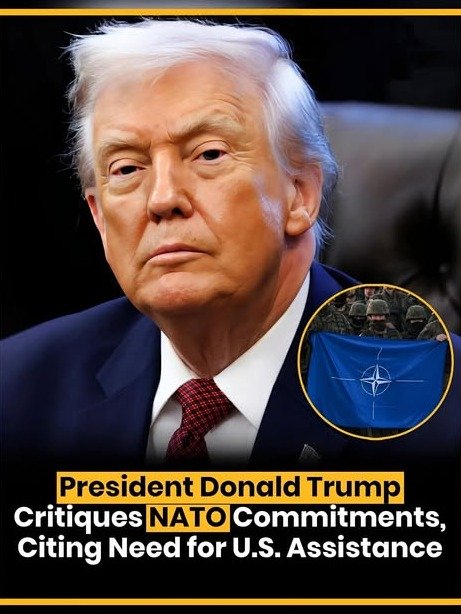
Imagine a world where the bedrock of global security, an alliance forged in the crucible of post-war uncertainty, faces its most profound existential challenge from within. This isn’t a hypothetical scenario; it’s the very real discussion that has gripped the North Atlantic Treaty Organization for years, largely fueled by the persistent demands of former U.S. President Donald Trump.
His consistent emphasis on NATO allies increasing their financial contributions has ignited a fierce debate, spotlighting deep-seated issues of defense spending and shared responsibility that continue to reverberate across the transatlantic alliance. The implications of these discussions are far-reaching, touching upon the very essence of collective defense and the future of international security.
The Unyielding Call for Fairer Contributions
Donald Trump’s message to NATO allies during his presidency was unequivocal: it was time for them to shoulder a greater share of the collective defense burden. His rhetoric, often sharp and direct, challenged the long-standing status quo where the United States historically contributed a disproportionately large amount to the alliance’s military capabilities and operational costs.
He frequently characterized many allies as ‘free riders,’ arguing that they were benefiting from American protection without adequately investing in their own defenses. This perspective, while controversial, forced a critical re-evaluation within NATO member states about their commitments and the sustainability of the alliance’s current funding model.
Understanding NATO’s 2% GDP Target
At the heart of Trump’s demands lies a specific, long-standing NATO guideline: that member states should spend at least 2% of their Gross Domestic Product (GDP) on defense. This target isn’t new; it was formally agreed upon by all allies at the 2014 Wales Summit, following Russia’s annexation of Crimea and growing concerns about European security.
The agreement was a commitment to reverse years of declining defense budgets across Europe after the Cold War. However, by the time Trump took office, many nations were still far from meeting this benchmark, leading to significant frustration from Washington.
“The United States is paying far too much for NATO, protecting countries that are, in my opinion, not paying their fair share.” – Donald Trump
This commitment is not merely about raw numbers; it reflects a nation’s dedication to maintaining robust military capabilities, contributing to collective security, and ensuring the readiness of the alliance to respond to various threats. Meeting the 2% target signifies a tangible investment in shared defense.
The Shifting Sands of Transatlantic Security
The debate over defense spending isn’t just about money; it’s about the evolving geopolitical landscape and the very purpose of NATO in the 21st century. As new threats emerge, from cyber warfare to resurgent state actors, the need for a strong, unified defense posture becomes even more critical.
Trump’s pressure underscored a fundamental question: could the alliance effectively deter aggression if a significant portion of its members were not adequately investing in their own military capabilities? This concern was particularly salient given Russia’s increasingly assertive posture on Europe’s eastern flank.
Allies Under Pressure: A Mixed Response
The response from NATO allies to Trump’s persistent calls has been varied. While some nations, particularly those on the front lines of potential Russian aggression like Poland and the Baltic states, had already begun increasing their defense spending significantly, others found it more challenging to meet the 2% goal.
Economic constraints, domestic political priorities, and differing perceptions of immediate threats all played a role in the pace of increased investment. However, the pressure from the U.S. did undeniably spur many European nations to accelerate their efforts and commit more resources to defense.
- Increased Spending: Many European allies have indeed boosted their defense budgets since 2014, with several now meeting or exceeding the 2% target.
- Capability Development: Funds have been directed towards modernizing equipment, enhancing readiness, and improving interoperability with other NATO forces.
- Political Will: The discussions forced a greater political will to prioritize defense spending, even amidst other domestic demands.
The Core Principle: Shared Responsibility and Article 5
At its heart, NATO is founded on the principle of collective defense, enshrined in Article 5 of its founding treaty: an attack on one member is considered an attack on all. This commitment is the ultimate security guarantee for all allies, particularly smaller nations.
However, the efficacy of Article 5 relies on the credible ability of all members to contribute to collective defense. If some nations are perceived as not pulling their weight, it can erode trust and potentially weaken the alliance’s overall deterrent posture. Trump’s arguments, while abrasive, aimed to reinforce this fundamental link between individual contributions and collective security.
Beyond the 2%: Modernizing NATO for New Threats
The discussion around defense spending extends beyond simply meeting a numerical target. It also encompasses how those funds are spent and whether they are contributing to the most relevant capabilities for modern threats. NATO faces a complex array of challenges:
- Hybrid Warfare: The blend of conventional, unconventional, and cyber tactics used to destabilize adversaries.
- Cyber Attacks: State-sponsored and non-state actors targeting critical infrastructure and democratic processes.
- Disinformation Campaigns: Efforts to sow discord and undermine trust within societies.
- Technological Race: The need to invest in cutting-edge technologies like AI, quantum computing, and advanced surveillance.
Therefore, increasing contributions is only one piece of the puzzle; smart investment in modernizing military forces and adapting to evolving threats is equally crucial for NATO’s long-term relevance and effectiveness.
The European Perspective: Strategic Autonomy and Self-Reliance
Trump’s consistent criticism also inadvertently fueled discussions within Europe about greater strategic autonomy. The idea of Europe taking more responsibility for its own security, distinct from but complementary to NATO, gained traction.
While not a move away from NATO, this push for greater European defense capabilities and coordination reflects a desire to be more self-reliant and less vulnerable to shifts in U.S. foreign policy. It’s an acknowledgement that a strong Europe makes for a stronger NATO.
The Enduring Legacy of Trump’s Stance
Even after his presidency, Donald Trump’s emphasis on burden-sharing continues to cast a long shadow over NATO. The expectation that allies will meet their 2% commitments has become more deeply ingrained, and the pressure to do so remains a significant factor in defense planning across Europe.
Should he return to office, many anticipate these demands would intensify, potentially leading to further strain on transatlantic relations if progress is not deemed sufficient. This ongoing dynamic underscores the critical importance of these discussions for the alliance’s cohesion and operational readiness.
Looking Ahead: The Future of Collective Defense
The debate initiated by Donald Trump, while contentious, has undeniably served as a catalyst for change within NATO. Allies have been compelled to confront difficult questions about their commitments, their capabilities, and their shared responsibility for global security.
The ongoing discussions about defense spending and shared responsibility are not merely bureaucratic exercises. They are fundamental to ensuring that NATO remains a robust, credible, and effective alliance capable of deterring aggression and defending its members in an increasingly unpredictable world. The future of transatlantic security hinges on these vital contributions and the unwavering commitment of all its members.
About the Author




