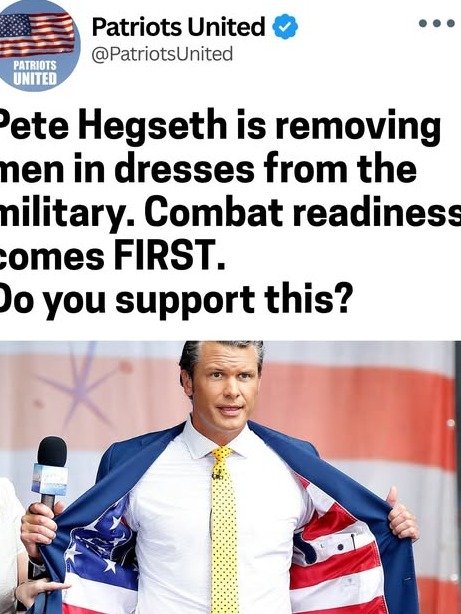
Imagine a military where every policy, every uniform, every individual choice is scrutinized through one lens: ultimate combat effectiveness. Pete Hegseth, a prominent voice in conservative media and a veteran himself, has reportedly ignited a fierce debate by advocating for significant changes to military personnel standards, particularly concerning gender identity and expression within the ranks. His core argument? That prioritizing ‘combat readiness’ must always come first, even if it means reshaping who serves and how.
This isn’t merely a political talking point; it’s a profound question about the very fabric of our armed forces and who we believe is best suited to defend the nation. The discussion around military service, gender identity, and the paramount importance of combat readiness is complex, touching upon issues of national security, individual rights, and the evolving nature of society itself. It forces us to confront deeply held beliefs and examine the practical realities of military life.
The Proponent: Pete Hegseth and His Stance
Pete Hegseth, a former Army National Guard officer who served in Afghanistan and Iraq, has become a well-known figure on national television. His background as a combat veteran often lends significant weight to his opinions on military matters. Hegseth has consistently voiced strong conservative viewpoints, particularly regarding what he perceives as a decline in traditional military values and an overemphasis on social experimentation.
His recent statements and advocacy reportedly center on the belief that policies allowing transgender individuals to serve openly, or those that accommodate diverse gender expressions, detract from the military’s primary mission. He argues that such policies introduce complexities—whether perceived as medical, social, or logistical—that ultimately compromise the combat readiness of units and the overall fighting force. This perspective is rooted in a desire to return to what he sees as more traditional and unambiguous standards for military service.
A Shifting Landscape: Gender Identity in the Military
The United States military has a long history of grappling with questions of inclusion, often reflecting broader societal shifts. For decades, policies regarding sexual orientation and gender identity were restrictive, culminating in the ‘Don’t Ask, Don’t Tell’ (DADT) policy for gay and lesbian service members, which was repealed in 2010. The debate over gender identity is the latest chapter in this ongoing evolution.
Under the Obama administration, the Department of Defense announced in 2016 that transgender individuals would be allowed to serve openly, with access to medical care and the ability to transition while in service. This policy aimed to remove barriers to service for qualified individuals and promote an inclusive force. It was seen by proponents as a step towards recognizing the capabilities of all Americans.
However, this policy was reversed during the Trump administration. In 2017, President Trump announced a ban on transgender individuals serving in the military, which was later refined to restrict service primarily to individuals serving in their birth gender, with limited exceptions. This shift sparked widespread controversy, with advocates for transgender rights arguing it was discriminatory and harmful to military cohesion, while supporters echoed concerns about readiness and costs.
The policy pendulum swung back again with the Biden administration. In 2021, President Biden signed an executive order reversing the Trump-era ban, once again allowing transgender individuals to serve openly in the military and access necessary medical care. This re-established the Obama-era policy, emphasizing that diversity and inclusion strengthen the military and that all qualified Americans should be able to serve.
Defining Combat Readiness: More Than Just Physicality
At the heart of Pete Hegseth’s argument, and indeed any discussion about military personnel policy, is the concept of ‘combat readiness.’ But what exactly does this term encompass? It’s far more nuanced than simply physical strength or marksmanship. Combat readiness is a multifaceted state, crucial for a military’s ability to effectively deter aggression, fight, and win wars.
“Combat readiness refers to the ability of military forces to execute their assigned missions effectively and immediately. It encompasses physical fitness, mental resilience, specialized training, equipment functionality, unit cohesion, and the deployability of every service member.”
Critics of policies that allow transgender service often raise concerns in several key areas:
- Medical Costs: The financial implications of gender-affirming care, including hormones and surgeries, are frequently cited as a potential burden on military healthcare budgets.
- Deployability: Concerns are sometimes raised about the deployability of service members undergoing medical transitions, suggesting potential disruptions to unit strength and operational timelines.
- Unit Cohesion: Some argue that accommodating diverse gender identities could create social friction or discomfort within units, potentially impacting morale and team effectiveness.
- Physical Standards: Questions are occasionally posed about whether individuals undergoing gender transition can consistently meet the physical standards traditionally associated with their assigned roles, particularly in combat specialties.
These concerns are often countered by proponents of inclusive policies. They argue that the military already manages a wide range of medical conditions and that the costs associated with gender-affirming care are a small fraction of the overall healthcare budget. Furthermore, they point out that many non-transgender service members also face deployability issues due to various medical or personal reasons.
The Counter-Arguments: Capacity, Diversity, and Morale
Advocates for allowing transgender individuals to serve openly stress that a person’s gender identity has no bearing on their ability to perform military duties. They emphasize that the military should focus on individual qualifications, skills, and commitment, rather than non-pertinent characteristics.
The argument for inclusion often highlights several points:
- Talent Pool: Restrictive policies limit the pool of qualified individuals available to serve. Allowing all capable Americans to volunteer strengthens the force by expanding recruitment options.
- Diversity as Strength: A diverse military, reflective of the nation it serves, can foster greater innovation, problem-solving, and adaptability. Different perspectives can enhance strategic thinking and operational effectiveness.
- Individual Morale and Retention: When service members feel respected and valued for who they are, it boosts morale, commitment, and retention rates. Forcing individuals to hide their identity can lead to stress, decreased performance, and ultimately, attrition.
- Medical Reality: Many medical conditions are managed within the military without impacting readiness. Gender-affirming care, when properly managed, can allow individuals to serve effectively and contribute fully.
Moreover, proponents argue that the concept of unit cohesion is strengthened by mutual respect and professionalism, not by enforced conformity to specific gender norms. They believe that well-trained and disciplined units can integrate diverse individuals effectively, focusing on shared mission objectives rather than personal differences.
Historical Echoes: Learning from Past Debates
The debate surrounding gender identity in the military is not entirely new in its essence. Throughout history, the U.S. armed forces have grappled with integrating various groups, often facing initial resistance rooted in concerns about readiness, morale, and tradition. The integration of African Americans, the inclusion of women in combat roles, and the repeal of ‘Don’t Ask, Don’t Tell’ all sparked similar debates about how these changes would impact the military’s effectiveness.
In each instance, initial fears often proved to be overstated. The military adapted, and the inclusion of previously excluded groups ultimately contributed to a stronger, more representative, and more capable fighting force. This historical context provides a valuable lens through which to view the current discussion around transgender service, suggesting that adaptation and inclusivity can lead to unexpected benefits.
The Broader Implications: Beyond the Barracks
The policies governing who serves in the military extend far beyond the immediate concerns of a barracks or a battlefield. They send powerful signals about national values, equality, and opportunity. A military that embraces or rejects certain groups can influence public perception, recruitment efforts, and the overall social fabric of the nation.
Pete Hegseth’s push for a specific vision of military personnel standards reflects a broader cultural and political conversation in America. It highlights the tension between traditional institutions and evolving societal norms. The outcome of this debate will not only shape the future of the U.S. military but also reflect deeply on what kind of nation we aspire to be, and who we believe is truly worthy of the honor of service.
Where Do You Stand? The Ongoing National Debate
The question posed by Pete Hegseth, whether one supports his efforts to prioritize what he terms ‘combat readiness’ by potentially restricting service based on gender identity, is a question that resonates deeply across the nation. It’s a debate with no easy answers, involving deeply held convictions, practical considerations, and the very definition of what it means to be a modern fighting force.
As citizens, we are prompted to weigh the arguments: the emphasis on traditional standards and perceived readiness concerns versus the benefits of inclusivity, diversity, and individual capability. The ultimate decision on who serves and under what conditions will shape the future of our armed forces and, by extension, the security of our nation. It demands careful consideration of all perspectives, ensuring that any policy is built on sound reasoning and a clear understanding of its true impact on both military effectiveness and the principles we uphold as a society.
About the Author




