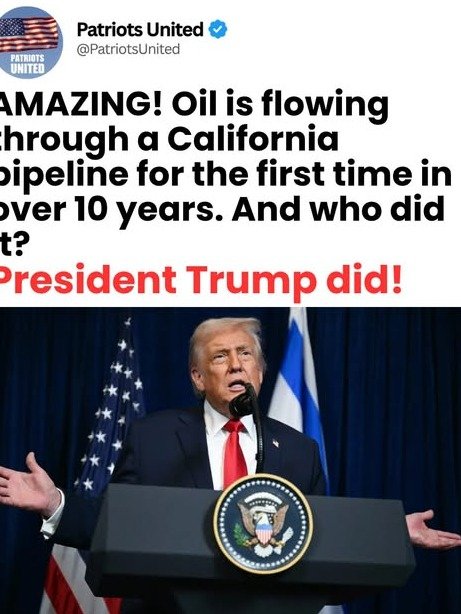
Imagine a vital energy artery, supplying the lifeblood of an entire state, lying dormant for ten long years. Now, picture a single, decisive executive order, cutting through a decade of regulatory silence, to bring it roaring back to life. That’s precisely what happened when former President Donald Trump invoked the Defense Production Act (DPA) to mandate the reopening of California’s Santa Ynez pipeline, a move with profound implications for the Golden State’s energy future.
This wasn’t just a routine administrative decision; it was a dramatic intervention, an “energy emergency move” that sent ripples through environmental circles, political offices, and energy markets alike. The Santa Ynez pipeline, a critical piece of infrastructure in California’s oil transportation network, had been offline since a devastating oil spill in 2015. Its unexpected revival under the DPA signals a significant shift, forcing a re-evaluation of energy independence, environmental protection, and the very definition of a national emergency.
The Decade-Long Silence: Why the Santa Ynez Pipeline Went Dark
To truly grasp the magnitude of Trump’s order, we must first delve into the tumultuous history of the Santa Ynez pipeline system. This extensive network, primarily operated by Plains All American Pipeline, served as a crucial conduit for transporting crude oil from offshore platforms in the Santa Barbara Channel to inland processing facilities. For decades, it played a quiet, yet indispensable, role in supplying a portion of California’s energy needs, moving thousands of barrels of oil daily from offshore production sites.
However, this vital infrastructure was abruptly silenced on May 19, 2015. A catastrophic rupture occurred in Line 901, a segment of the Plains All American Pipeline system located near Refugio State Beach in Santa Barbara County. This infamous event, widely known as the Refugio Oil Spill, unleashed an estimated 142,800 gallons of crude oil onto the pristine coastline and into the Pacific Ocean, causing widespread environmental devastation and triggering an enormous, costly cleanup effort.
The fallout from the Refugio spill was immediate and severe, both environmentally and politically. Regulators swiftly ordered the complete shutdown of the affected pipeline segments, including the Santa Ynez system, pending extensive investigations, repairs, and rigorous safety upgrades. The public outcry was immense, fueled by heartbreaking images of oil-soaked beaches, marine wildlife in distress, and the palpable damage to a beloved natural landscape. This incident solidified public and political opposition to fossil fuel infrastructure in a state already leaning heavily towards ambitious renewable energy goals.
What followed was not a quick resolution, but a protracted legal and regulatory battle that stretched on for nearly a decade. Plains All American Pipeline faced a barrage of criminal charges, civil lawsuits, and immense pressure to not only upgrade its infrastructure but also overhaul its safety protocols and corporate culture. The process of obtaining new permits for repair, testing, and eventual restart proved to be an arduous, bureaucratic saga, mired in complex environmental impact reviews, fierce community opposition, and a challenging web of state and local regulations. The pipeline remained a potent symbol of environmental tragedy and a casualty of California’s rapidly evolving energy ethos.
Unpacking the Defense Production Act: A President’s Emergency Powers
The invocation of the Defense Production Act (DPA) by President Trump to compel the pipeline’s reopening is arguably the most striking and controversial aspect of this entire story. The DPA, originally enacted in 1950 during the Korean War, grants the President broad authority to direct private industry to prioritize and accept contracts for materials and services deemed necessary for national defense. While its name strongly suggests military applications, its scope has significantly expanded over the decades to include national emergencies of various kinds, including economic and health crises.
Historically, the DPA has been utilized in a diverse range of scenarios. It accelerated the production of critical steel during wartime, ensured the rapid supply of medical equipment and ventilators during the COVID-19 pandemic, and even facilitated the production of baby formula during a national shortage. It allows the government to control industrial production, allocate vital resources, and even create incentives for industries to meet specific national needs, often bypassing typical market mechanisms and regulatory hurdles. This makes it an incredibly powerful, albeit often controversial, tool in the executive branch’s arsenal.
In the context of the Santa Ynez pipeline, Trump’s administration framed the pipeline’s prolonged shutdown as a direct contributor to an “energy emergency” that threatened both national security and economic stability. The core argument centered on the idea that California’s increasing reliance on imported oil, coupled with the significant loss of domestic production capacity due to the pipeline’s closure, made the state, and by extension the entire nation, dangerously vulnerable. This interpretation broadened the traditional understanding of “national defense” to encompass critical issues like energy independence, grid resilience, and economic stability.
However, critics, particularly environmental groups and California state officials, vigorously argued that using the DPA for a fossil fuel pipeline in a state actively pursuing aggressive renewable energy goals was a profound overreach of federal power. They contended that it undermined state sovereignty and environmental protections, questioning whether the situation truly constituted an “emergency” warranting such a powerful federal intervention, especially given California’s robust, albeit evolving, energy market and its capacity to adapt.
California’s Energy Conundrum: A State in Transition
California has long positioned itself at the global forefront of the green energy movement, setting some of the most ambitious goals for renewable energy adoption and greenhouse gas emission reductions in the nation. The state aims for 100% clean electricity by 2045 and has implemented increasingly stringent environmental regulations, often leading to direct clashes with federal energy policies, especially those under administrations prioritizing fossil fuel production. This progressive stance, while environmentally laudable, has also presented unique challenges for its complex energy infrastructure.
Despite its aggressive renewable energy ambitions, California remains a colossal consumer of petroleum products, essential for transportation and various industrial processes. While the state produces some oil domestically, particularly from offshore platforms, it still relies heavily on imports from other states and, increasingly, from international sources. The prolonged closure of the Santa Ynez pipeline meant that oil from the affected offshore platforms either had to be transported by other, often less efficient and more carbon-intensive, means like trucks or barges, or, more commonly, production from those platforms simply ceased, reducing overall domestic supply.
Furthermore, California has faced persistent and well-documented challenges with grid stability and the ever-increasing cost of energy. The state has experienced unsettling rolling blackouts during heatwaves and periods of high demand, highlighting the delicate and often precarious balance between transitioning to renewables and maintaining a reliable, affordable power supply for its nearly 40 million residents. Proponents of reopening the pipeline argued that increasing domestic oil flow could alleviate some of these pressures, reducing reliance on volatile international markets and potentially offering some relief to consumers facing some of the highest energy prices in the nation.
The Economic and Environmental Ripple Effects
The decision to restart the Santa Ynez pipeline carries a complex and often contradictory web of economic and environmental implications. Economically, the move could bring several immediate benefits. Reopening the pipeline would allow for the swift resumption of oil production from the offshore platforms that have been idled for years, potentially creating new jobs in the energy sector and injecting economic activity into local economies that rely on the industry. It could also lead to a more efficient and cost-effective transportation of crude oil, which, in theory, might translate to lower fuel prices for consumers, although this benefit is often debated and subject to broader market forces.
“Reactivating this pipeline isn’t just about moving oil; it’s about bolstering immediate energy security, supporting American jobs, and providing tangible economic relief for a state and a nation facing significant energy challenges,” stated a former administration official, emphasizing the perceived urgency and multi-faceted benefits of the order.
However, the environmental costs and risks are equally significant, if not more so, for a state deeply committed to climate action. For environmental advocates and many California residents, the reopening of a major fossil fuel pipeline represents a disheartening step backward in the critical fight against climate change. It signals a continued, and even reinforced, reliance on oil and gas, directly conflicting with California’s aggressive decarbonization goals and its leadership role in promoting clean energy technologies. The devastating memory of the Refugio spill also looms large, raising profound concerns about the inherent risk of future environmental disasters and the potential irreparable impact on the fragile marine ecosystems of the California coast.
- Increased Greenhouse Gas Emissions: Resuming oil production and transport through the pipeline will inevitably lead to increased greenhouse gas emissions, both from the extraction process and the eventual consumption of the fossil fuels. This directly undermines climate targets.
- Elevated Spill Risk: Despite any mandated upgrades, the inherent risk of another pipeline rupture or leak remains a major, unacceptable concern for coastal communities, local industries like fishing and tourism, and environmental groups who remember the devastating consequences of past spills.
- Policy Conflict and State Sovereignty: The federal intervention directly challenges California’s autonomy in shaping its own energy future and could set a dangerous precedent for federal overriding of state-level environmental regulations, potentially eroding local control over critical infrastructure decisions.
The debate surrounding this decision highlights a fundamental and enduring tension: the immediate, often perceived, need for energy reliability and affordability versus the long-term, existential imperative of addressing global climate change. Trump’s DPA order unequivocally prioritized the former, asserting federal authority over state environmental policies in what was ultimately deemed a matter of national interest and emergency.
Political Fallout and Future Implications
Unsurprisingly, the executive order generated immediate and intense political backlash, particularly from California’s state government and a broad coalition of environmental organizations. Governor Gavin Newsom’s administration, a vocal proponent of green energy and a frequent critic of federal fossil fuel policies, would undoubtedly view this as an unwelcome and heavy-handed intrusion into state affairs and a direct challenge to California’s long-standing environmental leadership and its right to self-determination in energy policy.
The legal grounds for using the DPA in this specific manner would almost certainly be scrutinized and challenged in court. While the President possesses broad powers under the Act, its application to force the reopening of a pipeline against established state and local regulatory processes, particularly those designed for environmental protection, would likely face significant legal hurdles. The interpretation of what truly constitutes an “energy emergency” sufficient to override state environmental laws and permit denials could become a major point of contention in federal courts, potentially leading to landmark rulings.
Looking ahead, the implications of this decision could be far-reaching, extending beyond just this single pipeline. It could set a powerful precedent for future federal interventions in state energy policy, particularly in states with robust environmental regulations that are seen as impeding national energy goals by a federal administration. It also underscores the ongoing ideological battle between federal administrations prioritizing fossil fuel production and energy independence, and states actively pushing for rapid and comprehensive transitions to renewable energy sources.
For the energy industry, particularly those involved in fossil fuel extraction and transport, the DPA order might be seen as a crucial lifeline, demonstrating that federal support can, in certain circumstances, override protracted state-level permitting obstacles and environmental opposition. For environmentalists and advocates for state’s rights, it’s a stark and concerning reminder of the vulnerability of local and state protections to federal executive power, especially when framed under broad national security or emergency provisions.
Conclusion: A New Chapter for California’s Energy Battle
The order to bring California’s Santa Ynez pipeline back online under the Defense Production Act is far more than just a logistical directive; it is a powerful and provocative statement. It represents a significant federal assertion of authority over state environmental policy, a determined attempt to bolster domestic energy production, and a redefinition of what constitutes a national energy emergency. After a decade of dormancy, the pipeline’s potential roar back to life symbolizes a renewed and intensified clash between immediate economic imperatives and the long-term, crucial imperative of environmental stewardship.
As California continues its ambitious and challenging journey towards a clean energy future, this federal intervention throws a significant and unexpected curveball into its meticulously laid plans. The long-term consequences – for the delicate balance of the environment, for the state’s intricate economy, and for the fundamental balance of power between federal and state governments – remain to be fully seen and understood. One thing is absolutely certain: the Santa Ynez pipeline, once a symbol of environmental tragedy and then of a decade of inaction, is now undeniably at the heart of a renewed, high-stakes energy debate that will undoubtedly shape California’s destiny for years to come.
About the Author




