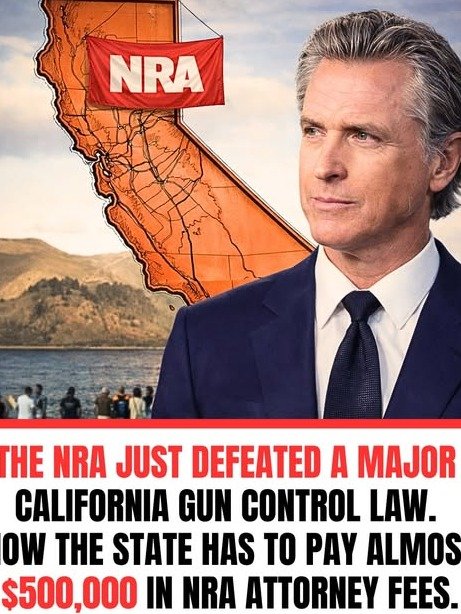
A monumental legal battle has just concluded in California, delivering a resounding victory for Second Amendment advocates and free speech proponents nationwide. The National Rifle Association (NRA), alongside the California Rifle & Pistol Association (CRPA), has successfully challenged and halted the implementation of Assembly Bill (AB) 2571, a controversial state law that sought to severely restrict the advertising and marketing of firearms to minors. This isn’t just a win; it’s a seismic shift in the ongoing debate over gun rights and constitutional freedoms.
For years, California has been at the forefront of enacting stringent gun control measures, often pushing the boundaries of legislative power. AB 2571 was another bold attempt to curb firearm ownership and access, specifically targeting how gun-related products could be advertised. But this time, the state’s reach was deemed to overstep constitutional bounds, marking a significant setback for anti-gun legislation and a powerful affirmation of fundamental rights.
The Battleground: California’s AB 2571
Enacted into law by Governor Gavin Newsom, Assembly Bill 2571 aimed to prohibit firearm industry members from marketing or advertising any firearm-related product in a manner that could be seen as ‘attractive to minors.’ This broad and vaguely defined prohibition extended to everything from product design to promotional materials, effectively attempting to shield anyone under 18 from seeing advertisements for firearms, even those that are legal for adults to own and use.
The intent, according to proponents, was to protect children from gun violence by reducing their exposure to firearm marketing. However, critics argued that the law was an unconstitutional overreach, infringing upon both the First Amendment’s guarantee of free speech and the Second Amendment’s right to keep and bear arms. The law’s broad language created a chilling effect, making it incredibly difficult for manufacturers and retailers to advertise any product without fear of legal repercussions.
NRA and CRPA Lead the Charge
Recognizing the severe implications of AB 2571, the National Rifle Association and its state affiliate, the California Rifle & Pistol Association, swiftly filed a lawsuit challenging the law’s constitutionality. They argued that the legislation was a direct assault on commercial speech rights, preventing law-abiding businesses from communicating with potential customers, including adults who might be interested in firearms for sport, hunting, or self-defense.
The legal team contended that the law’s definition of ‘attractive to minors’ was subjective and overly broad, making compliance nearly impossible. For instance, what if a firearm advertisement featured an adult using a rifle that a minor might also find visually appealing? Would that constitute a violation? The ambiguity created a legal minefield for anyone in the firearm industry.
“This victory is a crucial defense of the First Amendment, ensuring that politically motivated speech restrictions cannot undermine constitutional rights. AB 2571 was a blatant attempt to silence the firearm industry and deny law-abiding citizens access to information about legal products,” stated a representative from the NRA’s legal counsel.
A Double-Edged Constitutional Challenge
The lawsuit primarily focused on two fundamental constitutional challenges:
- First Amendment – Freedom of Speech: The plaintiffs argued that AB 2571 unconstitutionally restricted commercial speech. While commercial speech can be regulated, such regulations must serve a substantial government interest, directly advance that interest, and be narrowly tailored. The NRA contended that AB 2571 failed these tests, being overly broad and not directly addressing the stated goal of reducing gun violence among minors.
- Second Amendment – Right to Keep and Bear Arms: While less direct, the plaintiffs also argued that restricting the advertising of firearms indirectly impinged on the Second Amendment. The ability to inform the public about legal products, including firearms, is an essential component of exercising the right to acquire and use them.
The court’s decision hinged significantly on the First Amendment arguments, finding that the state had not adequately demonstrated how the broad advertising ban would directly and materially advance its interest in reducing gun violence among minors, nor that it was narrowly tailored enough to avoid infringing on protected speech.
The Court’s Stinging Rebuke: Preliminary Injunction Granted
The legal battle culminated in a federal judge granting a preliminary injunction against AB 2571. This means that the law, despite being passed and signed, cannot be enforced while the full legal challenge proceeds. The injunction is a powerful indicator that the court believes the plaintiffs have a strong likelihood of succeeding on the merits of their case.
The judge’s ruling highlighted the significant constitutional concerns raised by AB 2571, particularly regarding its impact on free speech. The court found that the law’s restrictions were too broad and did not meet the rigorous standards required for limiting commercial speech. This decision sends a clear message: even in the pursuit of public safety, legislative bodies cannot disregard fundamental constitutional protections.
Immediate Impact and Broader Implications
For firearm manufacturers, retailers, and enthusiasts in California, the preliminary injunction provides immediate relief. They can now continue to advertise their products without the looming threat of AB 2571 penalties, at least for the foreseeable future. This means gun stores can run promotions, manufacturers can display their wares, and lawful communication about firearms can resume without fear of legal reprisal based on the ‘attractive to minors’ clause.
Beyond California, this ruling has significant implications. It serves as a precedent and a warning to other states considering similar legislative approaches to gun control that target speech. Lawmakers will now have to carefully consider the constitutional ramifications of any proposed advertising restrictions, especially those related to products protected by other constitutional rights.
The Ongoing Constitutional Tug-of-War
This victory underscores the persistent tension between state efforts to regulate firearms and the constitutional rights enshrined in the First and Second Amendments. While states have a legitimate interest in public safety, particularly concerning minors, these interests must be balanced against fundamental freedoms.
The debate often centers on how far the government can go to protect its citizens without infringing upon their rights. This case clearly illustrates that when it comes to speech, especially commercial speech, the bar for government restriction is high, and vague, overly broad laws are unlikely to withstand judicial scrutiny.
What Comes Next? The Road Ahead
While a major win, the preliminary injunction is not the final word. The case will likely continue through the courts, potentially leading to a permanent injunction or further appeals. However, the initial ruling provides strong momentum for gun rights advocates and signals a difficult path ahead for California if it wishes to uphold AB 2571 in its current form.
This outcome is a testament to the tireless efforts of organizations like the NRA and CRPA in defending constitutional liberties. It reinforces the principle that even in a state known for its progressive legislation, constitutional rights, including the freedom of speech and the right to bear arms, remain paramount and are subject to robust legal defense.
The legal battle over gun rights and free speech is far from over, but this decisive victory in California marks a significant chapter, reminding everyone that constitutional protections are not mere suggestions—they are the bedrock of our freedoms, fiercely defended and upheld in the courts of law.
About the Author




