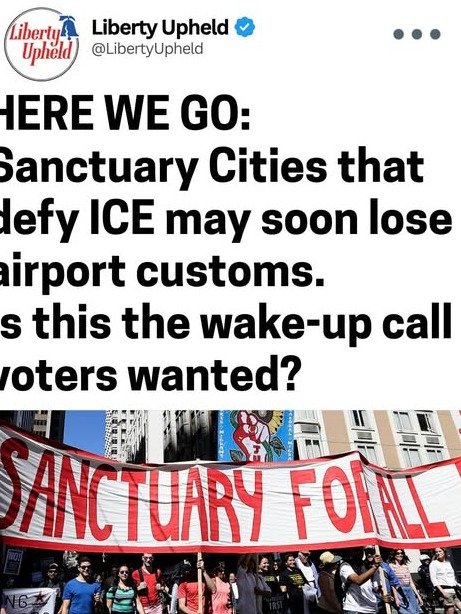
Imagine planning an international trip, only to discover your city’s major airport can no longer process international flights directly. This isn’t a dystopian fantasy; it’s a very real, looming threat for dozens of cities across the United States. A dramatic showdown is unfolding between federal authorities and so-called ‘sanctuary cities,’ with the stakes now escalating to an unprecedented level: the potential loss of vital airport customs operations.
The federal government is signaling a decisive move against municipalities that openly defy federal immigration laws and actively impede the work of Immigration and Customs Enforcement (ICE). This isn’t just about rhetoric anymore; the consequences could be tangible, impacting everything from international travel convenience to local economies. Are you ready for what this could mean for your city and your travel plans?
What Exactly Are ‘Sanctuary Cities’?
The term ‘sanctuary city’ itself can be contentious, but generally refers to jurisdictions that have policies in place designed to limit their cooperation with federal immigration enforcement. These policies vary widely, ranging from refusing to honor ICE detainer requests (which ask local jails to hold individuals for ICE beyond their scheduled release) to prohibiting local law enforcement from inquiring about a person’s immigration status.
The core philosophy behind these policies often centers on fostering trust between immigrant communities and local police, ensuring that residents feel safe reporting crimes without fear of deportation. Proponents argue that local resources should be focused on community safety, not federal immigration enforcement, and that cooperation with ICE can deter immigrants from engaging with local law enforcement, thereby making communities less safe overall.
The Growing Conflict: Federal Enforcement vs. Local Autonomy
For years, a legal and political battle has simmered between federal authorities, who are tasked with enforcing national immigration laws, and local governments asserting their right to set local priorities. Federal agencies like ICE argue that sanctuary policies create dangerous loopholes, allowing individuals who may pose a threat to public safety to avoid federal scrutiny and potential deportation.
ICE officials often state that their ability to carry out their mission is severely hampered when local jails refuse to hold individuals subject to detainers. This non-cooperation, they contend, forces ICE to conduct more arrests in communities, which can be more resource-intensive and potentially disruptive. The federal government views these local policies as a direct obstruction of federal law and a challenge to national sovereignty.
The Unprecedented Threat: Losing Airport Customs Operations
The latest and perhaps most impactful move being considered by the federal government is the withdrawal of Customs and Border Protection (CBP) operations from airports located in sanctuary jurisdictions. This isn’t a minor administrative change; it could fundamentally alter how these cities connect to the rest of the world. Losing CBP staff means an airport would no longer be able to process international flights.
Specifically, this would affect critical services like passport control, visa processing, and baggage screening for travelers arriving from abroad. Without CBP, an airport effectively loses its status as an international port of entry. This would be a massive blow, forcing international flights to divert to other airports, significantly impacting both inbound and outbound travel for the affected regions.
The Ripple Effect: Economic and Travel Fallout
The implications of losing airport customs operations are vast and far-reaching. For a city, its airport is often a vital economic engine, supporting tourism, international business, and trade. Imagine the following consequences:
- Travel Disruption: Travelers would face longer journeys, needing to connect through other international airports. This adds time, cost, and inconvenience, making the affected city less attractive as a destination.
- Economic Strain: Airlines would likely reduce or eliminate direct international routes, impacting airline employees, airport staff, and related businesses like hotels, restaurants, and tour operators. Tourism, a major revenue source for many cities, would suffer significantly.
- Business Impact: International trade and commerce rely heavily on efficient air cargo and business travel. Companies operating in these cities could face increased logistical challenges and costs, potentially deterring foreign investment and hindering economic growth.
The loss of international connectivity isn’t just an inconvenience; it’s a severe blow to a city’s global standing and economic vitality. The impact would be felt by everyone, from local businesses to the everyday traveler planning a vacation abroad.
Why the Federal Government is Pushing Back
From the federal perspective, the pushback against sanctuary cities is a matter of upholding the rule of law and ensuring national security. Proponents of federal action argue that immigration laws are federal by nature, and local jurisdictions do not have the authority to selectively ignore them.
About the Author




