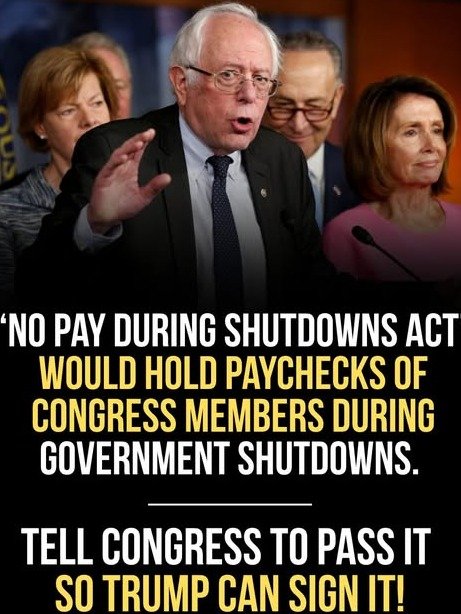
Imagine a scenario where thousands of federal employees are furloughed, their paychecks halted, and their families left scrambling to make ends meet, all because of political gridlock in Washington. Now, imagine that same scenario, but with members of Congress still collecting their full salaries, seemingly unaffected by the chaos they helped create. Sound unfair? Millions of Americans certainly think so, and a groundbreaking piece of legislation is finally gaining traction to address this glaring disparity.
The No Pay During Shutdowns Act has just cleared a crucial committee hurdle, propelling forward a proposal that aims to halt congressional pay whenever federal funding runs out. This isn’t just about optics; it’s about accountability, fairness, and creating a powerful incentive for our elected officials to prevent the costly and disruptive government shutdowns that have plagued the nation for decades. The momentum behind this bill signals a potential paradigm shift in how Washington operates.
The Staggering Cost of Congressional Standoffs: Understanding Government Shutdowns
Government shutdowns are far more than just political theater; they represent a catastrophic failure of governance with real-world consequences. These events occur when Congress fails to pass appropriation bills or continuing resolutions to fund government operations by the start of a new fiscal year. When no funding is authorized, non-essential government services cease, and hundreds of thousands of federal employees are either furloughed or forced to work without pay.
The impact ripples across the entire nation. Essential services, from national parks to certain regulatory functions, can be disrupted. Crucially, the economic toll is immense, with estimates of billions of dollars lost in productivity, delayed tax refunds, and decreased consumer confidence. Each shutdown chips away at the stability of the economy and the trust of the American people in their government’s ability to function.
For federal workers and their families, the personal cost is devastating. Imagine living paycheck to paycheck, only to have your income abruptly cut off through no fault of your own. Mortgages, rent, groceries, and medical bills don’t stop during a shutdown. Many federal employees are forced to take out loans, dip into savings, or even seek temporary employment just to survive, creating immense financial and emotional stress.
The Glaring Disparity: Why Congress Still Gets Paid
One of the most contentious aspects of government shutdowns, and a perennial source of public outrage, is the fact that members of Congress continue to receive their salaries, uninterrupted. While federal workers face financial hardship, lawmakers are insulated from the direct economic consequences of their inability to reach a budget agreement. This perceived double standard has fueled a widespread sense of injustice and cynicism.
The rationale for congressional pay during shutdowns often cites the 27th Amendment of the U.S. Constitution, which states that “No law, varying the compensation for the services of the Senators and Representatives, shall take effect, until an election of Representatives shall have intervened.” This amendment is interpreted by some as preventing Congress from changing its own pay during its current term, even in the event of a shutdown.
However, proponents of the No Pay During Shutdowns Act argue that this interpretation is overly broad or that specific legislation can be crafted to navigate these constitutional waters. The core argument isn’t about *changing* the compensation permanently, but rather *withholding* it during a period when the government itself is not fully functioning due to congressional inaction. The public sentiment is overwhelmingly clear: if the government isn’t working, neither should Congress’s paychecks be guaranteed.
The ‘No Pay During Shutdowns Act’: A Closer Look at Accountability
The No Pay During Shutdowns Act directly confronts this issue by proposing that members of Congress should not receive their salaries during any period when the federal government is shut down due to a lapse in appropriations. This is a direct measure to link their compensation to their performance – specifically, their ability to fulfill the fundamental duty of funding the government.
The bill’s passage through committee marks a significant step, signaling growing bipartisan recognition that the status quo is unsustainable and unacceptable. While the exact text of the bill would detail specifics, the overarching goal is to create a powerful financial incentive for lawmakers to prioritize compromise and prevent future shutdowns, thereby protecting federal workers and the national economy.
Supporters argue that this legislation is not just about punishment; it’s about fostering accountability and demonstrating solidarity with the federal workforce. When lawmakers experience the same financial pinch as the employees they represent, the urgency to find a resolution to budget impasses becomes much more personal and immediate. This shared sacrifice could fundamentally alter the dynamics of budget negotiations.
Historical Context and Public Demand for Change
The idea of docking congressional pay during shutdowns is not new. Similar proposals have surfaced in various forms over the years, often gaining popular support but struggling to navigate the complex legislative process. What makes the current momentum for the No Pay During Shutdowns Act particularly noteworthy is its progress through committee, suggesting a more serious and concerted effort to make it law.
Public opinion polls consistently show overwhelming support for such measures. Americans across the political spectrum are fed up with government shutdowns and view congressional pay during these periods as an egregious example of political privilege. This sustained public pressure has undoubtedly played a role in pushing this legislation forward, making it harder for lawmakers to ignore.
“It’s a matter of basic fairness. If federal employees are forced to go without pay because Congress can’t do its job, then Congress shouldn’t get paid either. It’s time our elected officials shared the burden they create.” – A common sentiment expressed by taxpayers.
The persistent demand for accountability has reached a critical mass. Voters are increasingly looking for concrete actions that demonstrate their representatives are truly serving the public interest, rather than being insulated from the consequences of their own political maneuvering.
The Road Ahead: What it Means for the Legislative Process
Clearing a committee is a significant hurdle, but it is just one step in the long and often arduous legislative journey. The No Pay During Shutdowns Act now faces further votes, potentially in the full chamber (House or Senate, depending on where it originated). It would then need to pass both chambers in identical form before being sent to the President for signature.
The path ahead will likely involve intense debate, as some members may raise concerns about the constitutional implications or the practicalities of implementation. However, the strong public mandate for this type of legislation could provide the necessary political will to overcome these obstacles. The optics of voting against a bill that aims to hold Congress accountable during shutdowns would be challenging for any lawmaker.
- Next Steps: The bill will move to a floor vote in its originating chamber.
- Potential Hurdles: Constitutional challenges, political opposition, and procedural delays.
- Key Drivers: Strong public support and the desire to prevent future costly shutdowns.
The political climate is ripe for such a change. With ongoing concerns about government efficiency and accountability, a bill that directly addresses a long-standing source of public frustration has a higher chance of success than ever before. The passage of this act would send a powerful message about responsible governance.
Impact and Implications: A New Era of Accountability?
Should the No Pay During Shutdowns Act become law, its implications would be far-reaching. Firstly, it would fundamentally alter the incentives during budget negotiations. Knowing that their own salaries are on the line could compel lawmakers to work harder and faster to find common ground, reducing the likelihood and duration of future shutdowns.
Secondly, it would restore a crucial element of public trust. When citizens see their elected officials sharing in the consequences of political inaction, it fosters a sense of fairness and demonstrates that Congress is not above the very rules it creates. This renewed trust is vital for a healthy democracy and for encouraging civic engagement.
Finally, it would provide a much-needed layer of protection for federal employees. While the bill doesn’t directly guarantee their pay during a shutdown, it creates a powerful deterrent against the shutdowns themselves, thereby indirectly safeguarding the livelihoods of hundreds of thousands of public servants who dedicate their careers to serving the nation. It’s a step towards ensuring that the burden of political gridlock doesn’t fall solely on the most vulnerable.
A Call for Shared Sacrifice and Responsible Governance
The advancement of the No Pay During Shutdowns Act is a testament to the persistent demand for greater accountability in Washington. It’s a proposal rooted in a simple, yet profound, principle: if Congress cannot fulfill its most basic duty of funding the government, its members should not be immune to the financial consequences that impact so many others.
This legislation represents more than just a change in pay policy; it symbolizes a potential shift towards a more responsible and responsive government. By creating a direct link between congressional performance and personal compensation, the act seeks to instill a sense of shared sacrifice and urgency, ultimately aiming to prevent the costly, disruptive, and deeply unfair government shutdowns that have plagued our nation for too long. The eyes of the nation are now on Congress, waiting to see if they will finally put the people’s business – and their own paychecks – on the line.
About the Author




