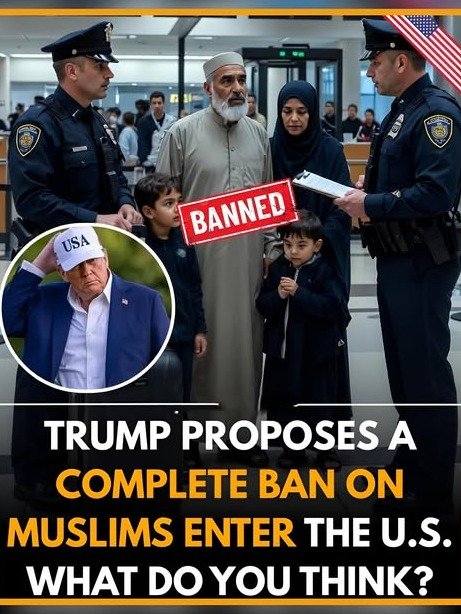
Imagine a world where your government can restrict who enters the country based on broad security concerns, potentially overriding individual liberties. This isn’t a hypothetical scenario; it’s the enduring legacy of a landmark Supreme Court decision that continues to shape our nation’s immigration policies and executive power dynamics.
The discussion surrounding one of the most contentious policies of recent years, the travel ban, has resurfaced, prompting a critical re-examination of its profound and often overlooked consequences. What many don’t realize is how this ruling set a precedent that could affect us all.
The Storm Before the Calm: A Policy Ignites Controversy
The saga began with a series of executive orders issued early in 2017, aiming to restrict entry into the United States for citizens of several Muslim-majority countries. These initial directives, often referred to by critics as a ‘Muslim ban,’ immediately plunged the nation into a constitutional crisis, sparking widespread protests, legal challenges, and global condemnation.
The administration asserted that these measures were essential for national security, designed to prevent potential terrorists from entering the country. However, opponents argued vehemently that the ban was discriminatory, religiously motivated, and violated fundamental constitutional principles, including the Establishment Clause and due process rights.
From Executive Order to Supreme Court Showdown
The initial executive orders faced immediate injunctions from federal courts, leading to several revisions. The third iteration, Proclamation 9645, ultimately became the subject of the pivotal Supreme Court case, Trump v. Hawaii. This version implemented varying restrictions on travelers from Iran, Libya, Somalia, Syria, Yemen, Chad (later removed), North Korea, and certain Venezuelan government officials.
The government’s legal team contended that the President possessed broad authority under federal immigration law and the Constitution to regulate who enters the country, especially when national security was at stake. They emphasized that the Proclamation was the result of a comprehensive, worldwide review by multiple government agencies, not religious animus.
Conversely, plaintiffs, including the State of Hawaii and various advocacy groups, argued that the ban was a thinly veiled attempt to fulfill a discriminatory campaign promise. They presented evidence of the President’s public statements, which they claimed demonstrated a clear intent to target Muslims, making the policy unconstitutional regardless of its revised language.
The Landmark Ruling: Deference to the Executive
In June 2018, the Supreme Court delivered its highly anticipated 5-4 decision in Trump v. Hawaii, upholding the travel ban. Chief Justice John Roberts authored the majority opinion, which centered on the principle of judicial deference to executive authority in matters of national security and immigration.
The Court applied a standard that required only a
About the Author




