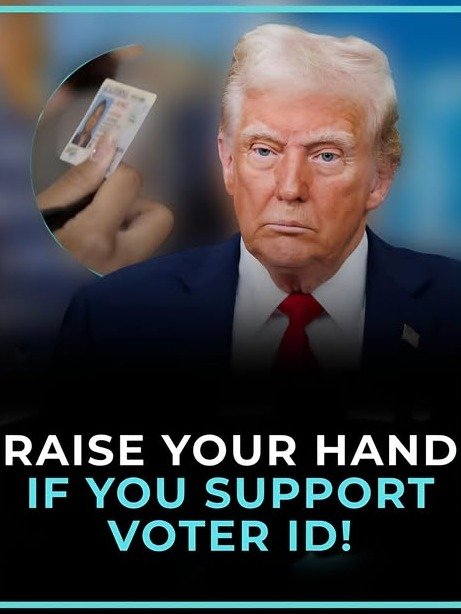
Imagine a cornerstone of democracy – the right to vote – suddenly entangled in a fierce, emotionally charged debate. This isn’t just a political talking point; it’s a fundamental question about access, security, and the very integrity of our elections. At the heart of it all lies one seemingly simple concept: voter identification.
But what if this ‘simple’ idea is anything but? What if requiring an ID to cast a ballot is either the ultimate safeguard for our democratic process or a dangerous barrier that silences legitimate voices? The stakes couldn’t be higher, and understanding both sides of this complex issue is crucial for every citizen.
The Argument for Stronger Election Security
For many, the call for voter ID laws is a straightforward matter of common sense. Proponents argue that just as you need identification to board a plane, cash a check, or even pick up a package, you should certainly need it to exercise your most fundamental civic duty. They believe this measure is essential to prevent voter fraud and ensure that only eligible citizens cast ballots.
This perspective emphasizes the importance of public confidence in election results. When people trust that elections are secure and fair, they are more likely to participate and accept the outcomes. A strong voter ID requirement is seen as a visible deterrent to fraud, bolstering the perceived legitimacy of the entire electoral system.
“Our democracy is only as strong as the integrity of its elections. Requiring a photo ID is a basic step to ensure every legal vote counts and to restore faith in our system.” – A common sentiment among voter ID advocates.
Advocates often point to the potential for in-person voter impersonation, even if statistically rare, as a threat that must be addressed. They argue that a single instance of fraud erodes trust and undermines the principle of one person, one vote. Therefore, preventative measures, like showing identification, are not just good policy but a moral imperative.
Protecting the Integrity of the Ballot Box
The core philosophy behind voter ID laws rests on the belief that securing the ballot box is paramount. If individuals can vote without proving their identity, the door is open to various forms of manipulation, from double voting to fraudulent registration. By demanding identification, states aim to close these loopholes and safeguard the sanctity of each vote.
- Preventing Impersonation: The most cited reason is to stop individuals from voting as someone else.
- Boosting Public Confidence: Visible security measures can reassure voters that the process is fair and legitimate.
- Ensuring Eligibility: Verifying identity helps confirm that the voter is indeed registered and eligible to cast a ballot in that precinct.
- Deterring Fraud: The mere presence of a voter ID law can discourage those who might consider attempting to vote illegally.
Furthermore, many states already require identification for various other government services or transactions. Proponents argue that voting, being such a critical civic act, should not be held to a lower standard of verification. They often highlight the availability of free IDs in some states as evidence that the burden on voters is minimal.
The Other Side: Concerns About Voter Suppression
While the arguments for voter ID laws focus on security, opponents raise serious concerns about accessibility and potential voter suppression. They contend that while the intent may be to secure elections, the practical effect is often to disenfranchise legitimate voters, particularly those from marginalized communities.
Critics point out that millions of Americans lack government-issued photo identification. This includes a disproportionate number of elderly, low-income individuals, students, people with disabilities, and racial or ethnic minorities. Obtaining the necessary ID can involve significant hurdles, such as finding original documents (birth certificates, marriage licenses), paying fees, and traveling to government offices, which may be far away or have limited hours.
“The right to vote is fundamental. Imposing unnecessary barriers like strict photo ID requirements doesn’t protect our elections; it actively disenfranchises citizens and silences their voices, especially those already struggling to be heard.” – A common sentiment among voter access advocates.
These barriers, opponents argue, are not mere inconveniences but genuine obstacles that prevent eligible citizens from exercising their right to vote. They often frame voter ID laws as a modern form of poll tax, disproportionately impacting those who are already socio-economically disadvantaged or face systemic challenges.
Disenfranchisement: A Cost to Democracy?
The debate around voter ID isn’t just about security; it’s profoundly about access. Many organizations dedicated to voting rights argue that the evidence of widespread in-person voter fraud – the very type of fraud voter ID laws are designed to prevent – is exceedingly rare. They suggest that the actual motivation behind some of these laws might be political, rather than a genuine concern for election integrity.
The administrative burden on election officials is another point of contention. Implementing and enforcing strict ID laws can be costly and complex, requiring resources that could otherwise be used to improve voter registration, education, or election infrastructure. Moreover, the confusion caused by varying ID requirements across states can deter voters.
- Lack of Widespread Fraud: Critics argue that in-person voter fraud is statistically insignificant, making strict ID laws a solution without a problem.
- Disproportionate Impact: Certain demographics are more likely to lack valid photo ID, creating an uneven burden.
- Cost and Difficulty: Obtaining necessary underlying documents and the ID itself can be costly and time-consuming.
- Historical Context: Opponents often link these laws to historical efforts to suppress minority votes.
Ultimately, opponents believe that the potential for disenfranchising even a small percentage of eligible voters is too high a price to pay for a problem that is largely theoretical. They argue that the focus should be on making voting easier and more accessible for all citizens, not on creating new hurdles.
Navigating the Nuances: Types of ID and Solutions
The term “voter ID” itself can be misleading, as there’s a wide spectrum of requirements across different states. Some states have strict photo ID laws, demanding a government-issued photo ID like a driver’s license or passport. Others allow non-photo IDs, such as utility bills or bank statements. Still, other states request ID but allow alternatives like signing an affidavit if no ID is presented.
These variations highlight the complexity. A state offering free IDs at every polling place might face fewer access criticisms than one requiring specific documents and travel to a distant DMV. Some proposed compromises include provisional ballots for those without ID, which can be verified later, or expanded opportunities for voters to obtain free identification.
The debate also touches on the role of technology. Could secure digital IDs or biometric verification offer a path forward that satisfies both security and access concerns? These solutions, however, come with their own set of privacy and implementation challenges, demonstrating that there’s no simple technological fix.
The Human Impact: Real Stories, Real Challenges
Beyond the legal and political arguments, the voter ID debate has a profound human impact. Consider an elderly person in a rural area who no longer drives and doesn’t have a birth certificate, which was lost decades ago. The effort to obtain a new birth certificate, then travel to a distant DMV for a non-driver ID, can be insurmountable.
Think of a college student, new to a state, whose only ID is from their home state or a student ID that isn’t accepted. Or a low-wage worker who cannot afford to take time off work, potentially losing pay, to navigate government bureaucracy. These are not isolated incidents; they represent the real-world consequences of stringent voter ID laws.
Conversely, the feeling of ensuring a secure election is also deeply human. For those who believe in strict ID laws, the thought that their vote could be diluted by fraudulent ballots is equally distressing. They see their stance as protecting the sacred act of voting for all legitimate citizens.
Where Do We Go From Here? Finding Common Ground
The voter ID debate is a microcosm of larger tensions within democratic societies: the balance between security and liberty, between order and access. There are legitimate concerns on both sides that deserve careful consideration, not dismissive rhetoric.
As citizens, our role is to move beyond partisan shouting and genuinely engage with the complexities. We must ask ourselves: How can we ensure the integrity of our elections without inadvertently disenfranchising eligible voters? What are the true risks, and what are the most effective, equitable solutions?
The answer likely lies in finding innovative solutions that enhance security while simultaneously expanding access. This might involve robust voter education campaigns, widespread availability of free and easily obtainable IDs, or streamlined processes for provisional voting. The future of our democracy hinges on our ability to navigate these challenging waters with both wisdom and empathy.
About the Author




