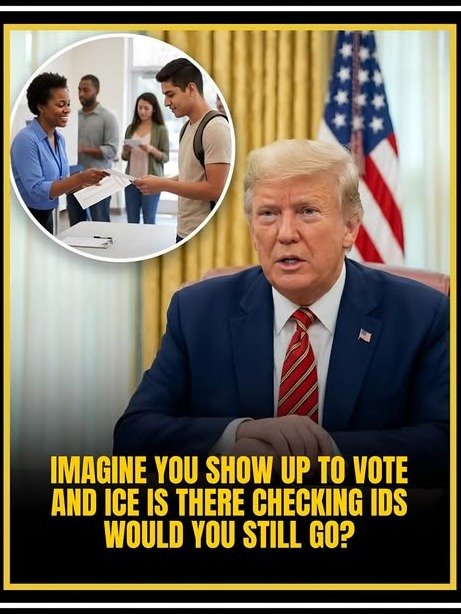
Imagine arriving at the polls, ready to cast your ballot, only to be told you can’t. This isn’t a hypothetical fear for millions; it’s a very real concern at the heart of one of America’s most contentious political debates: voter identification requirements. The ongoing struggle over how citizens prove their identity before voting is far more than a bureaucratic squabble; it’s a fundamental clash over access, security, and the very soul of our democracy.
For years, this issue has simmered, occasionally boiling over into national headlines and heated legislative battles. Different proposals for verification standards receive intense public scrutiny, sparking passionate arguments from both sides of the political spectrum. Understanding this complex landscape is crucial, as the outcome could profoundly shape who participates in our elections and how confident we remain in their integrity.
The Core Divide: Security vs. Access
At its heart, the voter ID debate pits two vital democratic principles against each other: the need to secure elections against fraud and the imperative to ensure every eligible citizen can easily cast their vote. Proponents argue that strict ID laws are essential safeguards, preventing illegitimate votes from diluting the power of legal ones. They emphasize the importance of public confidence in election results, suggesting that visible security measures are key to maintaining trust.
Conversely, opponents contend that these laws are often thinly veiled attempts at voter suppression, creating unnecessary barriers that disproportionately affect certain demographics. They argue that the focus on fraud is overblown and that the true cost is the disenfranchisement of legitimate voters. This tension makes finding common ground incredibly challenging, as both sides believe they are protecting a cornerstone of American liberty.
The Case for Security: Protecting the Ballot Box
Those who advocate for stricter voter ID laws often point to the fundamental principle that only eligible citizens should vote. They argue that requiring identification, particularly photo ID, is a common-sense measure akin to showing ID for other everyday activities, such as:
- Boarding an airplane
- Cashing a check
- Purchasing alcohol or tobacco
- Applying for government benefits
From this perspective, voting, a cornerstone of civic duty, should demand no less rigor. The primary justification is to prevent various forms of voter fraud, including impersonation at the polls, double voting (voting in multiple locations), and ballots being cast in the names of deceased individuals. They contend that even a small amount of fraud can erode public trust and undermine the legitimacy of election outcomes.
“Ensuring the integrity of our elections is paramount. Voter ID laws are a basic, reasonable step to protect against fraud and ensure that every legal vote counts, giving citizens confidence in our democratic process.” – A common sentiment among proponents.
Furthermore, advocates highlight that the perceived burden of obtaining an ID is often exaggerated. Many states offer free IDs for voting purposes, and identification documents like driver’s licenses or state IDs are already widely held. They see these laws not as obstacles, but as necessary tools for maintaining the sanctity of the ballot box.
The Counter-Argument: A Barrier to Democracy?
On the other side of the debate, critics of strict voter ID laws argue vehemently that they constitute a form of voter suppression. They assert that the types of fraud these laws claim to prevent, such as in-person voter impersonation, are exceedingly rare. Numerous studies and investigations have found such fraud to be statistically insignificant, suggesting that the problem these laws aim to solve is largely hypothetical rather than widespread.
Instead, opponents contend that the true impact of these laws is to disenfranchise eligible voters, particularly those who face significant hurdles in obtaining the required identification. These groups often include:
- Elderly citizens: Many older Americans, especially those who no longer drive, may not possess current photo IDs.
- Low-income individuals: The cost of obtaining an underlying document (like a birth certificate) and then a state ID can be prohibitive for those living paycheck to paycheck.
- Racial and ethnic minorities: These groups are disproportionately affected by poverty and lack of access to transportation, making ID acquisition more challenging.
- Students: College students living away from home may find it difficult to obtain state IDs from their voting state, and student IDs are often not accepted.
- People with disabilities: Mobility issues and lack of transportation can make trips to DMV offices difficult or impossible.
- Homeless individuals: Without a fixed address or access to necessary documents, obtaining official ID is a monumental task.
These groups often lack the required forms of photo identification, transportation to government offices, or the financial resources to obtain underlying documents like birth certificates. Critics argue that requiring specific types of ID creates an unnecessary and often insurmountable barrier, effectively silencing the voices of legitimate voters.
A Patchwork of Laws: Understanding the State-by-State Landscape
The United States does not have a uniform national standard for voter identification. Instead, each state sets its own rules, resulting in a complex and often confusing patchwork of requirements. These laws can generally be categorized into several types:
- Strict Photo ID: Voters must present a government-issued photo ID to cast a regular ballot. If they don’t have one, they may cast a provisional ballot but must return later with the required ID for their vote to count.
- Non-Strict Photo ID: Voters are requested to show photo ID, but if they don’t have one, they can often sign an affidavit or provide alternative forms of identification (like a utility bill) and cast a regular ballot.
- Strict Non-Photo ID: Voters must present a non-photo ID (e.g., bank statement, utility bill) to cast a regular ballot. Provisional ballots are used if no ID is presented, requiring follow-up.
- Non-Strict Non-Photo ID: Voters are asked for non-photo ID, but if they don’t have it, they can sign an affidavit or provide other verifying information.
- No ID Required: Voters are not required to show any form of ID to cast a ballot. Their identity is verified through other means, such as signature matching against registration records.
This varied landscape means that a voter’s experience at the polls can differ dramatically depending on which state they reside in. What is perfectly acceptable in one state might lead to a provisional ballot – or even outright disenfranchisement – in another. This inconsistency further complicates the national debate and highlights the localized nature of election administration.
Legal Showdowns: The Courts Weigh In
The constitutionality and impact of voter ID laws have been repeatedly challenged in federal and state courts. A landmark case, Crawford v. Marion County Election Board (2008), saw the U.S. Supreme Court uphold Indiana’s strict photo ID law, determining that the state’s interest in preventing voter fraud outweighed the burden on voters. This ruling opened the door for more states to enact similar measures.
However, subsequent challenges have often focused on the specifics of state laws and their discriminatory impact under the Voting Rights Act (VRA) or the Fourteenth Amendment’s Equal Protection Clause. Courts have sometimes struck down or weakened laws deemed to place an undue burden on specific groups or to have been enacted with discriminatory intent. The legal battleground remains active, with new cases constantly shaping the landscape of voting rights.
The Evidence Gap: How Prevalent is Voter Fraud?
A central point of contention in the voter ID debate is the actual prevalence of the problem these laws are designed to fix: voter fraud. While proponents often cite the potential for fraud and the need for preventative measures, opponents frequently counter with data indicating that in-person voter impersonation, the specific type of fraud most directly addressed by photo ID laws, is exceedingly rare.
Organizations like the Brennan Center for Justice have published extensive research suggesting that instances of voter impersonation are virtually non-existent, often amounting to only a handful of cases nationwide over many years. They argue that these isolated incidents do not justify laws that could disenfranchise hundreds of thousands of legitimate voters. Critics suggest that the fear of widespread fraud is often politically motivated, used as a pretext to enact laws that suppress turnout among demographics less likely to vote for the party in power.
Beyond the Headlines: Real-World Impacts and Turnout
Studies attempting to measure the real-world impact of voter ID laws on election turnout have yielded mixed results, further fueling the debate. Some research indicates a measurable drop in turnout among minority groups and young voters in states with strict ID laws. These studies often highlight the logistical challenges faced by these populations in obtaining the required identification, leading to reduced participation.
Other studies, however, suggest that the impact on overall turnout is minimal or negligible. Proponents argue that the vast majority of voters already possess acceptable ID, and any minor inconvenience is a small price to pay for secure elections. The discrepancy in findings often depends on the methodology, the specific state laws analyzed, and the demographic groups focused on, making it difficult to draw universal conclusions.
Finding Common Ground: Towards a Balanced Future
Given the deeply entrenched positions, finding a universally accepted solution to the voter ID debate is challenging. However, various proposals aim to strike a balance between election security and voter access:
- Free IDs: States could offer free, easily obtainable IDs for voting purposes, ensuring no citizen is denied a ballot due to financial constraints.
- Mobile ID Units: Deploying mobile units to bring ID services directly to communities, especially rural or low-income areas, could reduce transportation barriers.
- Expanded Accepted IDs: Broadening the types of IDs accepted (e.g., student IDs, utility bills, tribal IDs) could increase access without compromising security.
- Provisional Ballots with Cure Periods: Allowing voters without ID to cast a provisional ballot and then providing a reasonable timeframe and clear process to ‘cure’ their ballot by presenting ID later.
- Education Campaigns: Robust public awareness campaigns could inform voters of ID requirements well in advance of elections.
These approaches seek to address the legitimate concerns of both sides, acknowledging the importance of secure elections while also upholding the fundamental right to vote for all eligible citizens. The goal is to build a system where integrity is protected without creating unnecessary obstacles to participation.
Your Voice, Your Vote: Why This Debate Matters to YOU
The debate over voter identification requirements isn’t just a wonky political discussion; it directly impacts the health and future of our democratic system. It’s about who gets to participate, whose voice is heard, and how much trust we can place in our electoral outcomes. Whether you believe these laws are essential for security or a tool for suppression, understanding the nuances is vital.
As citizens, our engagement in this discussion, and our demands for fair and accessible elections, are paramount. The balance between security and access is delicate, and how we choose to tip that scale will define the inclusiveness and integrity of our future elections. Your ability to cast a ballot, and the confidence you have in the results, depends on how this ongoing issue is ultimately resolved.
Conclusion: A Future for Fair Elections
The debate over voter identification requirements is a complex, multifaceted issue that reflects deep divisions within American society regarding the balance between election security and voter access. There are valid concerns on both sides, from the desire to prevent fraud and maintain public trust to the imperative of ensuring every eligible citizen can exercise their fundamental right to vote without undue burden.
Moving forward, a constructive path will likely involve acknowledging the legitimacy of both security and access concerns. Solutions that combine robust verification methods with widespread, free, and easily accessible identification options could represent a compromise that strengthens faith in our electoral system while simultaneously expanding participation. The ongoing conversation is crucial, and its resolution will undoubtedly shape the future of American democracy.
About the Author




