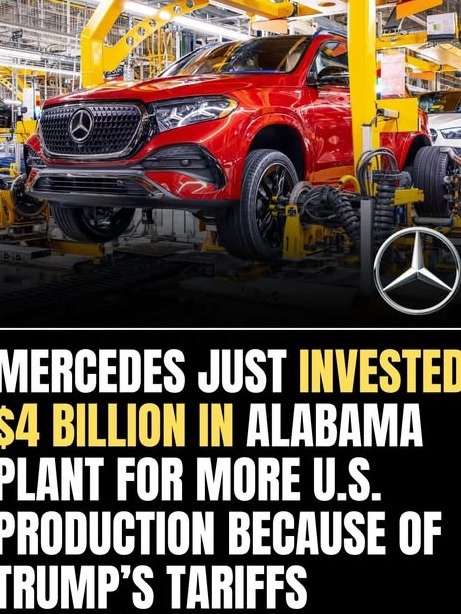
Imagine a world where the luxury car you drive, even a prestigious Mercedes-Benz, is proudly stamped ‘Made in America.’ This isn’t a distant dream; it’s a rapidly unfolding reality, driven by a monumental shift in global trade dynamics. The automotive industry is undergoing a seismic transformation, and the epicenter might just be right in Alabama.
Mercedes-Benz, a name synonymous with German engineering and global sophistication, is pouring billions of dollars into the Heart of Dixie. This isn’t just a minor expansion; it’s a profound reorientation of its global manufacturing strategy, signaling a new era for both the company and American industry as a whole.
The “Made in America” Imperative: Why Now?
For decades, globalized supply chains dominated manufacturing, allowing companies to source parts and assemble vehicles wherever costs were lowest. However, recent years have unveiled the fragility of this model, prompting a significant push towards domestic production, often dubbed the ‘Made in America’ initiative.
This drive is fueled by a confluence of factors: evolving government policies, a renewed focus on supply chain resilience, and a growing consumer sentiment favoring domestically produced goods. The goal is clear: reduce dependence on overseas manufacturing, safeguard against geopolitical disruptions, and bolster local economies.
Mercedes-Benz’s Bold Bet in Alabama
Mercedes-Benz has been a significant player in Alabama for over two decades, establishing its first U.S. assembly plant in Vance in 1997. But the latest investment dwarfs previous commitments, representing a multi-billion dollar infusion into its existing operations. This substantial capital is earmarked for a crucial transformation: the production of electric vehicles (EVs) and their essential battery components.
The company announced an investment of over $1 billion to build a battery plant near its existing vehicle assembly facility and to upgrade its production lines for electric vehicles. This strategic move positions Alabama as a central hub for Mercedes-Benz’s global electric vehicle offensive, ensuring a robust supply chain for its future models.
More Than Just Cars: The EV Revolution
This isn’t merely about producing more cars; it’s about pioneering the future of mobility. The investment in Alabama is directly tied to Mercedes-Benz’s ambitious electrification strategy, aiming for a fully electric lineup in segments where market conditions allow by the end of the decade. The new battery plant is critical to this vision.
“The opening of our new battery plant in Alabama is an important step in our global EV production network,” stated Jörg Burzer, Member of the Board of Management of Mercedes-Benz Group AG, Production and Supply Chain Management. “This allows us to efficiently scale up our EV production around the world.”
The facility will produce high-performance battery systems for a range of all-electric Mercedes-EQ models, including the EQS SUV and EQE SUV, both of which are also being assembled in Vance. This vertical integration significantly strengthens the company’s control over its EV production process.
Alabama: A Strategic Manufacturing Hub
Why Alabama? The state has cultivated a highly attractive environment for automotive manufacturing over the years. Its strategic location, robust infrastructure, and a skilled workforce nurtured by technical training programs have made it a magnet for global automakers. Mercedes-Benz was one of the first luxury brands to establish a major presence, paving the way for others.
Key advantages for Mercedes-Benz’s continued expansion in Alabama include:
- Existing Infrastructure: Leveraging an established assembly plant reduces setup time and costs.
- Skilled Labor Pool: Access to experienced workers and ongoing training initiatives.
- Logistics and Access: Proximity to major transportation networks for efficient supply chain management.
- State Incentives: Attractive economic development packages from the state and local governments.
These factors combine to make Alabama an ideal launchpad for advanced manufacturing, particularly in the rapidly evolving EV sector.
The New Trade Reality: A Global Reorientation
The billions flowing into Alabama are a direct response to a fundamental shift in global trade. The era of frictionless international trade, once a cornerstone of corporate strategy, is giving way to a more complex and often protectionist landscape. Geopolitical tensions, trade disputes, and the lingering lessons from the COVID-19 pandemic have highlighted the vulnerabilities of extended supply chains.
Manufacturers are now prioritizing resilience and regionalization. This means producing goods closer to the markets where they are sold, reducing transit times, mitigating shipping risks, and navigating complex tariff structures. The ‘Made in America’ push is not just a political slogan; it’s an economic imperative for companies seeking long-term stability.
Rising Costs of Imports: A Catalyst for Change
One of the most significant drivers behind this domestic manufacturing surge is the increasing expense of imported vehicles and components. Tariffs imposed by governments, fluctuating currency exchange rates, and escalating global shipping costs have all contributed to making overseas production less economically attractive.
For consumers, this often translates to higher prices for imported cars. For manufacturers, it means squeezed profit margins and unpredictable supply. By building vehicles and batteries in the U.S., Mercedes-Benz can:
- Mitigate Tariff Risks: Avoid import duties on finished vehicles and key components.
- Stabilize Costs: Reduce exposure to volatile international shipping rates and currency fluctuations.
- Enhance Supply Chain Control: Shorten lead times and improve responsiveness to market demand.
This strategic move is about ensuring competitive pricing and consistent availability for American consumers, while simultaneously securing the company’s operational future.
Economic Ripple Effects: Jobs and Innovation
The impact of Mercedes-Benz’s investment extends far beyond its factory gates. The expansion is expected to create hundreds of new, high-skilled jobs in Alabama, not just directly at Mercedes-Benz but also within the broader ecosystem of suppliers, logistics providers, and service industries that support a major automotive plant.
This influx of capital and technology also fosters innovation. The production of advanced EV batteries and vehicles demands cutting-edge engineering and manufacturing processes. This creates opportunities for local educational institutions to develop specialized training programs, further strengthening the region’s workforce and making it a hub for future automotive talent.
Challenges and Opportunities for US Manufacturing
While the reshoring trend presents immense opportunities, it also comes with challenges. Higher labor costs in the U.S. compared to some overseas markets necessitate significant investment in automation and advanced manufacturing techniques to maintain competitiveness. Additionally, securing a consistent supply of raw materials for battery production remains a global hurdle.
However, the advantages often outweigh these challenges. A strong domestic manufacturing base contributes to national economic security, reduces carbon footprints associated with long-distance shipping, and fosters a robust innovation ecosystem. The ‘Made in America’ label also carries significant brand appeal for many consumers.
The Future of Automotive Production: A Regionalized Approach
Mercedes-Benz’s move into advanced EV manufacturing in Alabama is a powerful testament to a broader trend: the regionalization of global supply chains. Instead of a single global production hub, companies are increasingly establishing manufacturing footprints within key markets to better serve local demand, navigate trade complexities, and build resilience against future disruptions.
This strategy ensures that vehicles sold in North America are predominantly built in North America, with components sourced from within the region where possible. It’s a pragmatic response to a changing world, promising greater stability and efficiency for the automotive industry in the long run.
Conclusion: A New Era for American Industry
The multi-billion dollar investment by Mercedes-Benz in Alabama is far more than just a corporate expansion; it’s a bellwether for the future of manufacturing. It underscores the profound shifts in global trade, the accelerating transition to electric vehicles, and the renewed importance of domestic production.
As major manufacturers like Mercedes-Benz adjust to this new trade reality, consumers can anticipate more ‘Made in America’ options, potentially at more stable price points. This strategic pivot not only strengthens the company’s position in a competitive market but also injects vital economic energy and technological advancement into American industry, shaping a new era for how our cars are made.
About the Author




