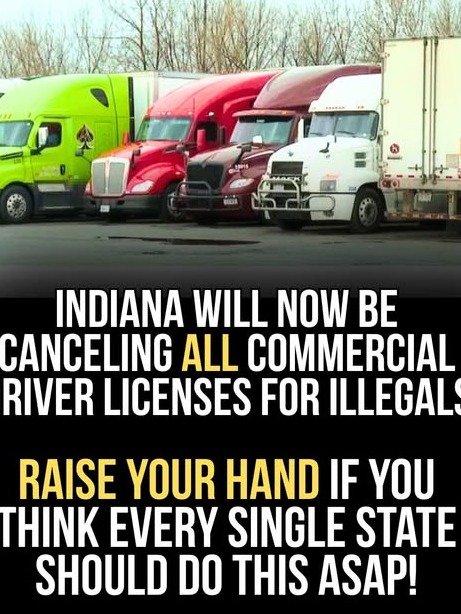
A seismic shift is underway in Indiana, one that could profoundly impact not only its economy but also the national discourse on immigration. The Hoosier State is moving aggressively to block commercial driver licenses (CDLs) for individuals residing in the country without legal authorization, igniting a fresh and intense battlefront in the broader, often contentious, fight over immigration policy.
This isn’t just a local issue; it’s a bold declaration from a state that aims to redefine its role in immigration enforcement, potentially setting a precedent that other states might follow. The implications extend far beyond who can drive a truck, touching on labor markets, public safety, and the very fabric of immigrant communities within Indiana and across the nation.
The Heart of the Matter: Indiana’s Stance on CDLs
At its core, the proposed legislation targets a specific demographic: individuals who are in the United States without legal documentation and currently hold or seek a Commercial Driver’s License. For many, a CDL is a gateway to stable employment, offering a pathway to careers in vital sectors like trucking, logistics, and agriculture. By restricting access, Indiana is sending a clear message about its approach to immigration and state-level enforcement.
The move comes amidst a national climate where states are increasingly taking the reins on immigration issues, often stepping into areas traditionally managed by the federal government. This particular action highlights the complex interplay between state authority, federal immigration law, and the practical realities of managing a diverse workforce.
Why Now? Unpacking the Motivation Behind the Crackdown
The timing of Indiana’s proposed CDL block is no accident. It reflects a growing sentiment among some lawmakers and constituents that states must do more to enforce immigration laws, particularly when they perceive a lack of federal action. Proponents of the measure often cite concerns about national security, public safety, and the integrity of state-issued identification documents.
Supporters argue that denying CDLs to undocumented individuals aligns with the principle of upholding the rule of law. They believe that granting such licenses could inadvertently legitimize unauthorized residency or create loopholes that could be exploited. Furthermore, there’s a strong emphasis on ensuring that individuals operating large commercial vehicles meet stringent legal and background requirements.
“This isn’t about targeting individuals; it’s about ensuring that everyone operating heavy machinery on our roads is legally authorized and properly vetted,” stated one Indiana legislator during a recent debate. “Our priority is the safety of all Hoosiers and the integrity of our state’s licensing system.”
Economic Ripples: How This Could Impact Indiana’s Industries
While the intent may be rooted in immigration enforcement, the economic consequences of such a policy could be substantial. Indiana’s economy, like many others, relies heavily on its transportation and logistics sectors. The trucking industry, in particular, faces persistent labor shortages, and any measure that further restricts the pool of eligible drivers could exacerbate this challenge.
Experts warn that a reduction in the available workforce for commercial driving could lead to increased operational costs for businesses, potential delays in the supply chain, and even higher prices for consumers. Industries such as agriculture, manufacturing, and retail, which depend on the efficient movement of goods, could feel the pinch most acutely.
- Increased Labor Costs: Fewer drivers could drive up wages, impacting business profitability.
- Supply Chain Disruptions: Delays in transporting goods could affect delivery times and product availability.
- Economic Competitiveness: Indiana could become less attractive for businesses reliant on a robust logistics network.
The Human Element: Impact on Undocumented Communities
Beyond the economic figures, this policy directly affects the lives of thousands of undocumented immigrants who have built lives and contributed to Indiana’s communities for years. For many, a CDL represents not just a job, but a pathway to providing for their families, achieving a semblance of stability, and participating in the state’s economy.
Denying access to CDLs could push these individuals into less regulated, potentially more dangerous, forms of employment or force them to leave the state in search of opportunities elsewhere. This could lead to a ‘brain drain’ of experienced drivers and a loss of valuable human capital that Indiana’s economy currently benefits from, even if informally.
A Broader Battle: State vs. Federal Immigration Authority
Indiana’s move is a potent example of the ongoing tension between state and federal authority over immigration matters. While immigration enforcement is primarily a federal responsibility, states have increasingly sought to enact their own policies, often citing public safety or economic concerns. This creates a complex legal landscape, frequently leading to court challenges.
Critics of such state-level crackdowns often argue that they overstep constitutional boundaries, creating a patchwork of laws that can be confusing and discriminatory. They point to past court rulings that have struck down state immigration laws deemed to infringe on federal prerogatives. The outcome of Indiana’s push could therefore have significant legal ramifications beyond its borders.
“We’re seeing states like Indiana stepping into a federal arena, and this often leads to legal challenges and conflicting policies,” commented an immigration law expert. “The question isn’t just about what a state wants to do, but what it legally can do under the supremacy clause.”
Public Safety Concerns: Fact vs. Fiction
One of the primary arguments for restricting CDLs is public safety. Proponents suggest that individuals without legal status may not be adequately vetted, posing a risk on the roads. However, opponents often counter that denying licenses pushes drivers into an unregulated shadow economy, where they might operate vehicles without proper training, insurance, or vehicle inspections, thereby *increasing* public safety risks.
Furthermore, many undocumented drivers already possess extensive experience and a clean driving record. The argument is made that a blanket ban, rather than a system based on driving competence and safety records, could be counterproductive. The debate often boils down to whether enforcing immigration status trumps the practical realities of road safety and economic contribution.
Lessons from Other States: A Patchwork of Policies
Indiana is not an island in this debate. Other states have grappled with similar issues, leading to a diverse range of policies regarding driver’s licenses for undocumented immigrants. Some states have moved to allow undocumented residents to obtain standard driver’s licenses, arguing that it improves road safety and ensures more drivers are insured and regulated.
Conversely, other states have adopted stricter measures, similar to what Indiana is proposing for CDLs. This creates a complex and often confusing legal environment, where a person’s ability to drive legally can change dramatically simply by crossing a state line. This national patchwork underscores the need for a more comprehensive federal approach, which remains elusive.
- States Allowing Licenses: Focus on road safety and integration, ensuring more drivers are trained and insured.
- States Restricting Licenses: Emphasize rule of law and immigration enforcement, often leading to legal challenges.
The Road Ahead: What Happens Next?
The proposed legislation in Indiana will undoubtedly face intense scrutiny, both politically and potentially legally. As it moves through the legislative process, there will be opportunities for public debate, expert testimony, and amendments. Should it pass, it is highly likely to be met with legal challenges from civil rights and immigrant advocacy groups.
The outcome will not only shape Indiana’s future but also contribute to the ongoing national dialogue about immigration, states’ rights, and the delicate balance between enforcement and integration. All eyes will be on the Hoosier State as it navigates this complex and emotionally charged issue, with implications that could ripple across the nation’s highways and economies.
Beyond the Headlines: Understanding the Full Scope
It’s crucial to look beyond the immediate headlines and understand the full scope of what Indiana is attempting. This isn’t merely about a piece of plastic; it’s about defining who belongs, who can contribute, and how a state chooses to interact with its diverse population. The decision will have long-lasting effects on families, businesses, and the very identity of Indiana.
As the debate unfolds, it serves as a powerful reminder of the interconnectedness of immigration policy, economic vitality, and social justice. The choices made today in Indiana could very well influence the trajectory of immigration discussions and state-level actions for years to come, making this a pivotal moment in the broader American narrative.
Your Voice Matters: Engaging with the Discussion
The complexity of this issue demands informed public engagement. Whether you support the measure, oppose it, or simply seek to understand its nuances, staying informed and participating in the discussion is vital. This policy, if enacted, will touch many lives and sectors, making its progression a matter of significant public interest.
The debate surrounding Indiana’s CDL crackdown is a microcosm of the larger national conversation about immigration. It highlights the deeply held beliefs, economic realities, and human stories that are all part of this defining challenge for the United States. Only through comprehensive discussion and thoughtful consideration can states navigate these turbulent waters effectively.
About the Author




