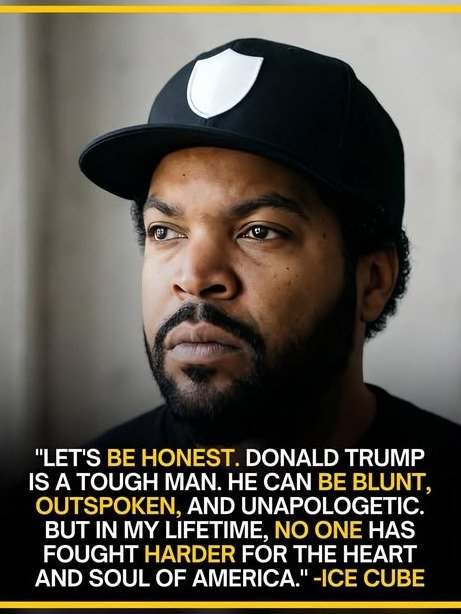
Imagine a hip-hop legend, known for his raw lyrics and cinematic grit, stepping into the political arena not with a protest song, but with a detailed economic blueprint designed to reshape a nation. This isn’t a Hollywood script; it’s the real-life journey of Ice Cube, whose bold engagement with ideas around economic opportunity for Black America has sparked intense debate and inspired a new wave of activism.
For years, discussions have simmered about the role of public figures in addressing systemic issues. But when Ice Cube unveiled his “Contract with Black America” (CWBA) and began engaging directly with political leaders from both sides of the aisle, he didn’t just join the conversation—he dramatically shifted its focus. What exactly was this contract, and why did it send shockwaves through Washington and beyond?
From Compton to Capitol Hill: A New Kind of Activism
Ice Cube, born O’Shea Jackson Sr., has always been a voice for the voiceless, his music often serving as a potent commentary on social injustice and economic disparity. From his groundbreaking work with N.W.A. to his prolific solo career and successful ventures in film, his artistry has consistently challenged the status quo and highlighted the struggles faced by marginalized communities.
However, the 2020 political climate presented an urgent call to action that transcended entertainment. Witnessing the persistent wealth gap, racial injustice, and lack of tangible progress for Black Americans, Ice Cube recognized that traditional advocacy methods weren’t yielding the necessary results. He decided it was time for a more direct, actionable approach, leveraging his platform to demand concrete policy changes.
Unpacking the ‘Contract with Black America’
The “Contract with Black America” (CWBA) was not a mere slogan or a vague promise; it was a meticulously crafted document outlining specific policy demands across various sectors. Released in the summer of 2020, it aimed to address systemic inequalities and create a pathway to economic empowerment and justice for Black communities.
At its core, the CWBA sought to bridge the racial wealth gap and ensure equitable access to resources and opportunities. It was a comprehensive proposal, touching on everything from banking and finance to criminal justice reform and education. The document represented a significant step beyond simply criticizing existing systems, offering instead a detailed framework for their overhaul.
- Banking and Finance: Demands for increased capital access for Black-owned businesses, reform of predatory lending practices, and investment in Black community development banks.
- Police and Justice Reform: Calls for accountability, ending qualified immunity, reallocating police budgets to community services, and comprehensive criminal justice overhaul.
- Education: Proposals for increased funding for historically Black colleges and universities (HBCUs), curriculum reform, and equitable access to quality education from pre-K through college.
- Healthcare: Advocacy for addressing health disparities, expanding access to affordable healthcare, and investing in Black health initiatives.
- Infrastructure and Technology: Plans for modernizing infrastructure in Black communities, ensuring digital equity, and fostering technology-driven economic growth.
- Land and Property Ownership: Initiatives to address historical land dispossession and promote Black land ownership and wealth creation through real estate.
Each pillar of the CWBA was designed to tackle a specific facet of systemic inequality, demonstrating a deep understanding of the interlocking challenges faced by Black Americans. It was a bold statement, asserting that true progress required a holistic approach, not just piecemeal reforms.
Navigating the Political Minefield: Discussions with Campaigns
What truly set Ice Cube’s initiative apart was his willingness to engage directly with political power brokers. He didn’t just publish the contract; he actively sought meetings with both the Democratic and Republican presidential campaigns during the heated 2020 election cycle. His rationale was clear: the CWBA was for Black America, and whoever was willing to implement its tenets would earn his support.
His most publicized engagement was with the Trump administration, specifically senior advisor Jared Kushner. This move sparked considerable controversy, with many critics questioning the optics and efficacy of working with a president whose rhetoric and policies were often seen as antithetical to the interests of Black communities.
“I’m not playing politics with this. I’m not on nobody’s team. I’m on the team of the Black community,” Ice Cube declared, defending his decision to speak with both campaigns. “I’m not endorsing anybody. I’m just trying to get some work done.”
He also met with representatives from the Biden campaign, though these discussions were reportedly less fruitful in terms of immediate commitment to the CWBA’s specific proposals. Ice Cube consistently maintained that his focus was on the contract itself, not on partisan alignment, emphasizing that the urgency of the issues demanded pragmatic engagement.
The Backlash and the Rationale
The decision to engage with the Trump campaign drew significant criticism from various quarters, including some prominent figures within the Black community and Democratic Party. Accusations of being a
About the Author




