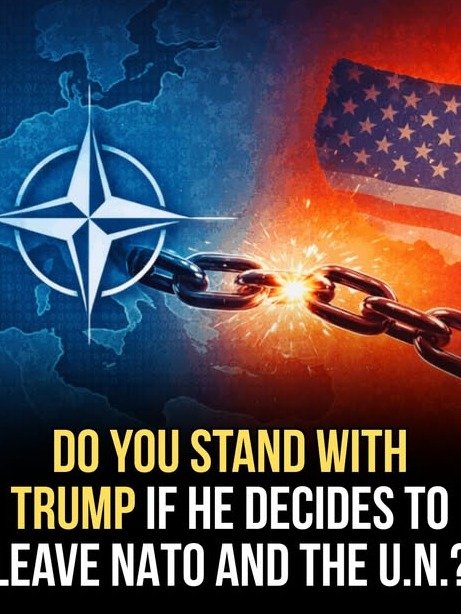
Imagine a world where the bedrock of international stability suddenly cracks, sending shockwaves across every continent. For decades, the United States has been the linchpin of a global order forged in the ashes of World War II, an order defined by powerful alliances like NATO and essential institutions like the United Nations. But what if America decided to walk away from it all?
This isn’t mere political speculation; it’s a potential seismic shift that could detonate the postwar order, marking one of the most profound breaks in modern American history. The implications would be staggering, not just for the U.S. but for every nation on Earth. Prepare to uncover the unseen dangers and the true cost of such an unprecedented move.
The Pillars of Postwar Stability: NATO and the UN
To understand the magnitude of a U.S. withdrawal, we must first grasp the significance of NATO and the UN. After the devastation of World War II, global leaders recognized the urgent need for a new framework to prevent future conflicts and foster cooperation. The result was a dual-pronged approach: collective security through military alliances and multilateral diplomacy through international organizations.
The North Atlantic Treaty Organization (NATO), established in 1949, was conceived as a bulwark against Soviet expansionism. Its core principle, Article 5, states that an attack on one member is an attack on all, creating an unprecedented collective defense pact. This guarantee has preserved peace and stability in Europe for over seven decades, preventing major power conflicts.
Concurrently, the United Nations (UN) was founded in 1945 as a forum for international dialogue, peacekeeping, humanitarian aid, and the promotion of human rights. It provides a crucial platform for nations to address global challenges – from climate change and pandemics to poverty and conflict resolution – often averting crises that individual nations could not tackle alone.
The Argument for Disengagement: An “America First” Vision
Proponents of a U.S. withdrawal from these foundational bodies often frame it as a necessary step to reclaim national sovereignty and prioritize domestic interests. This “America First” perspective suggests that the U.S. has borne an disproportionate share of the financial and military burden, while allies have not contributed enough.
They argue that organizations like the UN can constrain American foreign policy, forcing the U.S. to adhere to international norms or resolutions that might not align with its immediate interests. Furthermore, some believe these institutions are outdated, no longer serving their original purpose in a rapidly changing geopolitical landscape, and that the U.S. would be better off acting unilaterally or forming ad-hoc coalitions when necessary.
This viewpoint emphasizes a desire to reduce foreign entanglements, cut defense spending on overseas commitments, and refocus resources on challenges at home. It’s presented as a recalibration of American foreign policy, moving away from global leadership towards a more insular and self-reliant stance.
The Unraveling of NATO: A Geopolitical Tremor
Should the United States withdraw from NATO, the repercussions would be immediate and catastrophic, particularly for European security. NATO’s strength lies in its collective deterrence, backed by America’s vast military capabilities. Without the U.S., Article 5 would lose much of its credibility, leaving European nations vulnerable.
Europe would be forced to rapidly re-militarize, leading to potentially destabilizing arms races and increased defense spending. The absence of a unified front could embolden revisionist powers, most notably Russia, to expand their influence or even military operations in Eastern Europe, as the collective security umbrella would be severely weakened, if not entirely shattered.
For the U.S. itself, abandoning NATO would mean a drastic reduction in intelligence sharing and military interoperability with key allies. It would diminish America’s global influence, isolate it from vital partners, and potentially lead to new security threats emerging unchecked in a more volatile world. The strategic advantage of forward-deployed forces and diplomatic leverage would be severely curtailed.
The Silence of the UN: Global Governance in Chaos
An American exit from the United Nations would be equally destabilizing, albeit in different ways. The UN provides a critical diplomatic arena where nations, including adversaries, can engage in dialogue, negotiate solutions, and de-escalate conflicts. Without U.S. participation, the UN’s ability to act decisively on pressing global issues would be severely hampered.
The U.S. contributes significantly to the UN budget and peacekeeping missions, and its diplomatic weight is crucial in passing resolutions and enforcing international law. A withdrawal would leave a massive void, undermining the organization’s legitimacy and operational capacity. Other nations might follow suit, leading to a fragmentation of global governance and the rise of alternative, potentially less democratic, international blocs.
Consider the impact on critical UN agencies: the World Health Organization (WHO), UNICEF, the World Food Programme, and the Human Rights Council. U.S. funding, expertise, and moral authority are vital to their operations. Without them, efforts to combat pandemics, address humanitarian crises, protect refugees, and promote human rights worldwide would face unprecedented setbacks, leading to widespread suffering and instability.
Historical Echoes and Unforeseen Consequences
History offers a cautionary tale. Following World War I, the United States famously refused to join the League of Nations, an act many historians believe contributed to the League’s ultimate failure and the eventual outbreak of World War II. A withdrawal from NATO and the UN today would echo this isolationist impulse, but on a far grander and more dangerous scale.
“To abandon these institutions now would be to forget the lessons of history and invite a new era of global instability and unchecked aggression.” – A former U.S. Ambassador to the UN.
The economic fallout alone could be immense. Global trade, finance, and supply chains rely on a degree of international stability and predictable rules, which these institutions help to maintain. Disrupting this order could trigger economic downturns, increased protectionism, and a breakdown of the globalized economy that has benefited the U.S. for decades.
The Irreversible Damage to American Leadership
Beyond the immediate security and economic concerns, a U.S. withdrawal would inflict profound and potentially irreversible damage on America’s international reputation and soft power. For decades, the U.S. has been seen, for better or worse, as a leader and guarantor of the liberal international order.
Walking away would signal a retreat from global responsibilities, eroding trust among allies and emboldening rivals. It would diminish America’s ability to rally international support for its own interests, whether in combating terrorism, promoting democracy, or responding to emergent threats. The moral authority the U.S. has often claimed would be severely compromised.
Furthermore, such a move would not necessarily lead to greater freedom of action. Instead, the U.S. might find itself more isolated and facing a world where problems fester and multiply without the multilateral frameworks to address them. Global challenges like climate change, cyber warfare, and nuclear proliferation do not respect national borders and require coordinated international responses that the UN and NATO facilitate.
The Path Forward: Reaffirming Engagement
While criticisms of international organizations and alliances are valid and warrant ongoing reform, the solution is rarely outright abandonment. Instead, strengthening and adapting these institutions to meet contemporary challenges is often a more pragmatic and effective approach. The ongoing conflict in Ukraine, for example, has unequivocally demonstrated NATO’s enduring relevance and the critical need for collective defense.
The United Nations, despite its imperfections, remains the only truly global forum where all nations can convene. U.S. engagement within these bodies allows it to shape agendas, build consensus, and exert influence far more effectively than any unilateral action ever could. It is a testament to the power of diplomacy, shared values, and collective action.
A Decision with Global Ramifications
A move to leave NATO and the UN would not merely be a policy shift; it would be a foundational reorientation of American foreign policy with monumental consequences. It would challenge the very principles of collective security and multilateral cooperation that have defined the international landscape since World War II.
The debate surrounding such a decision is not just about American interests, but about the future of global stability, peace, and prosperity. The choice to either reinforce or dismantle these pillars of the postwar order will undoubtedly be one of the most consequential decisions in modern history, shaping the world for generations to come. The stakes could not be higher.
About the Author




