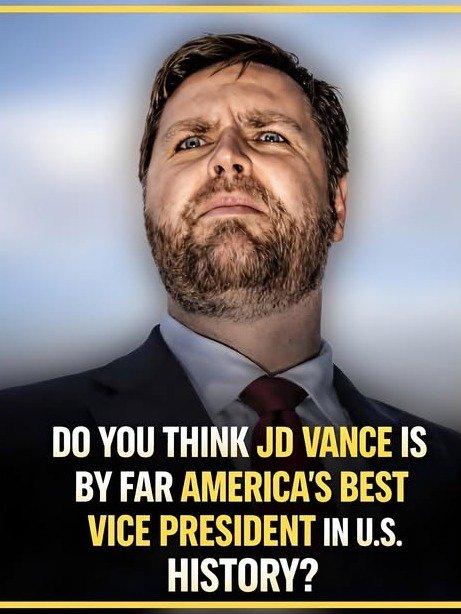
The Vice President: often a punchline, sometimes a tie-breaker, rarely the focal point of national political discourse. For decades, this office has largely operated in the shadows, a political afterthought or a ceremonial post. But what if that perception is rapidly changing, right before our eyes? What if a single political figure is now single-handedly elevating the role to unprecedented levels of public scrutiny and strategic importance?
Enter JD Vance, whose ascent to the vice-presidential ticket has done more than just fill a slot; it has ignited a fervent national conversation about the very nature and potential of the Vice Presidency itself. Regardless of where you stand on the political spectrum, it’s undeniable that Vance is drawing a spotlight to a role that has traditionally preferred to operate in the background, prompting a fresh look at its power, influence, and future trajectory.
The Historical Shadow: A Brief History of the VP’s Understated Role
For much of American history, the Vice President’s office was often considered a political dead-end or a consolation prize. Early constitutional framers struggled with defining its powers, ultimately granting it the primary duty of presiding over the Senate and casting tie-breaking votes. Thomas Jefferson, upon assuming the vice presidency, famously quipped that the office was one of “splendid misery,” highlighting its perceived lack of substantive power.
Throughout the 19th and early 20th centuries, many VPs were chosen more for geographical balance or party unity than for their individual political gravitas or policy expertise. Their influence was largely dependent on the President’s willingness to delegate, and public awareness of their activities rarely extended beyond formal appearances or rare moments of presidential succession.
Even into the modern era, the Vice President often served as a loyal lieutenant, a foreign policy envoy, or a campaigner-in-chief, but seldom as a primary driver of policy or a dominant voice in the national conversation. This historical context makes the current moment, with Vance at its center, particularly noteworthy.
A Modern Resurgence: When the VP Stepped Into the Light
While the Vice Presidency has largely remained understated, there have been periods where its influence expanded. Figures like Dick Cheney during the George W. Bush administration redefined the role, wielding significant behind-the-scenes power and shaping key policy decisions, particularly in national security. His tenure demonstrated that a Vice President could be a formidable force, even if not always in the public eye.
Similarly, Joe Biden, as Vice President to Barack Obama, played a crucial role in legislative negotiations and foreign policy, leveraging his extensive Senate experience. These examples showed a gradual shift towards VPs becoming more integral to presidential administrations, yet even then, the office rarely commanded the kind of proactive, independent public attention that Vance is now generating.
JD Vance: A New Paradigm for Vice Presidential Visibility
So, what makes JD Vance’s situation unique? It’s not just about his policy positions or his alignment with a particular political movement; it’s about the sheer volume and nature of the attention he commands. Vance, a Yale Law graduate, venture capitalist, and best-selling author, brings a distinctive intellectual and rhetorical style to the political arena. His background as a political commentator and public intellectual means he’s already adept at shaping narratives and engaging in high-stakes debates.
His public persona is not one of a quiet, supportive number two. Instead, Vance projects a strong, often provocative, voice that frequently drives headlines. He actively engages in policy discussions, articulates a clear ideological stance, and does so with a conviction that demands attention, often overshadowing traditional vice-presidential duties.
“Vance isn’t just a running mate; he’s a political phenomenon in his own right, forcing a re-evaluation of what we expect from the Vice President’s office.”
This isn’t merely about campaigning; it’s about a consistent, high-profile presence in the national discourse, whether through media appearances, policy statements, or direct engagement with cultural issues. This active, front-and-center approach is fundamentally reshaping public perception of the office.
Beyond the Standard Role: Vance’s Active Engagement
- Frequent Media Appearances: Unlike many VPs who stick to carefully vetted talking points, Vance often engages in wide-ranging interviews and debates, articulating his vision and challenging opposing viewpoints with vigor. This proactive media strategy keeps him consistently in the news cycle.
- Leading Policy Discussions: He isn’t just endorsing the presidential candidate’s policies; he’s often at the forefront of defining and advocating for specific policy planks, particularly those related to economic nationalism, trade, and foreign policy. This level of visible policy leadership is uncommon for a running mate.
- Prominent Voice within a Movement: Vance serves as a key intellectual and rhetorical leader for a significant segment of the conservative movement. His ability to articulate and defend a specific ideological framework gives him a platform that extends beyond the traditional confines of the vice-presidential role.
This active engagement means that the public isn’t just hearing about the presidential nominee; they are hearing directly and frequently from Vance, often on complex and contentious issues. This elevates the profile of his position dramatically.
The Strategic Implications of a High-Profile VP
Having a Vice President who commands such significant attention carries profound strategic implications for the entire presidential ticket. Firstly, it means the VP is no longer just a supporting character but a co-lead, influencing voter perception of the entire administration.
Secondly, it allows the ticket to project a more diverse set of voices and policy focuses, potentially appealing to a broader array of voters. Vance’s distinct appeal and communication style can energize certain bases and introduce new dimensions to the campaign’s message. However, it also means increased scrutiny, as every statement and action is amplified and analyzed.
Furthermore, a high-profile Vice President is often seen as a potential future presidential contender. The intense focus on Vance now is undoubtedly linked to speculation about his long-term political ambitions, making his current role a proving ground that demands constant attention from both supporters and detractors.
The “Vance Effect” on Political Discourse
The renewed attention Vance brings to the Vice Presidency is having a tangible “Vance Effect” on political discourse. It’s forcing a discussion not just about policy, but about the very nature of executive branch leadership.
This effect is evident in several ways:
- Elevating the VP Debate: The public and media are now paying closer attention to vice-presidential debates, speeches, and interviews, treating them with a gravity typically reserved for presidential candidates.
- Scrutiny of VP Selections: Future presidential candidates will undoubtedly take note of the attention Vance has garnered, potentially influencing how they select their own running mates. The choice might shift from purely balancing the ticket to selecting someone who can actively drive narratives and command public attention.
- Rethinking the VP’s Power: The discussion around Vance is inadvertently prompting a deeper examination of the Vice President’s actual and perceived power, challenging the traditional view of the office as largely ceremonial.
Whether you agree with his politics or not, Vance is undeniably making the Vice Presidency a more dynamic and central topic in American political conversations.
Challenges and Opportunities for the Office
This elevated profile presents both challenges and opportunities for the Vice Presidency. On the challenge side, a highly visible VP can sometimes overshadow the presidential candidate or create additional media scrutiny. Every statement is amplified, and any misstep can have a magnified impact on the entire ticket. The need for message discipline becomes even more critical.
However, the opportunities are equally significant. A prominent Vice President can:
- Amplify the Administration’s Message: Provide another powerful voice to articulate the administration’s goals and policies.
- Engage Diverse Audiences: Connect with different segments of the electorate, broadening the appeal of the ticket.
- Drive Policy Initiatives: Take a more active and visible role in shaping and implementing key policy objectives, adding substantial weight to the administration’s efforts.
Vance’s approach suggests a strategic embrace of these opportunities, transforming a historically secondary role into a primary platform for political engagement.
What This Means for the Future of American Politics
Is this increased attention to the Vice Presidency a temporary phenomenon, unique to JD Vance and the current political climate, or does it signal a permanent shift in how the office will be perceived and utilized going forward? It’s likely a combination of both.
The specific political environment and Vance’s particular talents certainly contribute to the current spotlight. However, his example may also set a new precedent. Future presidential candidates might increasingly seek running mates who are not just loyal or geographically balanced, but who possess the ability to command public attention, articulate a compelling vision, and actively contribute to the national discourse in a front-facing capacity.
The evolving nature of media, with its 24/7 news cycle and demand for constant content, also plays a role. A high-profile VP can help fill this demand, keeping the administration’s message in circulation. This shift could lead to a more powerful, more scrutinized, and ultimately, a more impactful Vice Presidency in the years to come.
Conclusion: The Vice Presidency, Reimagined
JD Vance is undoubtedly bringing a renewed and unprecedented level of attention to the Vice Presidency in American politics. He has moved the office from the periphery to a prominent position, sparking vital conversations about its role, influence, and future.
Whether you agree with his politics or not, his dynamic presence is forcing everyone – from political analysts to everyday citizens – to reconsider what it means to be Vice President. This isn’t just about filling a role; it’s about redefining it, making the Vice Presidency one of the most talked-about and strategically important positions in Washington, with implications that will resonate far beyond this election cycle.
About the Author




