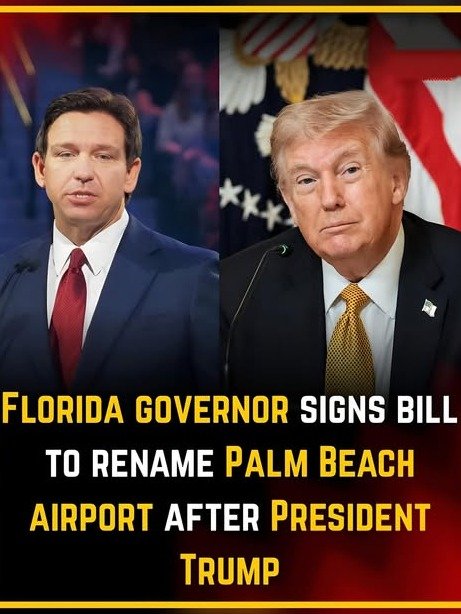
Imagine touching down in sunny South Florida, stepping off the plane, and seeing a name that has dominated headlines for years emblazoned across the terminal: Donald J. Trump International Airport. It sounds like something from a political drama, but a significant legislative step has brought this possibility closer to reality, sparking intense debate and capturing national attention.
On March 30, Florida Governor Ron DeSantis signed legislation that set in motion the process to rename Palm Beach International Airport (PBI) after former President Donald Trump. This move, which comes with a flurry of political symbolism and logistical challenges, has sent ripples through the state and beyond, leaving many to wonder about the implications of such a monumental change.
The Legislation That Started It All
The journey to potentially rename one of Florida’s key airports began with a legislative push that culminated in Governor DeSantis’s signature. This wasn’t merely a suggestion; it was a formal legislative act designed to honor a figure who remains deeply influential in Florida politics and nationwide.
The bill, once signed, initiated the formal steps required for such a significant public infrastructure renaming. While the immediate effect isn’t an overnight name change, it signals a strong intent from the state’s leadership to associate the airport with the former president, whose iconic Mar-a-Lago residence is located just a few miles away.
Why Rename an Airport? The Political Landscape
The decision to rename Palm Beach International Airport after Donald Trump is steeped in political significance. Governor DeSantis, a prominent figure in the Republican party, has often aligned himself with conservative causes and figures, including the former president.
This legislative action can be seen as a strategic move to solidify support among Trump’s base in Florida, a state where he maintains immense popularity. It’s a powerful symbolic gesture that resonates deeply with his supporters, offering a permanent tribute in a place he has called home for decades.
“This isn’t just about a name; it’s about making a statement,” commented one political analyst. “It’s a clear nod to a powerful political force and a strategic play in the ongoing conservative movement in Florida.”
Critics, however, argue that such a move is divisive and unnecessary, turning a public amenity into a political monument. They raise concerns about the precedent it sets and the potential for alienating a portion of the traveling public and local residents.
Proximity to Power: Mar-a-Lago’s Shadow
One of the most compelling aspects of this proposed renaming is the airport’s close proximity to Trump’s Mar-a-Lago estate. Mar-a-Lago, often referred to as the ‘Winter White House’ during his presidency, has become synonymous with Donald Trump’s post-presidency life and political activities.
Renaming the airport would create an undeniable geographical and symbolic link, essentially making the gateway to Palm Beach a direct homage to the former president. This connection is not lost on supporters, who see it as a fitting recognition of his enduring presence and influence in the region.
- Symbolic Significance: A permanent tribute near his primary residence.
- Political Statement: Reinforces Florida’s conservative identity.
- Local Impact: Direct connection for travelers arriving in Palm Beach.
The Road Ahead: Logistical Hurdles and Costs
While the legislation has been signed, the actual renaming of an international airport is a complex undertaking involving numerous logistical and financial considerations. It’s not as simple as just changing a sign; it requires a comprehensive overhaul of branding, navigation, and regulatory compliance.
Consider the sheer volume of changes needed:
- Signage: Every sign, both inside and outside the airport, would need updating.
- Branding: Websites, marketing materials, and official documents would require new branding.
- Air Traffic Control: Updating flight plans, air traffic control systems, and navigational charts.
- Maps and Directories: All national and international maps, GPS systems, and travel directories would need to reflect the new name.
- Legal and Regulatory: Approvals from various federal and international aviation bodies.
The cost associated with such an extensive rebranding effort could be substantial, potentially running into millions of dollars. These expenses would cover everything from physical signage and digital updates to administrative fees and public awareness campaigns. The question of who bears this cost – state taxpayers, local government, or private donors – is a significant point of contention.
Public Reaction: A Divided Opinion
Predictably, the news of the proposed renaming has elicited strong reactions from all sides. Supporters of Donald Trump view it as a well-deserved honor, celebrating his legacy and contributions.
“It’s about time we recognize a true American patriot right here in Florida,” expressed one local resident and Trump supporter. “He brought so much attention and prosperity to this area.”
Conversely, opponents have voiced their dismay, arguing that public infrastructure should remain politically neutral. They worry about the potential for further division and the message it sends to visitors and residents who may not share the same political views.
Social media has been abuzz with discussions, ranging from enthusiastic endorsements to fervent condemnations. This polarization highlights the deep political divides that such a high-profile decision can expose within a community and across the nation.
Historical Precedent: Naming Airports After Notable Figures
Renaming airports after prominent individuals is not a new phenomenon in the United States or around the world. Many major airports bear the names of former presidents, political leaders, or cultural icons.
- John F. Kennedy International Airport (JFK): Named after the 35th U.S. President.
- Ronald Reagan Washington National Airport (DCA): Named after the 40th U.S. President.
- George Bush Intercontinental Airport (IAH): Named after the 41st U.S. President.
- Thurgood Marshall Baltimore/Washington International Airport (BWI): Named after the first African American Supreme Court Justice.
These examples demonstrate a long-standing tradition of honoring influential figures through public infrastructure. However, the timing and political context of the proposed renaming of Palm Beach International Airport add a unique layer of complexity and controversy.
What Does This Mean for Travelers and Locals?
For the millions of travelers who pass through Palm Beach International Airport annually, a name change would require an adjustment. While the airport code (PBI) is likely to remain the same due to international aviation standards, the new official name would be widely promoted.
Local businesses, particularly those in the tourism and hospitality sectors, will also need to adapt to the new branding. The renaming could potentially influence how the region is perceived by visitors, depending on their political leanings and awareness of the change.
The Future of Palm Beach International Airport
As the legislation moves through its next phases, the eyes of the nation will be on Florida to see how this significant renaming initiative unfolds. It represents more than just a change on a map; it’s a reflection of the state’s political identity, its relationship with a former president, and the ongoing cultural conversation about public tributes.
Whether you support the change or oppose it, one thing is clear: the potential renaming of Palm Beach International Airport after Donald Trump is a landmark decision that will leave an indelible mark on Florida’s landscape and political narrative for years to come. The conversation has just begun, and its trajectory will be fascinating to observe.
Final Thoughts on a Monumental Shift
The signing of the legislation by Governor DeSantis on March 30 marked a pivotal moment in Florida’s political history. It signals a strong commitment to honoring Donald Trump in a very public and permanent way, right in the heart of a region deeply intertwined with his persona.
While the administrative and financial aspects of the renaming will undoubtedly present challenges, the symbolic weight of this decision is immense. It forces us to consider the role of political figures in public spaces and the lasting impact of such tributes on local communities and national identity. The future of Palm Beach International Airport, now potentially bearing the name of a former president, is set to become a focal point of discussion for a long time.
About the Author




