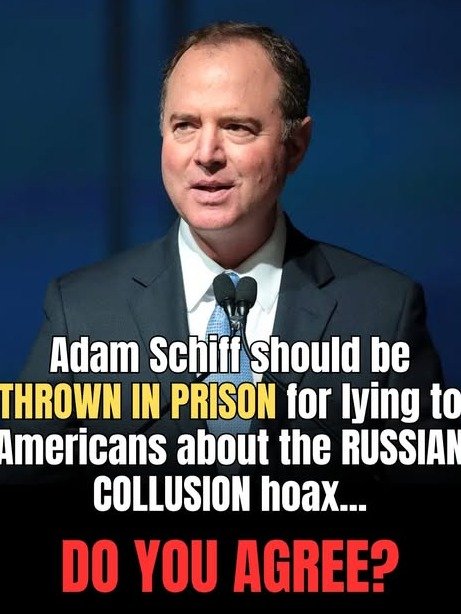
Few political figures evoke such strong, polarized reactions as Adam Schiff, especially when his name is mentioned alongside the tumultuous “Russia collusion” saga. For years, this battle dominated headlines, fractured political discourse, and left an indelible mark on American democracy. But as the dust settles, a critical question remains: what does accountability truly mean for those who shaped the narrative?
The intense debate surrounding Adam Schiff’s prominent role in investigating alleged ties between the Trump campaign and Russia continues to reverberate across the political landscape. His name became inextricably linked to the dramatic accusations and counter-accusations that defined an era, making him both a hero to some and a villain to others.
The Epicenter of a Political Storm
From the moment allegations of Russian interference in the 2016 presidential election first surfaced, the political world was thrust into an unprecedented maelstrom. The idea that a foreign adversary could meddle in American democracy, potentially influencing its outcome, sent shockwaves through the nation and ignited a fervent search for answers.
Adam Schiff, then the ranking member and later chairman of the House Intelligence Committee, quickly emerged as one of the most visible and vocal proponents of the investigation. His calm demeanor, articulate speeches, and frequent media appearances made him the public face of the Democratic Party’s pursuit of the truth regarding alleged collusion.
A Steadfast Voice Against Foreign Meddling
To his staunch allies, Schiff was nothing short of a patriot, standing firm against what they perceived as a grave threat to national security and democratic integrity. They saw him as a tireless champion of the rule of law, committed to uncovering the full extent of Russian interference and holding those responsible accountable.
“Adam Schiff bravely led the charge when others wavered,” one supporter might argue. “He understood the existential threat Russia posed to our elections and worked tirelessly to protect our democracy, even when facing relentless attacks.”
His supporters frequently pointed to the findings of the U.S. intelligence community, which concluded that Russia had indeed interfered in the election, as validation of the necessity of the investigation. They believed Schiff’s efforts were crucial in educating the public and pressuring the government to address these serious national security concerns.
The Mueller Report and Its Aftermath
The culmination of much of the investigation came with the release of the Special Counsel Robert Mueller’s report in April 2019. The report detailed extensive Russian efforts to interfere in the election but ultimately stated that it “did not establish that members of the Trump Campaign conspired or coordinated with the Russian government in its election interference activities.”
This outcome, while confirming Russian interference, ignited a fresh wave of debate. For many of Schiff’s critics, the Mueller report’s conclusion on collusion served as a powerful vindication of their stance, suggesting that the entire investigation had been an overblown, partisan exercise based on insufficient evidence.
However, Schiff and his allies emphasized other aspects of the report, particularly the detailed accounts of obstruction of justice attempts by President Trump. They argued that while direct conspiracy might not have been proven beyond a reasonable doubt for criminal charges, the evidence still painted a disturbing picture of a campaign willing to benefit from foreign interference and a president attempting to impede investigations.
Critics Allege Partisan Overreach
On the other side of the political spectrum, Schiff became a lightning rod for intense criticism. Opponents accused him of engaging in a politically motivated “witch hunt,” of exaggerating the evidence, and of misleading the American public with unproven assertions.
Many conservatives and Trump supporters viewed Schiff’s pronouncements as overtly partisan, designed to undermine the presidency rather than genuinely seek the truth. They argued that his frequent media appearances and confident statements about compelling evidence of collusion created a false narrative that fueled unnecessary division and distrust.
“Schiff consistently pushed a narrative of collusion that ultimately proved unfounded,” a detractor might claim. “He abused his position to score political points, causing irreparable damage to public trust in our institutions and the media.”
These critics often highlighted instances where Schiff’s public statements seemed to go further than the evidence eventually presented, particularly after the Mueller report’s findings regarding direct collusion. They called for him to be held accountable for what they perceived as an irresponsible and politically charged campaign.
The Heart of the Accountability Debate
The core of the “accountability debate” surrounding Adam Schiff is multifaceted. It touches upon the responsibilities of elected officials, the role of intelligence in public discourse, and the delicate balance between oversight and partisan politics. What exactly does accountability entail when a high-stakes investigation yields mixed results?
- For Allies: Accountability means diligently pursuing threats to democracy, even if the full scope of alleged wrongdoing isn’t definitively proven in a criminal court. It means standing up for democratic norms and the integrity of elections.
- For Critics: Accountability means being held responsible for public statements that are later contradicted or not fully substantiated by official investigations. It means acknowledging when evidence doesn’t support initial strong assertions and avoiding the creation of what they term “hoaxes.”
This debate isn’t just about Adam Schiff; it’s about the broader implications for political discourse. When does robust oversight cross the line into partisan attack? When does confident assertion become misleading speculation? These are the questions that continue to vex American politics.
Long-Term Impact on Trust and Institutions
Regardless of one’s stance on Adam Schiff’s actions, the Russia collusion saga, and his role within it, had a profound and lasting impact on American political culture. It exacerbated partisan divisions, eroded public trust in institutions like the intelligence community and the media, and set a precedent for how future allegations of foreign interference might be handled.
The intense scrutiny, the constant media coverage, and the deeply entrenched narratives from both sides have left a legacy of skepticism. Many Americans now approach political news with a heightened sense of caution, questioning the motives and veracity of information presented by politicians and news outlets alike.
Schiff’s supporters would argue that his actions, while controversial, were necessary to alert the public to real threats and to ensure that such interference would not be tolerated in the future. They believe that without figures like Schiff, the full story of Russian aggression might have been downplayed or ignored.
Conversely, his critics maintain that the entire episode, largely fueled by figures like Schiff, was a major factor in deepening political polarization and fostering a climate of distrust. They contend that the relentless pursuit of a narrative that ultimately fell short of criminal conspiracy damaged the credibility of critical institutions and figures.
The Unsettled Legacy
As Adam Schiff continues his political career, his name will undoubtedly remain synonymous with the Russia investigation. His legacy will be debated for years to come, reflecting the deep ideological chasm that defines contemporary American politics. Was he a courageous defender of democracy, or an overzealous partisan? Perhaps, in the eyes of history, he was a complex figure embodying both roles to different degrees.
The “accountability debate” surrounding him is not merely a historical footnote; it’s an ongoing conversation about the standards we expect from our leaders, the responsibilities of those in power, and the very nature of truth in a highly politicized environment. The answers remain as elusive and contested as the events themselves.
Ultimately, the saga of Adam Schiff and Russia collusion serves as a powerful reminder of the fragility of democratic institutions and the enduring challenge of maintaining public trust in an age of information overload and intense partisan warfare. The battle for accountability, much like the battle for truth, is never truly over.
About the Author




