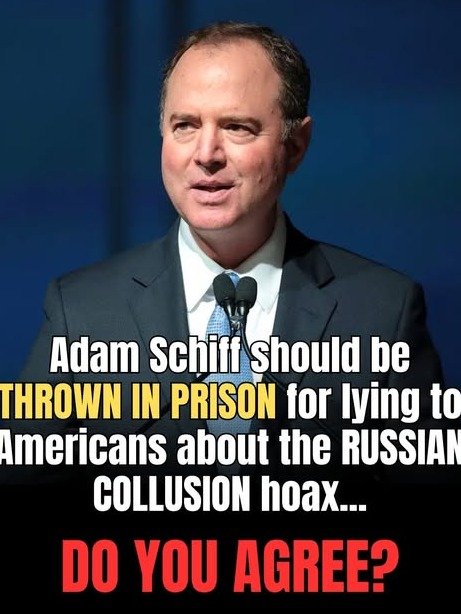
The name Adam Schiff instantly conjures images of intense political battles, hushed intelligence briefings, and a nation gripped by the specter of foreign interference. For years, his presence was central to the sprawling, contentious debate surrounding alleged Russian collusion in American elections, transforming him into both a revered champion and a reviled adversary on the national stage.
This isn’t just a story about a politician; it’s a deep dive into an era that fundamentally reshaped how Americans view their leaders, their intelligence agencies, and even their own political process. The reverberations of the Russia collusion battle continue to echo, making the question of accountability for figures like Schiff more pertinent than ever.
The Genesis of a Political Firestorm
The saga began to truly ignite in the wake of the 2016 presidential election, as intelligence agencies publicly asserted that Russia had actively interfered to influence the outcome. This bombshell revelation set off a chain reaction, leading to multiple investigations, most notably the Special Counsel investigation led by Robert Mueller.
Amidst this unfolding drama, Adam Schiff, then the ranking member and later chairman of the House Permanent Select Committee on Intelligence (HPSCI), emerged as a leading voice. He became a prominent figure in the media, frequently appearing on television to articulate the gravity of the allegations and the ongoing investigative efforts.
Schiff’s Ascent to Prominence
As the Democratic Party’s most visible face on intelligence matters, Schiff took on a critical role. He consistently highlighted what he described as alarming connections between the Trump campaign and Russian operatives, often using strong, declarative language that captivated his supporters and infuriated his detractors.
His public pronouncements were often seen as a direct challenge to the narrative put forth by the Trump administration, which largely dismissed the allegations as a ‘hoax’ or ‘witch hunt.’ This created an immediate and stark partisan divide, with Schiff at the epicenter of the political maelstrom.
The Weight of Public Statements
Throughout the intense period of the Mueller investigation, Schiff frequently spoke about the evidence he had seen in classified briefings. He publicly stated that there was “ample evidence of collusion” and that the Trump campaign had engaged in “treacherous” behavior.
These statements, while galvanizing his base, also drew fierce criticism from Republicans who accused him of prejudging the outcome, selectively leaking information, and even fabricating claims. The debate over the veracity and implications of his public remarks became a significant part of the broader political discourse.
“To his allies, Adam Schiff was a beacon of truth and a tireless defender of American democracy against foreign aggression. He stood firm against what they saw as an administration unwilling to confront a grave national security threat.”
The Mueller Report and its Aftermath
The release of the Mueller Report in April 2019 marked a pivotal moment. While the report detailed extensive Russian interference and numerous contacts between Trump campaign officials and individuals linked to the Russian government, it ultimately concluded that the investigation “did not establish that members of the Trump Campaign conspired or coordinated with the Russian government in its election interference activities.”
This finding was immediately seized upon by Schiff’s critics as proof that his earlier statements about “ample evidence of collusion” were unfounded or exaggerated. They demanded accountability, arguing that he had misled the public and fueled a politically motivated narrative.
The Accountability Divide: Allies’ Perspective
For those who supported Adam Schiff, his actions were not just justified but necessary. They viewed him as a diligent public servant, privy to classified intelligence that painted a disturbing picture of foreign interference and potential domestic complicity.
His allies believed he was courageously speaking truth to power, holding an administration accountable that they felt was actively undermining democratic institutions. They saw his vocal advocacy as a vital check on executive authority, particularly when dealing with matters of national security and intelligence.
- Defender of Democracy: Schiff’s supporters saw him as protecting the integrity of U.S. elections from foreign adversaries.
- Holding Power Accountable: They believed he was rightfully scrutinizing an administration they distrusted.
- Informed by Intelligence: His access to classified information lent credibility to his public warnings.
The Accountability Divide: Critics’ Perspective
On the other side of the aisle, Schiff became a lightning rod for Republican anger and frustration. His critics accused him of being a partisan warrior who prioritized political gain over truth, using his position on the intelligence committee to advance a narrative that lacked concrete evidence.
They argued that his consistent assertions of collusion, even after the Mueller Report’s findings, amounted to a deliberate attempt to deceive the public and damage a sitting president. For them, Schiff was a symbol of what they perceived as an overzealous and politically motivated investigation.
- Partisan Opportunist: Critics saw his actions as driven by a desire to undermine the Trump presidency.
- Misleading the Public: They pointed to his strong claims of collusion that were not ultimately substantiated by the Mueller report.
- Abuse of Power: Some accused him of using his intelligence committee role to push a political agenda.
The Impeachment Connection
Schiff’s visibility only intensified during the first impeachment proceedings against President Trump, where he served as the lead House impeachment manager. While that impeachment focused on Trump’s dealings with Ukraine, the underlying shadow of foreign interference and the weaponization of intelligence remained a potent backdrop, further cementing Schiff’s image as a central figure in anti-Trump efforts.
His impassioned arguments during the impeachment trial were praised by Democrats as masterful and condemned by Republicans as overly dramatic and politically charged, once again highlighting the deep chasm in public perception.
Media Scrutiny and Public Perception
The media played a significant role in shaping public perception of Adam Schiff. For cable news networks, he was a frequent guest, offering expert analysis and often breaking news on the latest developments in the Russia investigation. This consistent exposure amplified his voice and made him a household name.
However, this also meant he was subjected to intense scrutiny, with every word parsed and every statement analyzed. Depending on the outlet, he was either hailed as a hero or vilified as a partisan hack, a reflection of the polarized media landscape itself.
The Lingering Legacy of the Russia Battle
Years have passed since the peak of the Russia collusion debate, yet Adam Schiff’s name remains inextricably linked to it. The debate over his accountability isn’t just about one politician; it’s about the broader implications for political discourse, media trust, and the public’s understanding of complex investigations.
It raises fundamental questions: How should public officials communicate about ongoing, sensitive investigations? What is the balance between informing the public and avoiding premature conclusions? And how do we, as a society, navigate a political landscape where facts are often contested and trust in institutions is eroding?
An Enduring Controversy
The legacy of the Russia collusion narrative, and Adam Schiff’s role within it, continues to fuel partisan divisions. For many, he represents a principled stand against authoritarianism and foreign meddling. For others, he embodies the dangers of political overreach and unchecked ambition.
This ongoing debate underscores the profound impact of that tumultuous period on American politics and the deep-seated disagreements that persist. The question of whether Adam Schiff went too far, or acted precisely as he should have, remains a matter of fervent contention, shaping how we remember one of the most polarizing chapters in recent American history.
What Does This Mean For YOU?
Ultimately, the discussion around Adam Schiff’s accountability isn’t just an academic exercise. It speaks to the core of how information is presented, consumed, and debated in our democracy. Understanding the different perspectives on his role helps us critically evaluate political narratives and demand transparency from all public figures.
It encourages us to look beyond the headlines, to question the sources of information, and to form our own informed opinions, rather than simply accepting pre-packaged narratives. The Russia collusion battle, and Schiff’s place within it, serves as a powerful reminder of the importance of vigilance and critical thinking in a rapidly evolving political landscape.
About the Author




