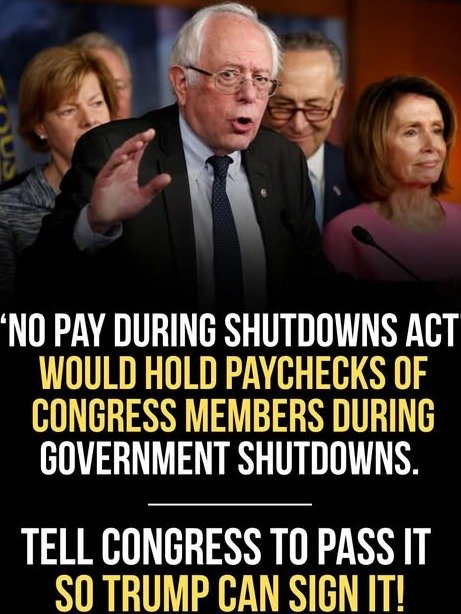
Imagine a scenario where thousands of dedicated federal employees are forced to go without a paycheck, their families struggling to make ends meet, all while the very politicians responsible for the gridlock continue to draw their full salaries. Sound unfair? You’re not alone. This infuriating reality has long been a flashpoint of public frustration during government shutdowns, but a groundbreaking new bill is poised to change everything.
The ‘No Pay During Shutdowns Act’ has just cleared a crucial committee hurdle, signaling a significant step forward in a proposal that aims to hold Congress accountable in a way never seen before. This isn’t just about money; it’s about fairness, accountability, and applying the same pressure to lawmakers that federal workers already face. Could this be the legislative game-changer we’ve been waiting for?
The Painful Reality of Government Shutdowns
Government shutdowns are more than just political theater; they have devastating real-world consequences. When Congress fails to pass appropriations bills on time, non-essential government operations grind to a halt. This often means national parks close, passport applications are delayed, and crucial research projects are put on hold, affecting millions of Americans.
Perhaps most acutely, hundreds of thousands of federal employees are either furloughed without pay or deemed ‘essential’ and forced to work without immediate compensation. These are your neighbors, friends, and family members – dedicated public servants who suddenly find their financial stability thrown into chaos through no fault of their own. Mortgages, rent, groceries, and childcare don’t stop just because Congress can’t agree.
The Long-Standing Double Standard
For years, a glaring double standard has fueled public outrage: while federal workers face immense financial strain, members of Congress continue to receive their salaries uninterrupted. This perceived immunity from the consequences of their own legislative failures has created a deep chasm of distrust between the public and their elected officials.
Critics argue that this system removes any meaningful financial incentive for lawmakers to avoid shutdowns. If their own paychecks aren’t on the line, what truly compels them to reach a bipartisan agreement before the funding deadline? The ‘No Pay During Shutdowns Act’ directly addresses this fundamental imbalance, seeking to align the financial realities of Congress with those of the federal workforce.
“It’s time for Congress to feel the same pinch that our federal employees do when they fail to do their job,” stated one proponent of the bill. “Accountability starts at the top.”
Understanding the ‘No Pay During Shutdowns Act’
The ‘No Pay During Shutdowns Act’ is straightforward in its intent: it proposes to withhold the salaries of members of Congress for any period during which a government shutdown is in effect. While the specific legislative language may include provisions for back pay once the government reopens, the immediate impact would be a powerful signal of shared sacrifice.
This bill is not an entirely new concept. Similar proposals have surfaced in the past, often gaining traction during periods of intense public frustration with congressional gridlock. However, the fact that this particular iteration has cleared a committee suggests a renewed momentum and a potentially stronger chance of becoming law.
Why This Bill Matters to You
Even if you’re not a federal employee, the passage of this act could have significant implications for you as a taxpayer and a citizen. Here’s why:
- Increased Accountability: It places direct financial pressure on lawmakers to prevent shutdowns, potentially leading to more timely and effective governance.
- Fairness: It addresses a long-standing grievance, creating a more equitable system where those who cause the shutdown also feel its immediate financial impact.
- Public Trust: By demonstrating a willingness to share in the burden, Congress could begin to rebuild some of the public trust that has eroded over years of political infighting.
- Fiscal Responsibility: While the direct savings from congressional salaries are minimal in the grand scheme of the federal budget, the symbolic value of responsible financial behavior from elected officials is immense.
The Road Ahead: Legislative Hurdles and Public Support
Clearing a committee is a significant step, but the ‘No Pay During Shutdowns Act’ still faces a challenging path to becoming law. It must pass both the House and the Senate, and then be signed by the President. Each stage presents opportunities for amendments, debates, and potential roadblocks.
However, the bill enjoys considerable public support across the political spectrum. The idea of holding politicians accountable for government dysfunction resonates deeply with voters, regardless of their party affiliation. Advocacy groups and citizens alike are likely to put pressure on their representatives to support this common-sense measure.
Historical Context: Shutdowns and Their Costs
Looking back, government shutdowns have been a recurring feature of American politics, particularly in recent decades. Major shutdowns in 1995-96, 2013, and 2018-19, for example, illustrate the widespread disruption and economic costs involved. The 2018-19 shutdown, the longest in U.S. history, lasted 35 days and cost the U.S. economy an estimated $11 billion, according to the Congressional Budget Office.
These figures highlight that while the ‘No Pay During Shutdowns Act’ focuses on congressional salaries, its true impact could be in preventing these costly events altogether. The financial pressure on lawmakers could serve as a powerful deterrent, forcing more serious negotiation and compromise.
Potential Arguments and Debates
While widely popular, such a bill is not without potential counter-arguments or areas of debate. Some might argue:
- Constitutional Concerns: While unlikely for this specific bill, some legislative proposals face scrutiny regarding the 27th Amendment (which prevents changes to congressional pay from taking effect until after the next election of representatives). However, withholding pay during a specific event rather than changing the salary itself may circumvent this.
- Impact on Staff: A concern could be that if members of Congress are not paid, it might indirectly affect their ability to pay essential staff, though the bill typically targets only the members themselves.
- Incentive for Quick, Poor Decisions: A very cynical view might suggest that extreme financial pressure could lead to rushed, ill-conceived agreements just to restore pay, rather than thoughtful policy. However, the primary goal is to foster agreement, not necessarily speed at all costs.
These debates are important parts of the legislative process, but the overwhelming public sentiment often leans towards greater accountability for elected officials.
The Future of Accountability in Washington
The ‘No Pay During Shutdowns Act’ represents a significant moment in the ongoing conversation about accountability in Washington. It’s a clear signal that the public is tired of political gamesmanship at the expense of federal workers and essential services.
As this bill moves through Congress, it will be a test of political will and a measure of how serious lawmakers are about addressing one of the most frustrating aspects of modern American governance. Will they finally put their own paychecks on the line, or will the double standard persist?
The pressure is on, and the eyes of the nation are watching. This act, if passed, could fundamentally alter the dynamics of future budget negotiations, pushing Congress towards compromise and away from the brink of costly, disruptive shutdowns. It’s a move that could redefine what it means to serve in Washington.
About the Author




