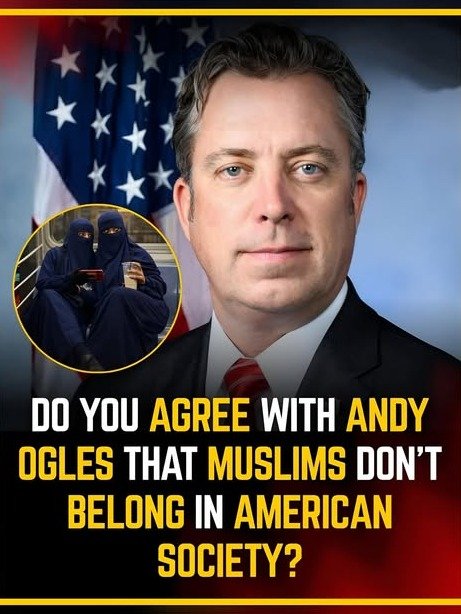
Imagine being told you don’t belong in the only home you’ve ever known, simply because of your faith. For many Muslim Americans, this isn’t just a hypothetical scenario, but a lived reality. Yet, the story of Islam in America isn’t a new chapter; it’s woven into the very fabric of this nation’s complex and often overlooked history.
As an American Muslim, born and raised in the USA, the question of belonging often resurfaces. But when we delve into the depths of our nation’s past, a powerful truth emerges: Islam has been present on these shores since before the United States was even formally established, profoundly challenging any narrative that seeks to label it as ‘foreign’ or ‘un-American’.
An American Story, A Muslim Identity
Being Muslim and American isn’t a contradiction; it’s a testament to the nation’s founding ideals of religious freedom and pluralism. Millions of Muslims contribute to every aspect of American life, from healthcare and technology to arts and public service, enriching the diverse tapestry that defines this country. This dual identity is a source of strength, reflecting a deep commitment to both faith and country.
However, this sense of belonging is frequently challenged by rhetoric that questions the loyalty or legitimacy of Muslim Americans. These challenges often stem from a lack of understanding, or worse, a deliberate erasure of history. It’s crucial to reclaim and amplify the narratives that demonstrate Islam’s enduring presence and contribution to the American story.
The Unseen Foundations: Islam in Early America
One of the most profound and often ignored chapters in American history is the significant presence of Muslims among the enslaved Africans brought to these shores. This isn’t a minor detail; it’s a fundamental aspect of how diverse cultures and faiths helped build this nation, often under unimaginable duress.
Historians estimate that between 10% to 30% of the enslaved Africans were Muslim. These individuals carried their faith, languages, and cultural practices across the Atlantic, often clinging to them despite brutal attempts at forced conversion and cultural eradication. Their stories are a powerful reminder of resilience and the deep historical roots of Islam in America.
“Islam has been a part of America for centuries, arriving not just with immigrants in recent decades, but with the very first waves of enslaved Africans.” – Dr. Sylviane Diouf, Historian
These early Muslim Americans left an indelible, though often hidden, mark. From skilled artisans and agriculturalists to scholars and spiritual leaders, their contributions were vital to the economic and cultural development of the nascent United States. They built communities, maintained their prayers, and even taught Arabic to others, passing down a legacy of faith against all odds.
Figures like Omar ibn Said, an educated Muslim scholar from Senegal who was enslaved in North Carolina, wrote an autobiography in Arabic, offering invaluable insights into the lives of Muslim captives. His story, and countless others, shatter the myth that Islam is a recent import to America, revealing its deep, foundational presence.
The Unshakeable Promise: Can the USA Ban God?
The very idea of banning a religion in the United States strikes at the heart of its constitutional framework. The question, “Can the USA ban God!?” is rhetorical precisely because the answer is a resounding ‘no,’ enshrined in the First Amendment of the U.S. Constitution.
- The Establishment Clause: This prevents the government from establishing or endorsing a religion. It ensures that no single faith can become the official religion of the state.
- The Free Exercise Clause: This guarantees individuals the right to practice their religion freely, without government interference, as long as it doesn’t violate public safety or order.
These clauses were revolutionary at the time of their drafting, reflecting the Founding Fathers’ desire to prevent the religious persecution and state-sponsored conflicts that plagued Europe. They understood that a nation built on diverse beliefs required a robust protection of religious liberty for all, not just a select few.
To ban a religion would be a direct assault on these fundamental principles, unraveling the very fabric of American democracy. It would contradict the spirit of a nation founded by those seeking freedom from religious oppression, and it would betray the promise of liberty for all its citizens.
Religious Freedom: A Cornerstone of American Identity
The protection of religious freedom isn’t merely a legal technicality; it’s a moral imperative and a defining characteristic of American identity. It ensures that individuals can pursue their spiritual paths, contribute to society based on their values, and live authentically without fear of government reprisal.
This freedom extends to all faiths, not just the majority. It protects the right of Christians, Jews, Muslims, Hindus, Buddhists, and people of no faith to believe (or not believe) as their conscience dictates. This pluralism is a strength, fostering a society where different perspectives can coexist and contribute to a richer national dialogue.
<
Confronting Modern Challenges and Preserving Our Ideals
Despite these constitutional guarantees and historical precedents, Muslim Americans continue to face significant challenges, including rising Islamophobia, discrimination, and political rhetoric that often seeks to marginalize or demonize their community. These challenges threaten not just Muslims, but the very ideals of religious freedom and equality upon which the nation was built.
It’s vital for all Americans to understand that an attack on the religious freedom of one group is an attack on the religious freedom of all. Upholding the First Amendment means defending the rights of every person to practice their faith without fear, regardless of how popular or unpopular that faith may be.
The enduring presence of Islam in America, from its earliest days to the present, serves as a powerful reminder of this nation’s capacity for diversity and its commitment to fundamental liberties. Recognizing this history is not just about acknowledging the past; it’s about strengthening our collective future.
A Call to Understanding and Unity
The story of Muslim Americans is an integral part of the larger American narrative – a narrative of struggle, resilience, contribution, and the ongoing pursuit of a more perfect union. By embracing this truth, we reinforce the principles that make America exceptional.
We must champion understanding over prejudice, education over ignorance, and unity over division. The question of whether America can ban God isn’t just about faith; it’s about whether America can abandon its soul. And the answer, unequivocally, is no. Our history, our Constitution, and our shared values stand as an unshakeable testament to that truth.
Let us remember that the strength of America lies in its embrace of diversity, including its rich tapestry of faiths. To deny the place of any faith, especially one with such deep historical roots, is to deny a part of America itself. The fight for religious freedom is a fight for the very essence of what it means to be American.
The legacy of Muslims in America, from enslaved ancestors to modern-day citizens, is a powerful testament to the enduring spirit of faith and the promise of a nation where all are truly free.
About the Author




