Imagine if your paycheck depended directly on whether you actually completed your core responsibilities at work. For most Americans, this isn’t just a hypothetical scenario; it’s a fundamental expectation. Yet, for members of Congress, the rules have often seemed to operate differently – even when they fail to pass a basic budget, one of their most crucial constitutional duties.
Year after year, we witness political brinkmanship, last-minute deals, and even debilitating government shutdowns, all stemming from Congress’s inability to agree on how to fund the nation. These stalemates don’t just create headlines; they disrupt government services, cause economic uncertainty, and erode public trust. It’s a cycle of dysfunction that many believe has gone on for far too long, with seemingly no real consequences for those at the top.
The Radical Idea: What is ‘No Budget, No Pay’?
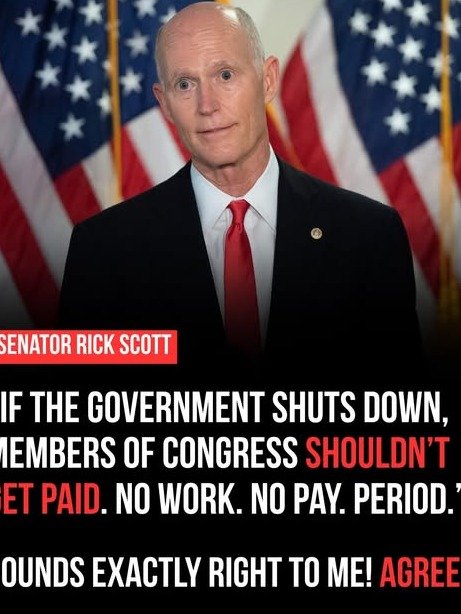
Enter Senator Rick Scott, who is championing a straightforward yet radical solution: a ‘No Budget, No Pay’ plan. The concept is disarmingly simple, designed to inject a dose of real-world accountability into the halls of power. Under this proposal, if Congress fails to pass a budget by the start of the fiscal year – October 1st – its members would not receive their salaries until a budget is finally enacted.
This isn’t just about withholding pay; it’s about shifting incentives. The current system often allows lawmakers to engage in prolonged debates and political maneuvering without experiencing the immediate financial repercussions that millions of Americans face during government shutdowns or economic instability. Senator Scott’s plan aims to change that dynamic by directly linking congressional compensation to legislative performance, creating a powerful personal stake in getting the job done.
Senator Rick Scott: A Champion for Accountability
Senator Rick Scott has been a vocal proponent of fiscal responsibility and government accountability throughout his career, both as Florida’s governor and now in the U.S. Senate. He frequently highlights the frustration of everyday Americans who expect their elected officials to simply do their jobs. For Scott, the ‘No Budget, No Pay’ initiative is a direct response to this widespread public sentiment and a way to hold Washington accountable.
“For too long, Congress has operated without real consequences for its failures to deliver on basic responsibilities,” Senator Scott has stated. “My ‘No Budget, No Pay’ plan is about forcing accountability. If Members of Congress can’t do the most fundamental part of their job – passing a budget – then they shouldn’t get paid until they do. It’s a simple concept that everyday families understand.”
He argues that this plan isn’t punitive but rather a necessary mechanism to align the interests of lawmakers with those of the constituents they serve. When Congress fails to pass a budget, it’s not just a procedural hiccup; it has tangible effects on federal employees, small businesses dependent on government contracts, and the broader economy that relies on government stability and foresight.
The Real Cost of Congressional Dysfunction
The implications of budget stalemates and government shutdowns extend far beyond political headlines. Each time Congress flirts with or enters a shutdown, real people and vital services are affected. Essential government functions may be curtailed, federal workers face uncertainty or go without pay, and national parks might close, impacting tourism and local economies. The economic ripple effects can be substantial, impacting everything from consumer confidence to international perceptions of American stability.
Consider the recent history of budget impasses. They often result in stopgap measures, known as continuing resolutions, which merely kick the can down the road without addressing underlying fiscal challenges. This piecemeal approach prevents long-term planning, hinders critical investments in infrastructure and social programs, and creates an environment of perpetual uncertainty for federal agencies and the public alike.
This cycle of crisis management rather than proactive governance is precisely what Senator Scott’s plan seeks to disrupt. By introducing a direct financial consequence for inaction, the ‘No Budget, No Pay’ proposal aims to elevate the urgency and seriousness with which budget negotiations are approached.
Why This Plan Could Be a Game-Changer
The core argument for ‘No Budget, No Pay’ is its potential to create a powerful incentive for compromise and efficiency. Currently, the political cost of failing to pass a budget is often diffuse, spread across the entire body of Congress, and sometimes even weaponized for partisan gain. By directly targeting individual lawmakers’ salaries, the plan introduces a more immediate and personal consequence that is hard to ignore.
- Increased Urgency: Lawmakers would have a stronger personal stake in reaching a comprehensive budget agreement before the fiscal year deadline, pushing them towards genuine negotiation.
- Focus on Core Duties: It would explicitly reinforce the idea that passing a budget is a non-negotiable part of their job, not a negotiable political pawn to be traded for other legislative priorities.
- Public Trust: Implementing such a plan could significantly boost public confidence, demonstrating that Congress is finally willing to hold itself accountable to the same standards it expects of others.
- Fiscal Discipline: The pressure to pass a budget on time could lead to more serious engagement with underlying fiscal challenges and a move away from temporary fixes and unsustainable spending habits.
This approach could foster an environment where bipartisan cooperation is seen not just as an ideal, but as a necessity for personal financial stability and, by extension, the stability of the nation. It forces members to consider the direct impact of their inaction, making the abstract concept of
About the Author




