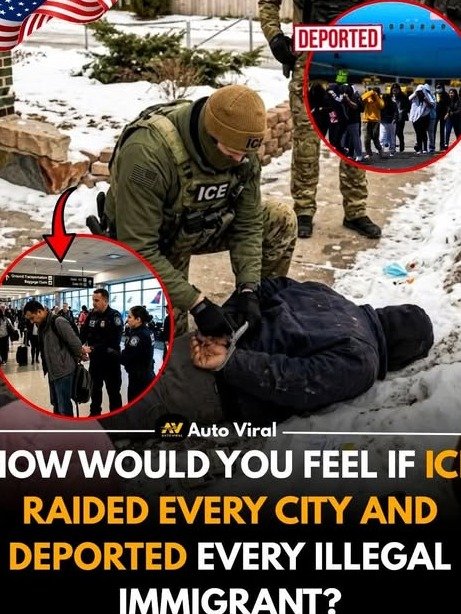
Imagine an America vastly different from the one you know today – not in decades, but perhaps sooner than you think. The ongoing, often heated, debate surrounding immigration enforcement isn’t just about borders and laws; it’s about the very soul and future of our nation. Every policy decision, every political statement, and every enforcement action carves a path toward a distinct version of America, impacting everything from our economy to our cultural identity.
For decades, immigration has been a foundational pillar of American society, yet the question of how to manage it remains one of our most divisive challenges. The enforcement debate, in particular, forces us to confront uncomfortable truths and consider radical shifts. What would America truly look like if we embraced a maximalist enforcement strategy, or conversely, a significantly more lenient one? The answers are complex, far-reaching, and demand our immediate attention.
The Heart of the Debate: Two Divergent Visions
At its core, the immigration enforcement debate pits two fundamentally different visions for America against each other. One vision champions strict border controls, rigorous interior enforcement, and rapid deportations, advocating for a system that prioritizes national sovereignty and the rule of law above all else. Proponents often argue this approach is essential for national security, maintaining cultural cohesion, and protecting domestic jobs and wages.
The opposing vision emphasizes humanitarian concerns, economic integration, and the historical role of immigrants in American growth. This perspective often calls for comprehensive immigration reform, including pathways to citizenship, streamlined legal immigration processes, and a focus on addressing the root causes of migration. Adherents believe such an approach aligns with American values, fosters economic dynamism, and strengthens our global standing.
The Economic Ripple Effect: Who Pays the Price?
One of the most immediate and tangible impacts of any shift in immigration enforcement would be felt in the American economy. Immigrants, regardless of their legal status, are deeply embedded in various sectors, from agriculture and construction to technology and healthcare. Drastic changes could either disrupt these industries or provide new avenues for growth, depending on the chosen path.
The Workforce Dilemma
Consider a scenario of aggressive, widespread enforcement leading to mass deportations. Industries heavily reliant on immigrant labor, such as farming, hospitality, and specific segments of manufacturing, would face immediate and severe labor shortages. Farmers, for instance, often struggle to find enough domestic workers willing to do strenuous seasonal labor, and a significant reduction in the immigrant workforce could lead to crop losses, increased food prices, and even a decline in agricultural output.
Conversely, a more open immigration policy, coupled with pathways to legal status, could alleviate labor shortages, particularly in booming sectors or those experiencing an aging workforce. It could also encourage entrepreneurship, as immigrants are statistically more likely to start businesses. However, critics argue that an influx of low-skilled workers could depress wages for native-born citizens in certain fields, though economic studies on this impact often present mixed results and depend heavily on specific market conditions.
Economic Growth and Innovation
Beyond labor, immigration enforcement policies can significantly impact national GDP and innovation. Immigrants contribute billions in taxes, spend money on goods and services, and often fill critical skill gaps. Stricter enforcement could lead to a ‘brain drain’ if highly skilled individuals are deterred from coming to or staying in the U.S., potentially stifling innovation in technology, science, and medicine.
An America with less immigration, or one that makes it harder for immigrants to integrate, might see slower economic growth and reduced competitiveness on the global stage. On the other hand, proponents of stricter enforcement believe that a more controlled, merit-based system would attract only the most beneficial immigrants, optimizing economic gains while minimizing perceived social costs.
Social Fabric and Community Impact: Unity or Division?
Beyond economics, the debate profoundly touches the social and cultural fabric of American communities. Immigration has historically enriched the U.S. with diverse traditions, languages, and perspectives, but also sparked debates about assimilation and identity.
Cultural Tapestry or Tensions?
An America with vastly increased enforcement could lead to more homogenous communities, especially in areas that have seen significant immigration. This might be seen by some as a return to traditional American values, while others would mourn the loss of multicultural vibrancy and the unique contributions of immigrant communities to local economies and cultural life, from diverse cuisines to new artistic expressions.
Conversely, a more lenient approach could foster greater diversity and cultural exchange, potentially leading to richer community experiences. However, it could also exacerbate social tensions if integration is not managed effectively, leading to debates over language, public services, and differing social norms. The challenge lies in fostering a sense of shared identity while celebrating diverse backgrounds.
Strain on Public Services?
The impact on public services is another critical aspect. Communities with large immigrant populations, particularly those with a significant number of undocumented residents, often face increased demands on schools, healthcare, and social welfare programs. Stricter enforcement could reduce this strain in some areas, but it could also lead to a larger hidden population afraid to seek necessary services, potentially creating public health or safety risks.
A system that integrates immigrants more effectively, providing pathways to legal status and employment, would allow them to contribute more fully to the tax base, potentially easing the burden on public services over time. The debate often boils down to whether immigrants are viewed as a net drain or a net contributor to public resources.
Political Landscape and Governance: Shifting Power Dynamics
The immigration enforcement debate is not just a policy discussion; it’s a political battleground that shapes elections, legislative priorities, and even international relations. The future of America’s political landscape is inextricably linked to how this debate evolves.
Shifting Electoral Maps
The demographic shifts driven by immigration have profound implications for electoral politics. As immigrant populations grow and naturalize, their voting power increases, potentially altering the balance of power in swing states and congressional districts. Parties that successfully appeal to immigrant communities and their descendants could gain a significant advantage in future elections.
Conversely, a country that sees a decline in immigration, or one where immigrant communities feel marginalized by enforcement policies, could see a different kind of political realignment. The debate itself galvanizes different voter bases, with some prioritizing border security and others advocating for humane reform, leading to deeply polarized political discourse and legislative gridlock.
The Rule of Law and National Identity
The discussion also revolves around the very definition of the rule of law and national identity. Advocates for strict enforcement often frame it as upholding the integrity of the legal system and national sovereignty. They argue that lax enforcement undermines the law and encourages further unauthorized immigration.
On the other hand, proponents of reform argue that current laws are outdated, impractical, and often inhumane, leading to an underclass of residents living in the shadows. They suggest that a modern, efficient legal immigration system would better serve the rule of law by creating clear, enforceable pathways rather than relying on punitive measures alone.
Humanitarian Considerations: Lives in the Balance
Beneath the economic and political arguments lie profound humanitarian concerns. Immigration enforcement decisions directly impact millions of lives, including families, children, and asylum seekers fleeing persecution.
Aggressive enforcement often leads to family separations, detention, and deportation, raising ethical questions about human rights and the treatment of vulnerable populations. Images and stories of children separated from parents or individuals held in detention facilities can deeply move public opinion and challenge a nation’s moral compass.
A more lenient or reform-oriented approach would likely prioritize family unity, offer more robust asylum processes, and provide social support for new arrivals. While this approach is lauded for its compassion, it also raises questions about capacity, resources, and the potential for a perceived ‘pull factor’ encouraging more migration. The balance between compassion and control is a constant tension in this debate.
Envisioning the Future: Three Potential Americas
So, what would America look like? Let’s explore three distinct, though simplified, scenarios based on the trajectory of immigration enforcement.
Scenario A: The ‘Zero Tolerance’ Nation
Imagine an America that has fully embraced a maximalist enforcement strategy. Borders are heavily fortified, technology-driven surveillance is pervasive, and interior enforcement is aggressive, leading to mass deportations. E-Verify is mandatory for all employers, and penalties for hiring undocumented workers are severe. Legal immigration is dramatically curtailed, perhaps focusing almost exclusively on highly skilled individuals or those with significant capital.
In this America, the undocumented population would shrink significantly. Industries reliant on this labor would either automate, move operations abroad, or struggle with higher labor costs and reduced output. Cultural diversity might lessen in some areas, and communities with historically large immigrant populations might see demographic shifts. Politically, this America would likely be more nationalist, with a strong emphasis on sovereignty and control. However, it could also face international criticism, labor shortages, and internal social strife from the humanitarian consequences of such policies.
Scenario B: A Path to Comprehensive Reform
Now, envision an America that has successfully implemented comprehensive immigration reform. This includes a clear pathway to legal status and citizenship for many undocumented immigrants already here, streamlined legal immigration processes, and robust, yet humane, border management. Investment is made in addressing the root causes of migration in other countries, and asylum processes are efficient and fair.
This America would see a significant portion of its undocumented population integrated into society, contributing openly to the economy and tax base. Labor shortages might be eased, and entrepreneurship could flourish. Culturally, this America would likely be even more diverse and vibrant, with new generations of immigrants enriching its social fabric. Politically, there might be greater consensus on immigration policy, though initial debates would be intense. The challenges would include managing the integration process, ensuring adequate resources for new arrivals, and maintaining public support for such reforms.
Scenario C: Muddling Through the Status Quo
Finally, consider an America that largely continues its current trajectory: a patchwork of inconsistent enforcement, ongoing political polarization, and periodic, reactive policy changes. The border remains a point of contention, interior enforcement continues without a clear overarching strategy, and legislative gridlock prevents meaningful, long-term reform.
This America would look very much like the one we know today, but with exacerbated problems. A large undocumented population would persist, living in uncertainty and contributing to a shadow economy. Industries would continue to rely on this labor while facing risks of enforcement. Social tensions would remain high, fueled by ongoing debates and a lack of resolution. Politically, immigration would remain a wedge issue, constantly used for electoral advantage rather than collaborative problem-solving. This scenario offers neither the perceived benefits of strict enforcement nor the potential advantages of comprehensive reform, leading to continued instability and inefficiency.
The Choice is Ours
The immigration enforcement debate is not just a theoretical exercise; it’s a living, breathing discussion with profound implications for every aspect of American life. The choices we make today, or fail to make, will determine which of these Americas, or some hybrid thereof, comes to fruition. It’s a debate that touches our economy, our social cohesion, our political future, and our very identity as a nation.
Understanding the potential consequences of each path is crucial for informed public discourse. It’s time to move beyond soundbites and engage with the complexity, the data, and the human stories at the heart of this defining national conversation. The future of America is literally at stake, and the time to decide what it will look like is now.
About the Author




