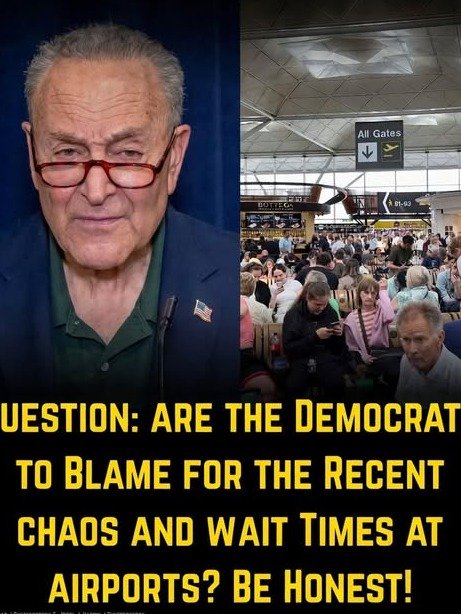
Remember that sinking feeling at the airport, watching security lines snake endlessly, knowing your flight was boarding soon? For many, this wasn’t just a bad travel day; it was a direct consequence of a government shutdown, specifically targeting the Department of Homeland Security (DHS). The ripple effects were immediate and deeply felt, particularly by the dedicated men and women of the Transportation Security Administration (TSA).
The core of the issue revolved around a critical question: who was responsible for the political stalemate that left thousands of essential workers, including TSA agents, working without pay? Allegations quickly surfaced, pointing fingers directly at one political party for precipitating the crisis. But what’s the full story behind this contentious period, and how did it impact the very fabric of our national security and travel infrastructure?
The Anatomy of a Government Shutdown: What Happened?
A government shutdown occurs when Congress fails to pass appropriation bills or continuing resolutions to fund government operations. This usually happens due to disagreements between the legislative and executive branches over budget priorities, policy riders, or broader political agendas. When the funds run out, non-essential government services cease, and essential employees are often forced to work without immediate compensation.
The specific DHS shutdown in question was a particularly acrimonious event, rooted in profound disagreements over border security funding. While the Department of Homeland Security encompasses many agencies, the spotlight often falls on those directly impacting public life, like the TSA, U.S. Customs and Border Protection (CBP), and the U.S. Coast Guard. These agencies are deemed ‘essential’ because their functions are critical to national security and public safety.
TSA Agents: The Unpaid Frontline Heroes
Imagine going to work every day, performing a vital public service, knowing your paycheck won’t arrive. This was the stark reality for tens of thousands of TSA agents during the shutdown. These dedicated individuals, responsible for ensuring the safety and security of air travel, were legally required to report for duty, despite the complete absence of their regular wages.
The financial strain on these agents was immense. Many live paycheck to paycheck, and missing even one pay period can lead to devastating consequences, including:
- Inability to pay rent or mortgage: The primary concern for countless families.
- Difficulty covering basic necessities: Groceries, utilities, and transportation became immediate challenges.
- Increased stress and anxiety: The uncertainty took a heavy toll on mental health.
- Forced to seek alternative income: Some agents reportedly took on second jobs or relied on food banks and community support.
Despite these profound personal hardships, the vast majority of TSA agents continued to show up, demonstrating an extraordinary commitment to their duty. Their professionalism under duress was widely praised, even amidst the political turmoil.
The Travel Nightmare: Extended Security Wait Times
The immediate and most visible impact of the unpaid TSA workforce was a dramatic increase in security wait times at airports across the nation. As the shutdown dragged on, a growing number of TSA agents, unable to sustain themselves and their families without pay, began to call in sick or resign. This created a significant staffing shortage, particularly during peak travel periods.
Airports, already operating on tight schedules, struggled to cope. Passengers reported wait times stretching for hours, leading to:
- Missed flights and connections: Travelers, especially those with tight layovers, often found themselves stranded.
- Increased stress and frustration: The uncertainty of clearing security added immense pressure to an already stressful travel experience.
- Economic impact on airlines and businesses: Delays and cancellations had a cascading effect on the travel industry.
- Security concerns: While TSA maintained security standards, reduced staffing could theoretically lead to longer lines and potential vulnerabilities, though officials consistently reassured the public that safety was not compromised.
The images of snaking lines and frustrated travelers became a powerful symbol of the shutdown’s real-world consequences, bringing the abstract political debate into sharp focus for millions of Americans.
The Allegation: Democrats to Blame?
The central allegation during this period was that Democrats were directly responsible for the DHS shutdown, and by extension, the hardship faced by TSA agents and the travel disruptions. This claim typically stemmed from the political impasse over funding for a border wall, a key demand from the Republican administration at the time.
From this perspective, the argument was that Democrats in Congress refused to allocate the requested funds for border security, specifically for the construction of a wall along the U.S.-Mexico border. By withholding their support for appropriations bills that included this funding, they were seen as blocking the entire budget, thereby triggering the shutdown. Proponents of this view argued that if Democrats had simply agreed to the border wall funding, the government would have remained open, and TSA agents would have been paid.
“The refusal to compromise on critical border security measures led directly to this shutdown, impacting hardworking Americans. Democrats had the opportunity to fund the government and chose not to, prioritizing political obstruction over public service.” – A common sentiment expressed by those supporting this view.
This narrative emphasized the idea that the Democratic Party’s unwavering opposition to the border wall was the primary, if not sole, cause of the fiscal standoff. The implication was that their political stance held the entire government, and the livelihoods of its employees, hostage.
A Broader Look: The Complexities of Political Blame
However, assigning blame in a government shutdown is rarely a simple, one-sided affair. Political analysts and opposing parties often present a more nuanced picture, highlighting the shared responsibility inherent in legislative stalemates. While Democrats were indeed resolute in their opposition to the border wall funding, they argued that the administration and Republicans were equally intransigent in their demands.
The Democratic counter-argument often centered on several points:
- Budgetary priorities: Democrats argued that the border wall was an ineffective and costly solution, and that funds could be better allocated to other border security measures, technology, or humanitarian aid.
- Executive demands: They contended that the administration’s insistence on a specific funding item, rather than negotiating a broader budget, was the true cause of the impasse.
- Hostage-taking: Many Democrats accused the administration of using the shutdown as leverage to force through an unpopular policy, effectively holding government operations hostage to a single demand.
- Bipartisan compromise: They often pointed to alternative funding proposals and compromises that were rejected by the opposing side, suggesting a lack of willingness to negotiate in good faith from the other party.
Therefore, while the allegation against Democrats focused on their refusal to fund the wall, the broader context involved a clash of fundamental policy philosophies and negotiating tactics from both sides of the aisle. Each party presented their position as a principled stand, while accusing the other of inflexibility.
The Resolution and Lingering Questions
Eventually, the DHS shutdown concluded, often through temporary funding measures or a negotiated compromise that did not fully satisfy either side’s initial demands. The resolution typically involved a combination of political pressure, public outcry over the impacts, and a realization that the costs of the shutdown outweighed the benefits of continuing the stalemate.
While the immediate crisis passed, the shutdown left lingering questions about the effectiveness of government, the vulnerability of essential workers, and the increasing polarization of American politics. It highlighted how fundamental disagreements can paralyze critical government functions and inflict real pain on ordinary citizens and civil servants.
Preventing Future Shutdowns: A Bipartisan Challenge
The experience of the DHS shutdown serves as a stark reminder of the need for effective governance and bipartisan cooperation. Preventing future shutdowns requires a willingness from all parties to:
- Negotiate in good faith: Prioritizing compromise over partisan victories.
- Prioritize public service: Ensuring essential government functions and employee livelihoods are not used as bargaining chips.
- Find common ground: Identifying areas of agreement even amidst significant policy differences.
- Long-term fiscal planning: Moving away from last-minute budget battles towards more sustainable financial strategies.
The impact on TSA agents and travelers during the DHS shutdown was a powerful illustration of how political gridlock can directly translate into tangible hardships for millions. Understanding the complex interplay of blame, policy, and human impact is crucial for navigating future political challenges and striving for a more functional government.
Conclusion: More Than Just a Headline
The allegation that Democrats were solely to blame for the DHS shutdown, leading to unpaid TSA agents and extended security lines, is a narrative that gained significant traction. It highlights a specific perspective on a contentious political event, focusing on the refusal to fund a key policy initiative.
However, a comprehensive understanding reveals a more intricate web of political maneuvering, deeply held policy differences, and a shared struggle for control over the nation’s budget and direction. Ultimately, the shutdown underscored the profound human cost of political stalemates, leaving a lasting impression on the thousands of dedicated TSA agents who worked without pay and the millions of travelers whose journeys were disrupted.
About the Author




