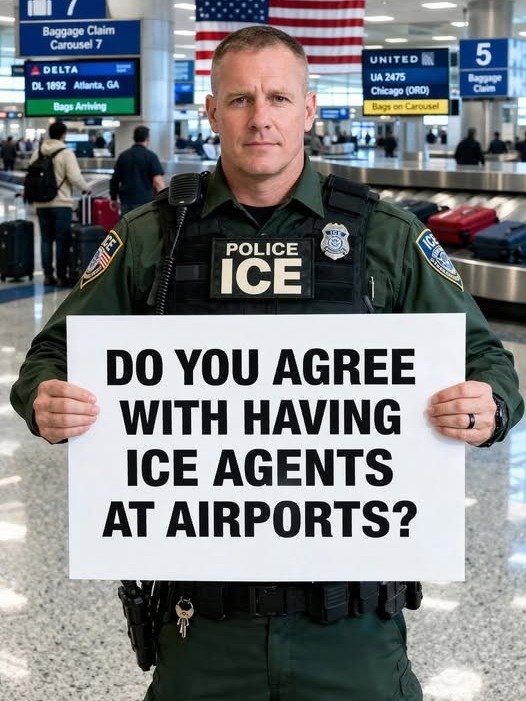
Imagine arriving at the airport, only to face endless lines, delayed flights, and a palpable sense of frustration. This has become an all-too-common reality for travelers across the United States. But what if the solution to this mounting chaos involved a controversial deployment that could fundamentally alter your airport experience? A recent proposal to deploy U.S. Immigration and Customs Enforcement (ICE) agents to assist at airports during periods of severe disruption has ignited a fierce debate, leaving many wondering about the implications for security, civil liberties, and the future of air travel.
This isn’t just about extra hands on deck; it’s about a potential shift in how federal agencies interact with the public in non-traditional roles. As staffing shortages continue to plague airports nationwide, leading to widespread delays and cancellations, the idea of leveraging existing federal law enforcement personnel like ICE agents has been put forward as a possible remedy. However, this proposal comes with a complex web of considerations, from the practicalities of logistics to profound ethical and legal questions.
The Unfolding Crisis in U.S. Airports
For years, U.S. airports have been grappling with a perfect storm of challenges. The post-pandemic surge in travel demand, coupled with persistent staffing shortages across various sectors – from Transportation Security Administration (TSA) officers and air traffic controllers to airline ground crews and customer service representatives – has pushed the system to its breaking point. Travelers regularly encounter agonizingly long security lines, sudden flight cancellations, and significant delays, turning what should be an exciting journey into a stressful ordeal.
These operational bottlenecks aren’t just inconvenient; they carry substantial economic costs and erode public trust in the efficiency of our national infrastructure. The ripple effect of one delayed flight can impact hundreds of passengers and countless subsequent flights, creating a cascading problem that is incredibly difficult to untangle. It’s against this backdrop of systemic strain that a truly unconventional solution has emerged, sparking a national conversation.
The Controversial ICE Deployment Proposal
The proposal suggests that ICE agents, who are federal law enforcement officers, could be temporarily reassigned or deployed to assist with various functions at U.S. airports during peak travel times or periods of significant operational disruption. The underlying rationale is that these agents are already trained in federal law enforcement and security protocols, making them a readily available resource to supplement stretched airport staff.
The specific roles ICE agents might fill are a subject of much speculation and debate. Proponents suggest they could help with crowd control, verify identification (under appropriate supervision), assist with passenger flow, or even provide an additional layer of security presence. The idea is to alleviate pressure on existing airport personnel, thereby reducing wait times and improving overall operational efficiency. This isn’t about replacing TSA or airline staff entirely, but rather providing a surge capacity when the system is overwhelmed.
“We need all hands on deck when our airports are struggling,” stated one proponent, highlighting the need for flexible federal resources to address immediate crises. “Utilizing trained federal agents, even outside their primary mission, could be a temporary but effective stopgap.”
Arguments For: Efficiency and Enhanced Security
Those who support the deployment of ICE agents at airports often point to several key benefits. First and foremost is the argument of efficiency and resource utilization. ICE agents are federal employees with law enforcement training, making them a pre-existing federal asset that could theoretically be mobilized quickly. Rather than waiting for new hires or extensive training programs, this approach offers an immediate influx of personnel.
Secondly, proponents argue that ICE agents could enhance overall airport security. Their presence, even in a supporting role, could act as a deterrent to potential threats and provide an additional layer of vigilance. In situations requiring a law enforcement response, having more trained officers on site could lead to faster and more effective interventions. This perspective views the airport environment as one where all federal law enforcement capabilities should be considered.
- Rapid Deployment: Existing federal agents can be deployed faster than hiring new staff.
- Leveraging Training: Agents possess law enforcement and security training.
- Increased Presence: Enhanced security visibility and deterrence.
- Operational Support: Potential to alleviate bottlenecks in non-enforcement capacities.
Arguments Against: Mission Creep and Civil Liberties Concerns
However, the proposal has been met with significant opposition, primarily centered on concerns about mission creep and the potential impact on civil liberties. Critics argue that ICE’s primary mission is immigration enforcement, and deploying them to assist with general airport operations could blur the lines of their authority and public perception. This could lead to confusion among travelers about the agents’ roles and responsibilities.
A major concern revolves around the potential for increased fear and profiling. Many fear that the presence of ICE agents, even if ostensibly for general assistance, could lead to heightened anxiety among immigrant communities and minority travelers. There are worries about potential for unwarranted questioning, scrutiny, or even discrimination, particularly given ICE’s controversial history in immigration enforcement. This could fundamentally change the welcoming atmosphere airports strive to maintain.
Furthermore, questions arise about the specific training of ICE agents for airport operational roles. While they are trained in law enforcement, they may not possess the specialized skills required for TSA screening, customer service, or airline gate management. Deploying them in roles for which they are not specifically trained could lead to inefficiencies or even new problems, rather than solving existing ones.
“Airports should be places of transit, not immigration checkpoints,” remarked a civil liberties advocate. “Deploying ICE agents, regardless of their stated purpose, sends a chilling message to travelers and risks eroding trust between the public and federal agencies.”
Legal, Ethical, and Practical Implications
The legal framework surrounding such a deployment is also complex. What would be the scope of authority for ICE agents operating outside their typical immigration enforcement duties? Would they be subject to the same protocols as TSA officers or local airport police? Clarifying these jurisdictional boundaries would be crucial to avoid legal challenges and ensure proper oversight.
Ethically, the debate touches on the appropriate use of federal power and the potential for unintended consequences. Is it ethical to deploy an agency with a specific, often contentious, enforcement mission into a general public assistance role? The public perception of such a move could be overwhelmingly negative, regardless of the intentions behind it. Practically, managing the logistics, training, and accountability for such a diverse deployment would present significant challenges.
- Jurisdictional Confusion: Blurring lines of authority between agencies.
- Public Trust: Risk of alienating certain traveler demographics and eroding public confidence.
- Resource Misallocation: Diverting ICE agents from their core mission.
- Training Deficiencies: Lack of specific training for airport operational roles.
- Potential for Profiling: Increased scrutiny for certain groups, even if unintended.
Alternative Solutions to Airport Challenges
Instead of, or in addition to, the controversial ICE proposal, many experts and advocacy groups suggest focusing on more direct and sustainable solutions to airport staffing shortages and operational woes. These include:
- Aggressive Recruitment and Retention: Launching robust campaigns to hire and retain TSA officers, air traffic controllers, and airline staff, offering competitive wages and benefits.
- Enhanced Training Programs: Investing in comprehensive training for all airport personnel to improve efficiency and customer service.
- Technological Innovation: Accelerating the adoption of advanced technologies like biometrics, automated screening lanes, and AI-powered systems to streamline processes and reduce reliance on manual labor.
- Improved Inter-Agency Coordination: Fostering better collaboration between federal agencies (TSA, FAA, CBP), airlines, and local airport authorities to anticipate and mitigate disruptions.
- Infrastructure Investment: Modernizing airport infrastructure to handle increased passenger volumes more efficiently.
These alternatives focus on addressing the root causes of airport disruptions rather than implementing what many view as a temporary and potentially problematic workaround. The long-term health and efficiency of the U.S. air travel system depend on robust, well-planned strategies.
The Road Ahead: What This Means for Travelers
The discussion around deploying ICE agents at U.S. airports is far from over. It represents a critical juncture in how we approach national security, public service, and the traveler experience. For passengers, the outcome of this debate could mean very different realities for their next journey. Will airports become more efficient but also more intimidating? Or will alternative solutions prevail, maintaining a balance between security and a welcoming travel environment?
As staffing shortages and travel disruptions continue to challenge the system, the pressure to find viable solutions will only intensify. The proposal to involve ICE agents underscores the desperation felt by some officials, but it also highlights the deep divisions in how the public and policymakers envision the role of federal agencies. Travelers should stay informed, as decisions made today could profoundly impact every future trip.
About the Author




