Imagine someone standing firm in their convictions, facing immense pressure, ridicule, or even danger for what they believe is right. We’d universally call that bravery, wouldn’t we? It’s a quality we often admire, a hallmark of heroism in countless stories and real-life scenarios.
But what if I told you that one crucial detail about that person could dramatically alter how society perceives and praises their courageous act? What if their religious faith, specifically Christianity, subtly shifts the narrative from ‘heroic’ to ‘expected’ or even ‘misguided’?
This isn’t just a hypothetical thought experiment. It’s an uncomfortable question that many Christians and observers of culture have pondered: is there a hidden double standard when it comes to acknowledging bravery, depending on whether the individual identifies as Christian?
The Invisible Barrier: How Faith Changes Perception
Consider the countless acts of service and self-sacrifice performed by Christians around the world. Missionaries dedicate their lives to helping impoverished communities, often in dangerous regions, providing education, healthcare, and humanitarian aid. Yet, their efforts are frequently framed as mere ‘religious duty’ or attempts at ‘proselytization’ rather than selfless acts of courage.
Compare this to secular aid workers who undertake similar risks in the same regions. While their bravery is often lauded without qualification, the Christian’s motivation is frequently scrutinized or even dismissed. It’s as if their faith, instead of being seen as a source of strength, becomes a filter that diminishes the perceived value of their actions.
This phenomenon extends beyond international aid. Think of individuals who take a moral stand in their workplaces or communities, adhering to principles rooted in their faith, even when it means facing professional repercussions or social ostracism. For a non-Christian, this might be celebrated as integrity; for a Christian, it can be framed as ‘intolerance’ or ‘imposing beliefs’.
“True bravery is not the absence of fear, but the triumph over it.” – Nelson Mandela. Yet, when that triumph is rooted in faith, society sometimes struggles to acknowledge it.
The courage to uphold deeply held, often unpopular, beliefs in a progressively secular society requires immense fortitude. Yet, when Christians do so, they are rarely given the same credit for bravery that might be afforded to those who champion more culturally accepted causes.
Deconstructing the Double Standard
Why does this subtle, yet pervasive, double standard appear to exist? Part of the answer lies in the changing cultural landscape. As Western societies become increasingly secular, there’s a growing discomfort with overt expressions of religious faith, particularly Christianity, in the public square.
Media narratives often play a significant role. Stories featuring Christian acts of bravery might be less likely to gain widespread positive coverage, or they might be framed in a way that emphasizes the religious aspect over the universal human courage demonstrated. This can lead to a subconscious devaluation of such acts in the public consciousness.
Furthermore, there’s a common misconception that religious individuals are simply acting out of a desire for heavenly reward, thus diminishing the ‘selfless’ aspect of their bravery. This overlooks the profound human compassion and conviction that often drives faith-based actions, motivations that are just as valid and powerful as any secular humanitarian impulse.
The bias can also stem from a misunderstanding of what faith entails. For many, faith isn’t just a set of rules, but a deep, personal commitment that informs their entire worldview and inspires extraordinary acts of love, resilience, and yes, bravery. To dismiss these acts because of their spiritual origin is to miss a fundamental aspect of human motivation.
What Truly Defines Courage?
So, what truly constitutes bravery, irrespective of a person’s background or beliefs? At its core, bravery involves facing fear, pain, danger, uncertainty, or intimidation with resolve. It can be physical, like rushing into a burning building, or moral, like speaking truth to power.
- Physical Courage: Enduring physical pain, hardship, or threat.
- Moral Courage: Standing up for one’s ethical convictions, even in the face of social disapproval or personal risk.
- Intellectual Courage: Challenging one’s own assumptions or popular beliefs, pursuing truth despite discomfort.
- Spiritual Courage: Maintaining faith and hope in times of profound despair or persecution.
Each of these forms of courage is valuable and worthy of recognition. The source of one’s conviction—whether it’s secular humanism, philosophical principles, or religious faith—should not be the primary determinant of whether an act is deemed brave. The act itself, its impact, and the character it reveals should be the focus.
When a Christian chooses to forgive an aggressor, or dedicates their life to serving the marginalized, or stands firm against societal pressures that contradict their conscience, they are demonstrating profound bravery. These are not simply ‘religious acts’; they are acts of human courage, amplified by their faith.
The Dangers of Selective Praise
The selective praise of bravery carries significant dangers for society. When we judge courage through a biased lens, we risk creating a fragmented understanding of heroism, where only certain types of bravery are celebrated while others are ignored or even condemned. This erodes empathy and understanding between different groups.
It can also lead to the silencing of voices and the marginalization of individuals who draw strength from their faith. If the cost of being recognized for courage is to downplay or hide one’s religious identity, then society loses out on the rich diversity of human experience and motivation that contributes to a truly compassionate world.
Ultimately, a double standard in recognizing bravery undermines the very concept of universal values. If courage is only praiseworthy when it aligns with a particular secular worldview, then we are not celebrating human potential, but rather conformity to a narrow ideological framework.
This isn’t about demanding special recognition for Christians; it’s about advocating for equitable recognition for *all* acts of genuine courage, regardless of the individual’s background or belief system. It’s about ensuring that the true spirit of heroism is seen and celebrated wherever it manifests.
Moving Towards a Fairer Assessment
How can we, as individuals and as a society, overcome this potential bias and ensure a fairer assessment of bravery? It begins with conscious effort and critical self-reflection. We must challenge our own preconceived notions and biases when we encounter stories of courage.
- Look Beyond Labels: Focus on the actions, the sacrifice, and the impact, rather than the religious or non-religious affiliation of the person.
- Question Narratives: Be aware of how media and cultural discourse might be framing certain acts of courage differently based on the actor’s background.
- Seek Understanding: Try to understand the motivations behind an individual’s actions, whether they stem from faith, philosophy, or humanitarian principles, without prejudice.
- Celebrate Universal Values: Acknowledge that qualities like compassion, resilience, integrity, and self-sacrifice are valuable, no matter their origin.
By consciously adopting a more inclusive and objective lens, we can begin to see bravery for what it truly is: a powerful human attribute that transcends creed, color, or conviction. We can foster a society that genuinely values courage in all its forms.
The Call for Unbiased Recognition
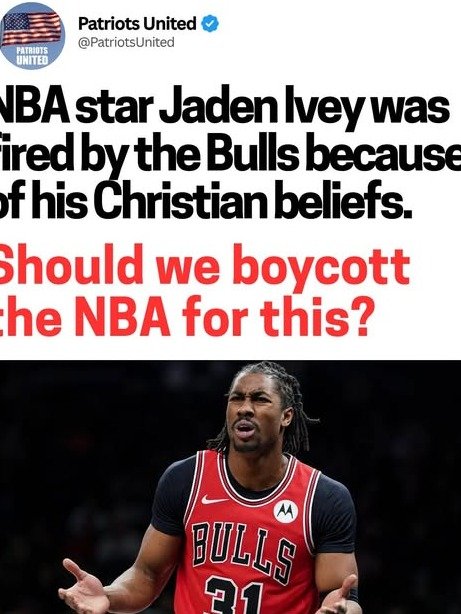
The original question – ‘Let me guess if he wasn’t a Christian they would be praising him for being brave’ – is more than just a passing thought. It’s a poignant observation that challenges us to examine the hidden biases in our societal consciousness. It urges us to consider whether we are truly fair in our praise and recognition of heroism.
True progress in understanding and empathy comes when we can appreciate the courage of all individuals, regardless of their spiritual or philosophical framework. Let’s strive to be a society that celebrates bravery in every human heart, acknowledging that conviction, selflessness, and resilience are universal virtues that deserve our unbiased admiration.
It’s time to ask ourselves: are we truly seeing the bravery in front of us, or are we letting an invisible barrier of perception obscure the truth?
About the Author




