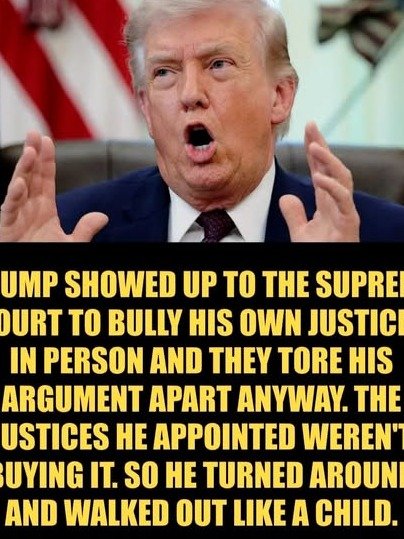
Imagine a moment so seismic, so utterly unexpected, that it sends shockwaves through the highest echelons of American power. A headline flashes across screens: ‘Trump Storms Out of Supreme Court After His Own Justices Destroy His Birthright Citizenship Argument.’ While such a dramatic scene might sound like pure fiction, it perfectly encapsulates the intense, high-stakes battle over one of America’s most foundational principles: birthright citizenship. This isn’t just about political theater; it’s about the very fabric of who is considered an American.
The idea that even a President’s own judicial appointees could deliver a unanimous, resounding rejection of one of his signature policy goals is a powerful notion. It highlights the intricate dance between executive power, judicial independence, and constitutional law. Such a scenario, though hypothetical in its dramatic ‘storming out,’ forces us to examine the enduring strength of the U.S. Constitution and the role of the Supreme Court as its ultimate interpreter.
The Core of the Controversy: What is Birthright Citizenship?
At the heart of this intense debate lies the 14th Amendment to the U.S. Constitution, specifically its first sentence:
“All persons born or naturalized in the United States, and subject to the jurisdiction thereof, are citizens of the United States and of the State wherein they reside.”
This clause, ratified in 1868 in the aftermath of the Civil War, was primarily intended to grant citizenship to formerly enslaved people and ensure their rights. For over a century and a half, it has been widely interpreted to mean that nearly anyone born on U.S. soil is a U.S. citizen, regardless of their parents’ immigration status.
This interpretation was famously solidified by the Supreme Court in the 1898 case of United States v. Wong Kim Ark. In this landmark decision, the Court ruled that a child born in the United States to Chinese immigrant parents, who were not citizens themselves, was indeed a U.S. citizen. This case set a powerful precedent, affirming the broad scope of birthright citizenship and shaping American identity for generations.
Trump’s Longstanding Challenge to Birthright Citizenship
Donald Trump has long been a vocal critic of birthright citizenship, often referring to it as a ‘ridiculous’ and ‘absurd’ policy. Throughout his political career, he has repeatedly called for an end to it, arguing that it incentivizes illegal immigration and creates what he terms ‘anchor babies.’ His proposals have ranged from pushing for legislation to attempting to alter the policy via executive order, sparking widespread legal and political debate.
His arguments often center on a narrower interpretation of the 14th Amendment’s ‘subject to the jurisdiction thereof’ clause. Critics of birthright citizenship argue that this phrase should exclude children born to parents who are not legal residents or citizens, claiming they are not fully ‘subject to the jurisdiction’ of the U.S. government in the same way citizens or legal residents are. However, this interpretation fundamentally clashes with established legal precedent and the historical understanding of the amendment.
The Supreme Court’s Role: Upholding or Reshaping the Law?
The Supreme Court serves as the final arbiter of constitutional questions in the United States. Its decisions have monumental impacts, shaping laws and policies for decades, sometimes even centuries. When a President, especially one who has appointed multiple justices, expresses a strong desire to change a long-standing constitutional interpretation, all eyes turn to the Court.
In a hypothetical scenario where the Supreme Court hears a case challenging birthright citizenship, several factors would come into play:
- Stare Decisis: The principle of adhering to precedent. Overturning a case like Wong Kim Ark would be an extraordinary move, requiring compelling legal arguments and potentially destabilizing vast areas of law.
- Textualism and Originalism: Many conservative justices, including those appointed by Trump, often adhere to textualist or originalist philosophies, meaning they interpret the Constitution based on its original meaning or plain text. The 14th Amendment’s text, especially in light of its historical context, largely supports the current interpretation of birthright citizenship.
- Separation of Powers: An executive order attempting to unilaterally alter a constitutional amendment would face immense legal hurdles, as amending the Constitution requires a specific, rigorous process involving Congress and the states, not presidential decree.
Why Trump’s Own Justices Might Rule Against Him
The core of the dramatic headline – ‘His Own Justices Destroy His Birthright Citizenship Argument’ – lies in a fundamental misunderstanding of judicial appointments. While presidents appoint justices who generally align with their broader legal philosophies, Supreme Court justices take an oath to uphold the Constitution, not the political agenda of the president who appointed them. This independence is a cornerstone of the American legal system.
Even justices appointed by a conservative president, known for their textualist or originalist leanings, would likely find it exceptionally difficult to dismantle birthright citizenship as currently understood. Here’s why:
- The Clear Text: The phrase ‘All persons born or naturalized in the United States, and subject to the jurisdiction thereof, are citizens’ is quite explicit. Legal scholars generally agree that ‘subject to the jurisdiction’ refers to being subject to U.S. law, which applies to everyone physically present in the country, barring foreign diplomats and invading armies.
- Historical Context: The 14th Amendment was passed specifically to grant citizenship to those previously denied it, primarily formerly enslaved people, and to prevent states from denying citizenship based on race or origin. Its broad language was intentional.
- The Weight of Precedent: Overturning Wong Kim Ark would require a radical departure from over a century of settled law. Such a move would be seen as an act of judicial activism by many, even those who ideologically oppose birthright citizenship, because it would disregard the principle of stare decisis.
- Judicial Integrity: Justices, regardless of their political leanings, are acutely aware of their role in maintaining the integrity and stability of the legal system. A ruling perceived as purely political or as an overreach would damage the Court’s credibility.
Therefore, even a Supreme Court with a conservative majority, including justices appointed by Donald Trump, would face immense legal and historical challenges in overturning birthright citizenship. Their judicial philosophies, which often emphasize adherence to constitutional text and historical understanding, would likely lead them to affirm the established interpretation.
The Political Earthquake: What a ‘Defeat’ Would Mean
If such a hypothetical ruling were to occur, affirming birthright citizenship despite presidential opposition, it would undoubtedly send political shockwaves. For proponents of stricter immigration policies, it would represent a significant setback, highlighting the limits of executive power and the enduring strength of the Constitution.
The ‘storming out’ described in the sensational headline, while not a literal event, serves as a powerful metaphor for the intense frustration and political defeat such a ruling would represent for those who advocate for ending birthright citizenship. It underscores the profound disappointment a president might feel if his own appointees prioritize constitutional fidelity over political alignment.
Such a scenario would also reignite debates about judicial independence and the role of the judiciary in a highly partisan political landscape. It would highlight the critical distinction between a president’s policy preferences and the binding interpretations of the nation’s highest court.
The Enduring Debate and the Future of American Citizenship
While the legal framework of birthright citizenship remains robust, the political debate surrounding it shows no signs of abating. It is intertwined with broader discussions about immigration reform, national identity, and the future demographic landscape of the United States. Politicians on both sides will continue to use this issue to rally their bases and push for their respective visions of America.
However, any attempt to fundamentally alter birthright citizenship would necessitate either a constitutional amendment – a notoriously difficult process requiring broad bipartisan consensus – or a radical reinterpretation by the Supreme Court, which historical and legal precedent strongly disfavors. The drama of a president’s ‘own justices’ thwarting his agenda underscores the enduring power of the Constitution and the independent role of the judiciary.
In the end, the sensational headline, though likely a dramatic fabrication, forces us to confront a vital truth: the U.S. Constitution is a living document, interpreted by independent jurists who, despite their appointing authority, are ultimately bound by law, precedent, and their oath to uphold the foundational principles of the nation. The battle over birthright citizenship is a testament to the enduring strength and complexity of the American legal and political system, where even the most powerful figures must ultimately contend with the rule of law.
About the Author




