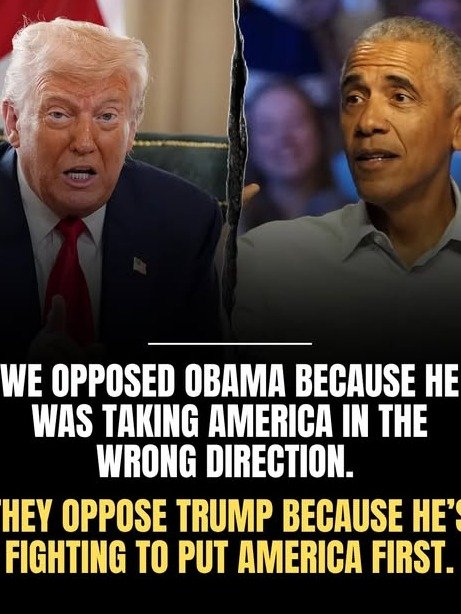
Have you ever wondered why political conversations feel like navigating a minefield these days? It’s not just about differing opinions on policy; something far deeper is at play, fracturing the very fabric of American unity. This isn’t just a squabble over taxes or healthcare; it’s a chasm forged by how we perceive and react to our leaders, both those in office today and those who once occupied the Oval Office.
The stark contrast in how Americans view their presidents, past and present, has become a defining characteristic of our modern political landscape. This phenomenon goes beyond traditional partisan disagreements, manifesting as a profound cultural and ideological split that permeates nearly every aspect of public discourse, from family dinners to national headlines.
The Echoes of History: A New Kind of Division
While political division is certainly not new to American history—the nation has weathered civil wars, bitter elections, and profound social upheaval—the current intensity feels uniquely pervasive. What makes this era different is the highly personalized nature of the divide, often centered less on policy platforms and more on the individual occupying the highest office.
In previous generations, even fierce political rivals might find common ground or at least respect for the office itself. Today, however, reactions to presidential figures often swing wildly between fervent adoration and outright condemnation, leaving little room for nuanced perspective or shared national identity.
The Cult of Personality: Beyond Policy Debates
One of the most striking aspects of this deepening divide is the shift from policy-centric critiques to character-based assessments. For many, a president’s personality, communication style, or perceived moral compass now overshadows their legislative achievements or economic policies. This creates an environment where loyalty becomes paramount, and criticism of “our” president is seen as an attack on “us.”
This phenomenon isn’t limited to the sitting president. Historical figures are also frequently re-evaluated through a contemporary lens, often to serve present-day political narratives. The way we remember and interpret past presidencies directly impacts how we engage with current leadership, further entrenching existing biases and solidifying partisan identities.
Media’s Amplifying Role: The Information Silo
The modern media landscape plays an undeniable role in exacerbating these contrasting reactions. Traditional news outlets, increasingly catering to specific demographics, and the pervasive nature of social media create powerful echo chambers. Individuals are constantly exposed to information that reinforces their pre-existing beliefs, making it difficult to encounter alternative viewpoints or challenge their own assumptions.
This constant affirmation of one’s own perspective leads to a greater demonization of the “other side.” When every news feed and social media interaction validates your negative view of a president or political party, it becomes incredibly challenging to see them as anything other than an adversary. The digital age has, in many ways, made it easier to live in self-affirming bubbles.
“When information is tailored to confirm, rather than challenge, our beliefs, the common ground for dialogue erodes rapidly.” – Political Analyst
Generational and Ideological Fault Lines
The divide isn’t uniform; it often breaks along generational and ideological lines. Younger generations, often more progressive, may view historical figures and current leaders through a lens of social justice and equity, sometimes clashing with older generations who hold more traditional or conservative viewpoints. These differing value systems contribute significantly to the contrasting presidential reactions, creating a generational gap in political perception.
Moreover, the ideological spectrum itself has become more rigid. The center seems to have diminished, with more people identifying strongly with either the far left or far right. This polarization means that any presidential action, regardless of its objective merit, is immediately filtered through a highly partisan lens, eliciting predictable, often extreme, reactions from opposing camps. Nuance is often lost in the noise of ideological warfare.
The Psychological Toll of “Us vs. Them”
At its core, this deep political divide taps into fundamental human psychology: the need for belonging and the instinct to protect one’s group. When presidential figures become symbols of an entire ideology or way of life, supporting or opposing them transforms into an act of tribal loyalty. This “us vs. them” mentality can be incredibly powerful, but also deeply destructive, fostering animosity where understanding is needed.
This psychological framework often leads to the dehumanization of political opponents. When you view those who support a different president as inherently misguided, immoral, or even dangerous, constructive dialogue becomes impossible. The goal shifts from understanding to defeating, from compromise to conquest, creating a perpetual state of political conflict.
- Erosion of Trust: Trust in institutions, media, and even fellow citizens diminishes significantly.
- Increased Hostility: Public discourse becomes more aggressive, less tolerant, and prone to personal attacks.
- Social Fragmentation: Communities and even families can be torn apart by political disagreements, impacting personal relationships.
Impact on Governance and Society
The consequences of such a profound and personalized political divide are far-reaching. Governance becomes increasingly difficult as bipartisan cooperation dwindles. Essential legislative action can be stalled or completely derailed by partisan gridlock, impacting everything from infrastructure to healthcare, ultimately hurting the very citizens it aims to serve.
Beyond policy, the social fabric of the nation suffers immensely. When a significant portion of the population views the other side with suspicion and animosity, it erodes the sense of shared national identity. This fragmentation can lead to decreased civic engagement, increased social unrest, and a general feeling of instability that undermines the foundational principles of a unified nation.
Internationally, a deeply divided nation can project an image of weakness or unpredictability on the global stage. This can affect alliances, trade relationships, and overall global standing, as other nations may question the stability and reliability of U.S. leadership. The internal strife, therefore, becomes an external vulnerability, impacting foreign policy and national security.
Can the Divide Be Bridged?
The question then becomes: can this deep divide be healed, or at least mitigated? It’s a daunting challenge that requires introspection and a willingness to step outside our comfortable echo chambers. It demands a renewed commitment to critical thinking, media literacy, and perhaps most importantly, empathy – the ability to understand and share the feelings of another.
Rebuilding trust and fostering understanding will necessitate a conscious effort to engage with differing perspectives, not with the intent to convert, but to comprehend. It means recognizing that people on the “other side” are not necessarily malicious, but simply hold different values, experiences, or interpretations of facts that shape their political views.
Ultimately, the future of American unity hinges on our collective ability to look beyond the immediate reactions to individual presidents. We must strive to understand the underlying currents of discontent, hope, and fear that shape these reactions, and search for common ground upon which a more cohesive national identity can be rebuilt, one conversation and one act of understanding at a time.
The stakes are incredibly high. The continued polarization threatens not just political stability, but the very principles of a democratic society built on dialogue, compromise, and mutual respect. It’s a call to action for every citizen to reflect on their role in either perpetuating or bridging this profound divide, for the sake of a stronger, more united future.
About the Author




