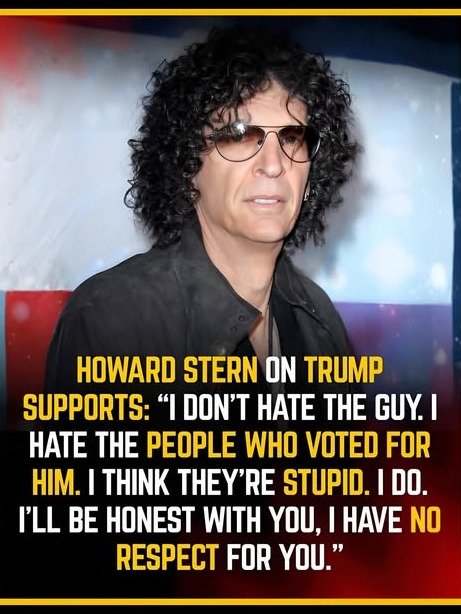
When the self-proclaimed “King of All Media,” Howard Stern, speaks, the world often listens – and sometimes, it erupts. In September 2024, Stern once again ignited a national conversation, drawing widespread attention for his unvarnished and potent criticism of former President Donald Trump’s supporters during a live broadcast. His remarks weren’t just a casual observation; they were a passionate, no-holds-barred commentary that sent shockwaves through social media and traditional news outlets alike.
This wasn’t Stern’s first foray into the political arena, nor his first time expressing strong opinions about Trump or his base. However, the timing and intensity of his 2024 statements felt particularly charged, reverberating across an already polarized nation. Listeners and critics alike were left to dissect not just what he said, but the underlying frustrations and societal divides his words brought to the surface.
The “King of All Media” Steps Back into the Fray
Howard Stern has built a legendary career on pushing boundaries, challenging norms, and fearlessly expressing his mind. From his controversial early days to his current SiriusXM platform, he has cultivated a reputation for authenticity, even if that authenticity often comes with a dose of outrage. His evolution from shock jock to a more introspective, yet still provocative, interviewer has only amplified his reach and influence.
For years, Stern and Trump shared a complex, often public, friendship. Trump was a frequent guest on Stern’s show, and their interactions were characterized by a certain camaraderie. However, as Trump’s political ambitions grew and he ultimately ascended to the presidency, Stern’s views on him, and crucially, his supporters, began to shift dramatically. This personal history adds another layer of complexity to his recent criticisms, making them resonate even more deeply with long-time followers.
September 2024: The Incendiary Broadcast
The specific broadcast in September 2024 that garnered so much attention saw Stern unleash a torrent of criticism aimed directly at those who continue to staunchly support Donald Trump. While the exact transcript of his full remarks is extensive, the core message was clear: Stern expressed profound frustration and bewilderment over what he perceived as an unwavering, almost cult-like devotion to the former president, often at the expense of what Stern views as logic, facts, or national unity.
“I look at these people, and I just don’t understand,” Stern reportedly lamented, his voice tinged with a mix of exasperation and disbelief. “How can you still be there? How can you ignore everything that’s happened?”
His commentary touched upon themes of blind loyalty, the dismissal of verifiable information, and what he saw as a dangerous disregard for democratic institutions. He didn’t just criticize Trump; he challenged the very mindset and motivations of his most ardent followers, questioning their ability to critically assess political realities. This direct appeal to the supporters themselves, rather than just the politician, is what truly struck a nerve.
The Public’s Divided Reaction
As expected, Stern’s comments immediately set off a firestorm of reactions across social media, news channels, and online forums. The responses were, predictably, starkly divided, mirroring the very polarization he was discussing. Supporters of Trump swiftly condemned Stern, accusing him of being out of touch, elitist, and hypocritical.
- Critics of Stern: Many Trump supporters lashed out, calling Stern a “Hollywood liberal” who had lost touch with everyday Americans. They accused him of alienating a significant portion of his audience and engaging in the very divisive rhetoric he claimed to deplore.
- Defenders of Stern: Conversely, many applauded Stern for his courage and honesty. They saw his comments as a refreshing dose of reality from a prominent voice, echoing their own frustrations with the political landscape.
The controversy quickly escalated beyond his usual listener base, becoming a talking point on cable news and political punditry shows. It highlighted the enduring power of celebrity voices in shaping, or at least reflecting, public discourse, particularly in an election year where every statement is scrutinized.
A History of Political Commentary and Evolution
Stern’s journey into political commentary is a fascinating one. For decades, his show was largely apolitical, focusing on pop culture, celebrity interviews, and often crude humor. However, as the political climate shifted, particularly with the rise of Donald Trump, Stern found himself increasingly compelled to speak out. His transformation from a figure who once welcomed Trump as a friend to one of his most vocal critics is a testament to his evolving personal and political views.
This evolution has not been without its costs. While it has endeared him to a new segment of listeners who appreciate his candor, it has undoubtedly alienated others who preferred his earlier, less politically charged persona. Stern himself has acknowledged this, often expressing a sense of duty to speak his mind, even if it means losing fans.
The Broader Implications: Celebrity, Politics, and Polarization
Howard Stern’s September 2024 comments serve as a powerful microcosm of the larger societal issues at play in America today. His remarks underscore several critical points:
- The Role of Celebrities: What responsibility do public figures have when expressing political opinions? Do they have a right to speak their minds, or should they remain neutral to avoid alienating their audience?
- Deepening Polarization: The visceral reactions to Stern’s comments highlight the profound ideological chasm that exists within the country. It suggests that even seemingly neutral observations can be interpreted through a highly partisan lens.
- The “Echo Chamber” Effect: Stern’s frustration with what he perceived as an unwillingness to engage with alternative viewpoints speaks to the challenge of breaking through ideological echo chambers, where individuals are primarily exposed to information that confirms their existing beliefs.
These controversies are not merely about what one radio host said; they are symptomatic of a nation grappling with fundamental questions about truth, loyalty, and the very nature of political identity. Stern’s platform, with its vast reach, simply provides a louder stage for these ongoing debates.
What Does This Mean for Howard Stern and His Audience?
For Howard Stern, these comments solidify his position as a prominent, if controversial, political commentator. He has clearly chosen to prioritize his personal convictions over maintaining a strictly neutral, universally appealing public image. This decision, while bold, has arguably made his show more relevant than ever in an era where authentic voices are increasingly valued, even if they are divisive.
For his audience, it means understanding that tuning into Stern’s show now involves engaging with his unfiltered political perspectives. Whether listeners agree or disagree, his broadcasts are a guaranteed source of thought-provoking, often uncomfortable, commentary on the state of the nation. His September 2024 remarks were a stark reminder that in the world of Howard Stern, silence on critical issues is simply not an option.
The Enduring Debate
The fallout from Howard Stern’s September 2024 broadcast serves as a potent reminder of the volatile intersection between celebrity, politics, and public opinion. His strong criticisms of Donald Trump supporters weren’t just headlines; they were a mirror reflecting the deep divisions and frustrations simmering beneath the surface of American society.
Whether you agree with his sentiments or find them entirely objectionable, one thing is certain: Howard Stern continues to be a voice that commands attention, provokes thought, and ensures that the national conversation, no matter how uncomfortable, keeps moving forward. His ability to spark such intense debate, even after decades in the spotlight, proves that the “King of All Media” still reigns supreme in his capacity to stir the pot.
About the Author




