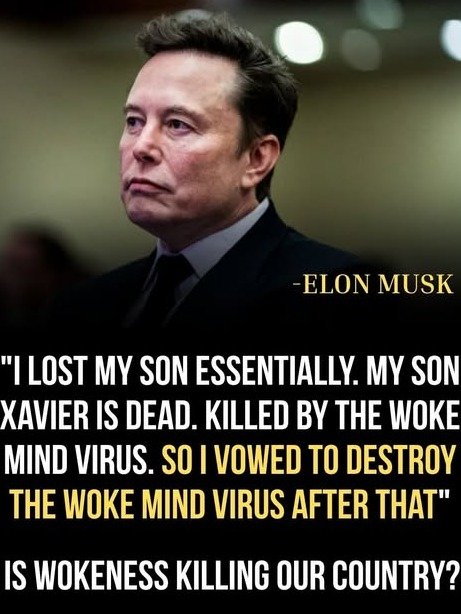
Elon Musk, a name synonymous with innovation and futuristic ventures like electric cars and space travel, has undergone a fascinating evolution in the public eye. Once primarily known for his groundbreaking work at Tesla and SpaceX, he has increasingly stepped into the arena of cultural and political commentary, often sparking intense debate.
This shift isn’t merely a celebrity dabbling in current affairs; it appears to be rooted in deeply personal experiences and convictions that have profoundly shaped his worldview. What exactly transformed the tech titan into a vocal cultural firebrand? The answers lie in a closer look at the pivotal moments and principles that drive him.
From Visionary to Vocal Critic: A Changing Persona
For years, the public image of Elon Musk was largely that of an eccentric but brilliant entrepreneur, focused on pushing humanity forward through technological leaps. His companies, Tesla and SpaceX, captured imaginations with their ambitious goals of sustainable energy and multi-planetary existence.
However, over the past few years, a new facet of Musk’s personality has emerged. He has become an outspoken critic of what he perceives as threats to free speech, common sense, and even civilization itself, often using his massive platform on X (formerly Twitter) to voice his opinions.
The Seeds of Conviction: Early Life and Influences
To understand Musk’s current stance, one must look back at his formative years. Growing up in apartheid-era South Africa, he experienced firsthand the consequences of a society built on restrictive ideologies and limited freedoms. This environment, marked by censorship and political control, likely instilled in him a deep-seated appreciation for individual liberty and open discourse.
His early life was also characterized by a relentless pursuit of knowledge and a questioning of established norms. This intellectual curiosity, combined with an inherent distrust of groupthink, laid the groundwork for his later challenges to prevailing cultural narratives. He often speaks of a desire for objective truth and rational problem-solving, values that he feels are increasingly under threat.
A Champion of Free Speech: The X Acquisition
Perhaps no event more clearly signaled Musk’s pivot to cultural and political engagement than his acquisition of Twitter, which he subsequently rebranded as X. He repeatedly articulated his motivation for buying the platform as a mission to protect free speech, which he referred to as the ‘digital town square.’
Musk expressed concerns that the platform had become overly restrictive, censoring legitimate viewpoints and stifling open debate. His vision for X was to create a truly uncensored public forum, even if it meant navigating contentious and sometimes uncomfortable conversations. This commitment to free expression is a cornerstone of his personal philosophy.
“Free speech is the bedrock of a functioning democracy, and Twitter is the digital town square where matters vital to the future of humanity are debated.”
Battling the ‘Woke Mind Virus’: Cultural Concerns
Beyond free speech, Musk has frequently voiced strong opinions on what he terms the ‘woke mind virus,’ a concept he believes is undermining societal progress and rational thought. He has criticized aspects of identity politics, cancel culture, and what he perceives as an overemphasis on subjective feelings over objective reality.
These criticisms often stem from his belief in meritocracy and a focus on solving real-world problems. He argues that excessive political correctness and ideological purity tests can stifle innovation, discourage critical thinking, and lead to a less productive society. His concerns often resonate with those who feel traditional values are being eroded.
AI Safety and Existential Risks: A Personal Crusade
Another significant area where Musk’s personal convictions intersect with broader societal issues is artificial intelligence. While his companies like Tesla are at the forefront of AI development, he has also been one of its most vocal critics regarding potential existential risks.
Musk has repeatedly warned about the dangers of unregulated AI, advocating for robust safety protocols and ethical guidelines. His involvement in organizations like OpenAI (which he co-founded) and his consistent public statements reflect a deep, almost personal, concern for the future of humanity in an age of rapidly advancing technology. He sees it not just as a business challenge but as a moral imperative.
The Intersection of Business and Beliefs
For Musk, his ventures are not just about making money; they are often extensions of his deeply held beliefs about how to improve the world. Tesla aims to accelerate the world’s transition to sustainable energy, addressing climate change. SpaceX seeks to make humanity a multi-planetary species, ensuring the long-term survival of civilization.
His engagement in cultural and political debates can be seen through a similar lens. He views these discussions as crucial for shaping the societal framework within which his ambitious projects can thrive, and indeed, for the very survival and progress of humanity itself. He often acts with a sense of urgency, believing that certain issues are not just important, but critical.
Navigating Controversy: The Price of Being Outspoken
Musk’s increasingly outspoken nature has, predictably, drawn both fervent support and fierce criticism. His pronouncements on cultural issues often ignite firestorms on social media, leading to accusations of insensitivity, political bias, or even irresponsibility. He has been labeled everything from a free speech hero to a dangerous provocateur.
Despite the backlash, Musk appears undeterred. He frequently engages directly with critics, often with a characteristic blend of humor and defiance. This willingness to stand firm in the face of public scrutiny further underscores the personal conviction behind his words. He seems to genuinely believe he is fighting for principles he deems essential.
What Drives the Transformation?
So, what is the ultimate personal turning point that fuels this transformation? It’s likely not one single event, but a confluence of factors:
- Childhood experiences: Witnessing the suppression of speech and thought in South Africa.
- Entrepreneurial challenges: Battling bureaucracy and skepticism, reinforcing a belief in individual agency.
- Observation of societal trends: A growing concern that Western societies are losing their way through ideological divisions and censorship.
- A sense of responsibility: As one of the world’s most influential figures, a feeling that he has a duty to speak out on critical issues.
- A pragmatic, engineering mindset: Applying a problem-solving approach to societal issues, often bypassing traditional political discourse.
These elements combine to create a figure who sees himself not just as a CEO, but as a public intellectual and an advocate for what he believes are fundamental human values.
The Future of Elon Musk’s Cultural Impact
As Elon Musk continues to navigate the complexities of technology, business, and public discourse, his role as a cultural commentator is likely to grow. His willingness to challenge norms, coupled with his immense platform, ensures that his views will continue to shape discussions on free speech, AI ethics, and the direction of modern culture.
Whether one agrees with his specific viewpoints or not, his journey from a visionary tech entrepreneur to a prominent voice in the culture wars is a testament to the powerful influence of personal experience and conviction in shaping public figures. His story is far from over, and his impact on both technology and culture will undoubtedly continue to unfold in fascinating ways.
About the Author




