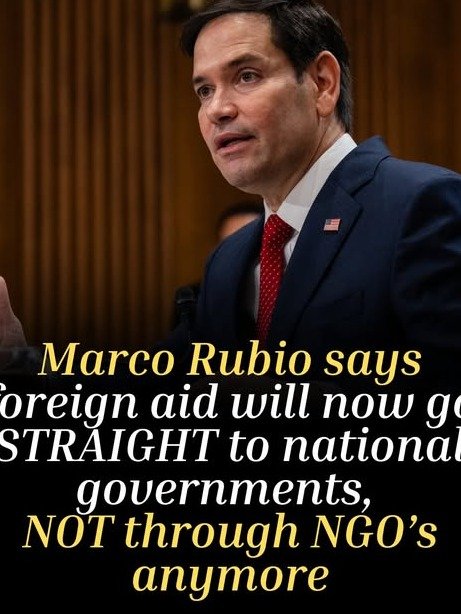
Imagine a world where billions in U.S. foreign aid no longer flow through familiar channels. That world is now here. Secretary of State Marco Rubio has just unveiled a monumental shift in U.S. foreign aid policy, announcing that vast sums, previously routed through non-governmental organizations (NGOs), will now go directly to national governments.
This isn’t just a tweak; it’s a complete overhaul that promises to send shockwaves across the international development landscape. This bold move signals a new era in how America engages with the world, prioritizing direct government-to-government partnerships and fundamentally reshaping the roles of key players in global aid.
The End of an Era: Why the Shift?
For decades, NGOs have been the primary conduits for a significant portion of U.S. foreign aid, lauded for their on-the-ground expertise, flexibility, and ability to reach vulnerable populations often overlooked by central governments. They’ve been instrumental in delivering humanitarian relief, health services, education, and infrastructure projects in countless nations.
However, this long-standing model has faced increasing scrutiny. Critics have pointed to issues of overhead costs, potential duplication of efforts, and a perceived lack of accountability to recipient nations. There have also been concerns about whether aid delivered through NGOs always aligns perfectly with the strategic interests of the United States or the long-term development goals of sovereign governments.
Secretary Rubio’s announcement directly addresses these concerns, signaling a desire for greater efficiency, transparency, and alignment. The administration believes that by channeling funds directly to national governments, aid can be integrated more seamlessly into national development plans, fostering greater ownership and sustainability.
A New Paradigm: Direct to Governments
Under this groundbreaking new policy, billions of dollars previously earmarked for international NGOs will now bypass these organizations entirely. Instead, these funds will be transferred directly to the treasuries and ministries of recipient national governments. This represents a profound vote of confidence in the capacity and accountability of these sovereign entities.
The underlying philosophy is clear: empower national governments to take the lead in their own development. By entrusting them with direct financial resources, the U.S. aims to strengthen local institutions, enhance governmental capacity, and ensure that aid initiatives are driven by national priorities rather than external agendas.
“This isn’t about cutting aid; it’s about making aid more effective, more accountable, and more respectful of national sovereignty,” Secretary Rubio stated in his announcement. “We believe that by working directly with governments, we can achieve greater impact, foster true partnership, and ensure our investments yield lasting results for the people they are intended to serve.”
Potential Benefits: Efficiency, Sovereignty, and Accountability
The proponents of this new approach highlight several key advantages. Firstly, it could significantly reduce administrative overheads. By cutting out intermediary organizations, more of each dollar could theoretically reach its intended purpose, rather than being absorbed by operational costs, fundraising, and reporting requirements of NGOs.
Secondly, the policy emphasizes national sovereignty and ownership. When funds go directly to governments, they have the ultimate decision-making power over how those resources are allocated and utilized, in line with their own development strategies. This can foster a stronger sense of responsibility and commitment from local leaders.
Finally, direct funding could enhance accountability, albeit with a different focus. Instead of NGOs being accountable to their donors and beneficiaries, national governments would now be directly accountable to their own citizens for the effective use of U.S. aid. This shift could theoretically strengthen democratic processes and public oversight within recipient countries, provided robust mechanisms are in place.
- Increased Efficiency: Potentially lower administrative costs and faster disbursement.
- Enhanced Sovereignty: Greater control for recipient governments over their own development priorities.
- Strengthened Institutions: Opportunity to build capacity within national ministries.
- Clearer Accountability: Governments directly responsible to their citizens for aid usage.
The Flip Side: Risks and Concerns
While the new policy holds promise, it also raises significant concerns among development experts and human rights advocates. The most prominent worry is the increased risk of corruption. Channeling billions directly into government coffers, particularly in nations with weak governance structures or high levels of corruption, could lead to misuse of funds, embezzlement, or aid being diverted for political purposes.
Another major concern is the potential impact on civil society and vulnerable populations. NGOs often operate in areas where governments have limited reach or where political sensitivities prevent direct governmental intervention. They frequently serve as watchdogs, advocates for marginalized groups, and direct service providers for communities bypassed by central authorities. This new policy could severely diminish their capacity and influence.
Furthermore, there’s the question of agility and responsiveness. NGOs are often lauded for their ability to respond quickly to crises and adapt to changing circumstances on the ground. Governments, by their nature, can be slower and more bureaucratic. This could impact emergency response efforts and the flexibility needed for complex development challenges.
Navigating the Implementation: Oversight and Capacity Building
Recognizing these risks, the U.S. administration has indicated that the implementation of this new policy will involve robust oversight mechanisms. This will likely include stringent conditions attached to aid packages, requiring recipient governments to demonstrate transparent financial management, adhere to human rights standards, and show measurable progress on agreed-upon development goals.
Capacity building will also be a critical component. The U.S. plans to invest in strengthening the financial management systems, auditing capabilities, and project implementation expertise of recipient governments. This aims to equip them to effectively manage and deploy the increased direct funding, mitigating the risks associated with weak institutional frameworks.
The success of this paradigm shift will heavily depend on the careful selection of partner governments, the design of rigorous monitoring and evaluation frameworks, and a willingness to adapt the approach based on real-world outcomes. It’s a high-stakes gamble with global implications.
The Future of NGOs: Adaptation or Obsolescence?
For international NGOs, this policy change presents an existential challenge. Many will see their primary funding streams significantly reduced or cut off entirely. This will force a fundamental reevaluation of their strategies, funding models, and roles in the development ecosystem.
Some NGOs may pivot to become technical advisors or capacity-building partners for national governments, offering their expertise in specific sectors. Others might focus more heavily on advocacy, research, or direct service delivery funded by private philanthropy or other bilateral donors. The most adaptable organizations will likely find new niches, while those unable to adjust may face severe financial strain or even closure.
This shift also underscores the growing importance of local civil society organizations. While international NGOs may face hurdles, the policy could inadvertently empower local groups to hold their governments accountable for the aid received, creating a new dynamic of internal oversight and advocacy.
Geopolitical Repercussions: A New Chapter in U.S. Influence
Beyond the immediate impact on aid delivery, this policy shift carries significant geopolitical weight. By forging stronger, more direct ties with national governments, the U.S. aims to reinforce its bilateral relationships and enhance its influence on the global stage. This could be seen as a strategic move to counter the growing influence of other global powers that often favor direct government-to-government engagement.
The move also signals a potential redefinition of what
About the Author




