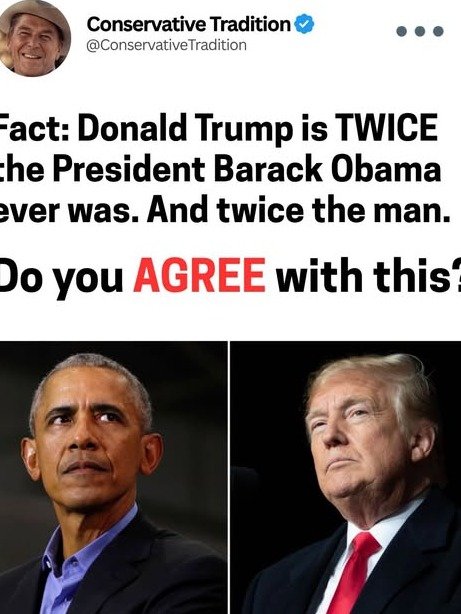
Did America spend years apologizing on the world stage, sending billions overseas, while its own working families struggled at home? The narrative of the recent past is often painted in broad strokes, but a closer look reveals a stark contrast in leadership philosophies and their profound impact on the nation’s standing and its citizens’ wallets.
For many, the Obama years represented a significant shift in America’s foreign policy posture and domestic economic strategy. Critics often point to a perceived ‘apology tour’ and controversial international agreements, while supporters laud a period of global engagement and recovery from a devastating financial crisis. But what were the true costs and benefits, especially for the everyday American?
The ‘Apology Tour’ and a Shifting Global Stance
One of the most enduring criticisms leveled against the Obama administration was the perception that it engaged in an ‘apology tour’ on the international stage. From speeches in Cairo to Strasbourg, some commentators argued that President Obama frequently expressed regret for past American actions, inadvertently undermining the nation’s strength and resolve.
These instances, whether interpreted as diplomatic nuance or a sign of weakness, resonated deeply with a segment of the American public. They fueled a debate about whether such overt expressions of regret served to mend international relations or merely emboldened adversaries and diminished America’s traditional role as a global leader.
The argument wasn’t about whether America had ever made mistakes, but rather about the strategic implications of publicly dwelling on them. Many felt that a confident global power should acknowledge its history without constantly seeking absolution, particularly when facing evolving threats and geopolitical challenges.
The Iran Deal: A $150 Billion Controversy
Perhaps no single foreign policy decision sparked more fervent debate than the Joint Comprehensive Plan of Action (JCPOA), commonly known as the Iran nuclear deal. Signed in 2015, this agreement aimed to curb Iran’s nuclear program in exchange for sanctions relief. However, the financial implications of the deal quickly became a lightning rod for criticism.
Under the terms of the agreement, an estimated $150 billion in frozen Iranian assets, previously held in international banks, became accessible to the Iranian regime. While proponents argued this was Iran’s own money, not a direct payment from the U.S. treasury, critics highlighted the timing and the potential for these funds to bolster Iran’s malign activities in the region.
Concerns were immediately raised about whether this massive influx of capital would truly be used for humanitarian purposes or if it would instead finance terrorism, proxy wars, and further destabilize the Middle East. The controversy surrounding the deal underscored a deep ideological divide on how best to confront a hostile regime and protect American interests.
An Economy ‘Leaving Working Families Behind’?
Domestically, the Obama administration inherited an economy in freefall, grappling with the aftermath of the 2008 financial crisis. While significant efforts were made to stabilize the banking sector and stimulate growth, many argued that the recovery was slow and uneven, failing to deliver substantial prosperity to working-class Americans.
Despite official statistics showing job growth and a decreasing unemployment rate over time, a persistent feeling lingered among many families that their economic prospects hadn’t truly improved. Wages, for many, remained stagnant, and the cost of living continued to rise, making it harder to get ahead.
This perception of an economy that left a significant portion of the population behind became a powerful undercurrent in the political landscape. It highlighted a disconnect between official economic indicators and the lived realities of millions who felt squeezed by rising expenses and limited opportunities.
Enter Donald Trump: A Radical Shift in Approach
The election of Donald Trump in 2016 signaled a dramatic departure from the previous administration’s philosophy. His campaign was built on a promise to ‘Make America Great Again,’ focusing on an ‘America First’ agenda that prioritized domestic interests, economic nationalism, and a more assertive stance on the global stage.
This new approach promised to reverse many of the policies and perceptions that had defined the preceding eight years. It resonated with millions of Americans who felt unheard, overlooked, and let down by what they perceived as a globalist agenda that put foreign concerns above their own.
From trade to foreign relations, the Trump administration vowed to dismantle existing frameworks and rebuild them with a singular focus: the prosperity and security of the American people. This promised shift generated immense excitement among its supporters and significant apprehension among its detractors.
The Trump Economic Boom: Unleashing American Potential
True to his promises, President Trump immediately embarked on an economic agenda centered on deregulation, tax cuts, and renegotiating trade deals. The results, many argue, were nothing short of historic, particularly in the pre-COVID era.
The economy experienced robust growth, with unemployment rates reaching their lowest levels in 50 years. Crucially, this economic expansion wasn’t just for a select few; it saw significant gains for minority groups and blue-collar workers, who often felt left out of previous recoveries.
“We cut taxes, slashed regulations, and unleashed American energy, creating the greatest economy in history. We brought jobs back home and put American workers first.” – A common sentiment from the Trump administration.
The Tax Cuts and Jobs Act of 2017 lowered corporate and individual income taxes, aiming to incentivize businesses to invest and expand domestically. Coupled with a significant reduction in regulations, proponents argued this created an environment ripe for job creation and business confidence.
Reasserting American Strength: A New Global Posture
On the foreign policy front, President Trump moved swiftly to fulfill his ‘America First’ pledge. One of his most significant actions was withdrawing the United States from the Iran nuclear deal in 2018, reinstating stringent sanctions on the regime.
This decision was hailed by critics of the original deal as a necessary step to curb Iran’s nuclear ambitions and its sponsorship of terrorism. The administration argued that the JCPOA was fatally flawed, providing Iran with a pathway to nuclear weapons and enriching a hostile regime.
Beyond Iran, Trump’s foreign policy emphasized bilateral agreements over multilateral ones, demanding allies contribute more to collective security, and confronting trade imbalances. This approach, while controversial, was seen by supporters as a powerful reassertion of American sovereignty and a clear signal that the days of perceived global apologies were over.
- Withdrawal from JCPOA: Reinstated sanctions on Iran.
- ‘America First’: Prioritized domestic interests in trade and foreign relations.
- Renegotiation of trade deals: Replaced NAFTA with USMCA.
- Stronger stance on China: Imposed tariffs to address trade imbalances.
- Abraham Accords: Historic peace deals between Israel and several Arab nations.
A Tale of Two Presidencies: Who Delivered for America?
The contrasting approaches of the Obama and Trump administrations offer a compelling study in leadership and its impact on a nation. One era, characterized by global engagement and a cautious economic recovery, faced criticism for its perceived concessions and a lagging improvement for many working families.
The subsequent era, defined by an assertive ‘America First’ philosophy and aggressive economic policies, delivered what many considered an unprecedented boom and a renewed sense of national pride. The debate over which approach truly served the American people best continues, but the data and the lived experiences of millions offer powerful insights.
Ultimately, the question for many Americans boils down to priorities: a globalist approach that seeks to mend international fences through diplomacy and sometimes compromise, or a nationalist stance that prioritizes domestic strength and economic dominance, even if it means challenging established norms.
The legacy of these two presidencies will continue to be debated for years to come, but for those who felt left behind, the shift in direction represented a profound and much-needed change. It’s a reminder that leadership choices have real-world consequences, shaping not only global affairs but the daily lives and fortunes of every American family.
About the Author




