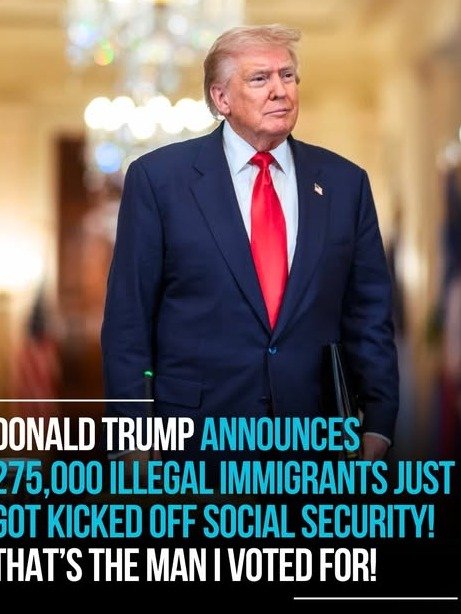
Is Social Security on the brink? A recent announcement from the Trump administration has ignited a firestorm of debate, suggesting a monumental shift in how benefits are perceived and distributed, particularly concerning immigration. This isn’t just about policy; it’s about the financial future of millions of Americans, and a potential shake-up that could redefine the very foundation of our social safety net.
The administration has highlighted a significant push for an ‘immigration-and-benefits crackdown,’ pointing to an estimated 275,000 undocumented immigrants. While the full context of their involvement with various benefits remains a complex topic, this figure has become a flashpoint in the ongoing discussion about the solvency and integrity of Social Security and other public programs. The implications of such a crackdown are far-reaching, promising to ripple through the economy and impact countless families.
The Core of the Social Security Debate: Solvency and Sustainability
For decades, Social Security has been a cornerstone of American retirement planning, providing a vital safety net for seniors, the disabled, and survivors. However, the program faces persistent long-term solvency challenges, driven by an aging population, lower birth rates, and changing economic dynamics. Experts frequently debate various solutions, from raising the retirement age to increasing payroll taxes or adjusting benefits.
Amidst these ongoing concerns, immigration often enters the discussion, with proponents of stricter policies arguing that undocumented immigration places an undue burden on public resources. The argument posits that if individuals are not contributing through official payroll taxes, their presence could strain systems like Social Security, even if they don’t directly receive federal retirement benefits themselves. This perspective fuels calls for more stringent eligibility requirements and enforcement.
Understanding the Proposed “Crackdown” on Benefits
When the Trump administration signals a “major immigration-and-benefits crackdown,” it suggests a multifaceted approach aimed at tightening access to public services for undocumented immigrants. This could involve several key areas, each with its own set of complexities and potential impacts.
- Enhanced Verification: Implementing stricter identity and eligibility verification processes for individuals applying for any federal, state, or local benefits. This would aim to prevent those without legal status from accessing programs they are not entitled to.
- Data Sharing: Increasing information sharing between immigration enforcement agencies and benefit-granting agencies to identify and deter ineligible applicants.
- Policy Reevaluation: Reviewing existing laws and regulations to identify loopholes or areas where current policies might be perceived as allowing access to benefits for undocumented individuals, even indirectly.
- Criminalization of Fraud: Stepping up efforts to prosecute individuals who fraudulently obtain benefits, with a particular focus on those who are also undocumented.
These measures are presented as essential steps to safeguard taxpayer money and ensure that benefits are reserved for those legally entitled to them, thereby strengthening the financial health of programs like Social Security.
The Fiscal Argument: Protecting Taxpayer Dollars
A central pillar of the argument for an immigration-and-benefits crackdown is fiscal responsibility. Proponents contend that allowing undocumented immigrants to access public benefits, directly or indirectly, drains resources that could otherwise support legal residents and citizens. The administration’s focus on the 275,000 figure underscores this belief, implying a significant financial impact.
“Our commitment is to ensure that every dollar contributed by hardworking Americans through Social Security taxes goes to those who have legally earned it,” a senior administration official might state. “We cannot allow our vital safety nets to be strained by those who have not followed our laws, and this crackdown is a necessary step to protect our seniors and future generations.”
This perspective resonates with many who feel that the system is being exploited and that tighter controls are necessary to preserve the integrity and solvency of critical programs. The concern is that any perceived leakage or improper access could accelerate Social Security’s projected shortfall.
The Economic and Social Complexities
However, the issue is far from straightforward, with significant economic and social complexities. Critics of such crackdowns often point out that undocumented immigrants also contribute to the economy in various ways. Many pay sales taxes, property taxes (indirectly through rent), and even income taxes (using Individual Taxpayer Identification Numbers, ITINs), contributing to the tax base that funds public services.
Furthermore, many undocumented immigrants work in essential sectors, filling labor gaps and contributing to economic productivity. Restricting their access to certain benefits, even if they are not directly eligible for Social Security retirement, could have broader societal impacts, potentially increasing poverty, health crises, and social instability, which could indirectly strain other public services.
The Nuance of Social Security Contributions and Benefits
It’s crucial to understand the specific relationship between undocumented immigrants and Social Security. Generally, undocumented immigrants are not eligible for federal Social Security retirement or disability benefits. However, many undocumented workers pay into the system through payroll taxes, often using fraudulent Social Security numbers or ITINs. These contributions, estimated to be billions of dollars annually, go into the Social Security trust funds.
These payments are often referred to as a “subsidy” to Social Security, as these individuals are unlikely to ever collect benefits themselves. A crackdown focused purely on preventing undocumented immigrants from *receiving* benefits might miss the larger picture of their contributions, or conversely, could exacerbate the system’s long-term financial health if their contributions were somehow eliminated without a corresponding reduction in benefit payouts.
Potential Impacts on Legal Immigrants and Citizens
A broad “immigration-and-benefits crackdown” also raises concerns about unintended consequences for legal immigrants and even citizens. Increased scrutiny, more complex verification processes, and a general climate of fear could deter eligible individuals from applying for benefits they rightfully deserve. This is particularly true for mixed-status families, where some members are citizens or legal residents, while others may be undocumented.
The administrative burden of implementing such a crackdown could also be significant, potentially slowing down processing times for all applicants and diverting resources from other critical functions. Advocates for immigrant rights warn that such policies could lead to widespread confusion and hardship, undermining the very safety net they aim to protect.
The Broader Political Landscape and Future Outlook
This proposed crackdown is not an isolated policy; it’s deeply embedded in a larger political narrative surrounding immigration, national sovereignty, and fiscal conservatism. It reflects a desire to enforce existing laws more rigorously and to prioritize the interests of citizens and legal residents.
Looking ahead, any significant changes would likely face considerable legal challenges and intense political debate. The courts would undoubtedly weigh in on the legality and constitutionality of new regulations. Public opinion, shaped by media narratives and personal experiences, would also play a crucial role in determining the viability and longevity of such policies. The future of Social Security and its interaction with immigration policy remains a hotly contested issue, with profound implications for the nation’s social and economic fabric.
What This Means For You and Your Future
The discussion around Social Security and immigration is complex, touching upon deeply held values, economic realities, and the future of a program critical to millions. While the immediate impact on your personal Social Security benefits might not be clear, the broader debate signals a period of potential instability and reevaluation for the system as a whole.
It is more important than ever to stay informed about these developments. Understand the arguments, both for and against, and consider how these proposed changes could shape the future of retirement and social welfare in America. Your engagement in this critical conversation is vital to safeguarding the security of future generations.
About the Author




