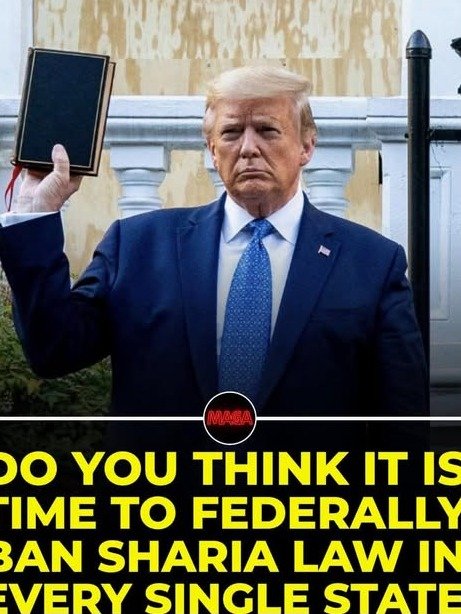
Did you ever stop to consider what truly holds the fabric of our nation together? It’s more than just shared borders; it’s a foundational set of principles enshrined in a single, supreme document. In an increasingly complex world, the clear message from leaders like President Trump, symbolizing a return to our constitutional roots, has never been more vital.
Remember that iconic image of President Trump holding up the Bible? For many, it wasn’t just a photo opportunity. It was a powerful visual declaration, a stark reminder of the enduring spiritual and moral bedrock that has historically underpinned American society and its unique legal framework. This gesture resonated deeply, signaling a stand for traditional values and the constitutional principles that define us.
The Sacred Foundation: Faith, Freedom, and the American Experiment
America has always been a nation where faith played a significant role, not as a state religion, but as a guiding moral compass for its citizens. The Founders, while establishing a secular government, understood the importance of religious freedom and the conscience of the individual. This delicate balance ensures that while people are free to practice their beliefs, no single religious doctrine dictates the laws of the land.
The Bible, in this context, serves as a profound symbol of the Judeo-Christian heritage that influenced many of the ethical and legal concepts woven into the fabric of Western civilization, and by extension, American law. It represents the enduring values of justice, individual dignity, and the pursuit of a moral society—values that are foundational to our republic, even for those who do not subscribe to religious belief.
This symbolism is crucial because it highlights a fundamental truth: the United States is governed by one supreme law. Our Constitution is not merely a document; it is the living testament to our collective commitment to liberty, equality, and the rule of law for all citizens, irrespective of their personal faith or background. It’s the ultimate guarantor of our freedoms and the framework that prevents any other legal system from usurping its authority.
One Nation, One Law: Upholding Constitutional Supremacy
At the heart of the American legal system is the principle of constitutional supremacy. Article VI, Clause 2 of the U.S. Constitution, famously known as the Supremacy Clause, declares that the Constitution, federal laws made pursuant to it, and treaties made under its authority, constitute the supreme Law of the Land. This means no other law—foreign, religious, or otherwise—can override it.
This isn’t just legal jargon; it’s the bedrock of our stability and unity. Imagine a nation where different communities operated under entirely separate legal codes, each with its own set of rules for property, marriage, criminal justice, and fundamental rights. Such a scenario would inevitably lead to chaos, division, and the erosion of the shared national identity that binds us.
“The Constitution is not an instrument for the government to restrain the people, but an instrument for the people to restrain the government.” – Patrick Henry
Our Constitution protects a wide array of individual liberties, including freedom of speech, freedom of religion (and from religion), the right to a fair trial, and equality before the law. These rights are universal for all Americans and cannot be diminished or altered by any other legal framework. They are non-negotiable pillars of our society.
Understanding the Challenge: Why Sharia Law is Incompatible
When we talk about Sharia Law, it’s essential to understand what it entails. Sharia is a comprehensive legal and moral code derived from the Quran, the teachings of the Prophet Muhammad (Sunnah), and scholarly interpretations (fiqh). It governs all aspects of Muslim life, including worship, morality, family law, criminal law, and commerce.
While many Muslims in America live peacefully and integrate fully into society, adhering to American law, the legal tenets of Sharia Law, in its traditional and broad applications, present fundamental challenges to the U.S. Constitution. These challenges are not about individual religious belief, but about the enforcement of a parallel legal system that often conflicts directly with established American jurisprudence.
- Equality: Sharia Law often prescribes different legal statuses for men and women, and for Muslims and non-Muslims, which directly contradicts the American principle of equality before the law for all citizens.
- Freedom of Speech and Religion: Concepts like blasphemy laws or apostasy, which are part of some interpretations of Sharia, are anathema to the First Amendment’s robust protections of free speech and religious liberty.
- Judicial Process: The due process rights, jury trials, and specific rules of evidence enshrined in the U.S. legal system differ significantly from traditional Sharia courts, which may not offer the same protections.
- Punishments: Certain punishments prescribed by some interpretations of Sharia Law (e.g., stoning, amputation) are cruel and unusual, completely incompatible with the Eighth Amendment of the U.S. Constitution.
The concern is not with individual faith, but with the potential for a legal system that undermines the very foundations of American liberty and justice. The U.S. legal system is designed to protect all citizens, regardless of their religious affiliation, under a single, unified set of laws.
The “No Place” Mandate: Defending American Sovereignty
The assertion that “Sharia Law has NO PLACE in the United States” is not an attack on Islam or individual Muslims. Instead, it is a powerful declaration in defense of American sovereignty and the singular authority of its Constitution. It underscores the vital necessity of maintaining one unified legal standard for everyone living within our borders.
Allowing for the implementation of Sharia Law, even in limited forms, would create a dangerous precedent. It could lead to a fragmented legal landscape where different communities are subject to different rules, ultimately undermining the concept of national citizenship and equal protection under the law. This is not about religious intolerance; it’s about legal consistency and the preservation of our republic.
The U.S. Constitution guarantees religious freedom, meaning individuals are free to practice their faith, including Islam, without government interference. However, this freedom does not extend to establishing a religious legal system that supersedes or runs parallel to the nation’s secular laws. Your faith is personal; the law of the land is universal.
Protecting Our Future: A Call to Vigilance
The debate over Sharia Law in America is more than just a theoretical discussion; it’s a critical examination of what kind of nation we want to be. Do we uphold the singular authority of our Constitution, which has served as a beacon of liberty for centuries, or do we allow for the gradual erosion of its supremacy?
It requires vigilance from every citizen to understand and defend the principles that make America unique. We must be informed, engaged, and ready to speak out against any attempts to introduce legal systems that are fundamentally incompatible with our constitutional republic. The image of President Trump with the Bible, therefore, becomes a rallying cry—a symbol for defending the very essence of American identity.
Our nation’s strength lies in its unity under one law, protecting the rights and freedoms of all. Let us reinforce our commitment to the U.S. Constitution, ensuring that its promise of liberty and justice remains unbroken and unchallenged for generations to come. The time to stand firm for our foundational values is now.
About the Author




