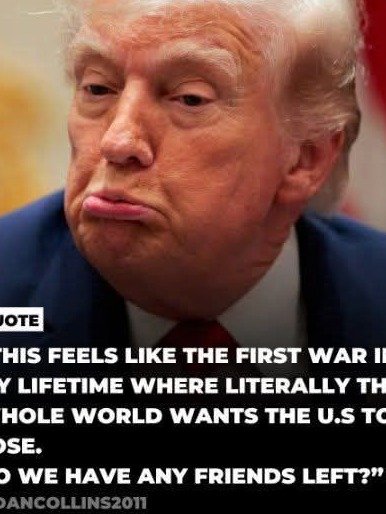
A single viral post has ignited a firestorm of discussion across the internet, tapping into a deep-seated unease that many have felt but struggled to articulate. It suggests a profound shift on the world stage, where global tensions are not just rising, but potentially isolating the United States in ways we haven’t seen in decades. This isn’t just about headlines; it’s about a palpable feeling that the ground beneath our feet is changing.
This widespread sentiment begs a critical question: Is America, once the undisputed leader of the free world, truly becoming more isolated? Are we witnessing the slow erosion of alliances and influence that have defined global stability for generations? The implications, if true, are staggering, affecting everything from economic prosperity to national security.
The Shifting Sands of Global Power
For much of the post-World War II era, the United States stood as the preeminent global superpower. Its economic might, military strength, and diplomatic leadership fostered a network of alliances and institutions that shaped the international order. This period, often referred to as the American Century, was characterized by relative stability and a clear unipolar framework.
However, the 21st century has introduced a complex tapestry of new challenges and rising powers. We’ve moved beyond a simple unipolar world into a more multi-polar or even a-polar landscape, where influence is fragmented and distributed among various state and non-state actors. This diffusion of power naturally alters the dynamics of international relations, and with it, America’s perceived standing.
Emerging Challengers and Redrawn Lines
The rise of China as an economic and military powerhouse, the resurgence of Russia’s geopolitical ambitions, and the growing influence of regional players like India and Brazil have fundamentally reshaped the global chessboard. These nations are not merely participating in the existing order; they are actively seeking to redefine it, often through alternative institutions and alliances that bypass traditional Western-led frameworks.
“The era of unquestioned American hegemony is over. We are in a new chapter, one defined by competition, re-alignment, and the constant re-evaluation of national interests by all parties involved.” – Geopolitical Analyst
This dynamic competition inevitably leads to heightened tensions. From trade disputes and technological rivalries to proxy conflicts and information warfare, the global stage is fraught with flashpoints. The sense of unease captured by the viral post is a direct reflection of these intricate and often unsettling developments.
Factors Fueling the Perception of Isolation
Several critical factors contribute to the growing perception that the U.S. might be becoming increasingly isolated. These are not isolated incidents but rather interwoven threads in a larger narrative of global transformation and evolving foreign policy approaches.
- Foreign Policy Shifts: Recent years have seen policy decisions that have, at times, strained traditional alliances. Unilateral withdrawals from international agreements, protectionist trade policies, and a perceived transactional approach to diplomacy have led some allies to question the reliability and long-term commitment of the U.S.
- Domestic Polarization: Internal political divisions and an increasing focus on domestic issues can project an image of distraction or instability abroad. When a nation is perceived as inwardly focused, its capacity for global leadership and engagement can be called into question.
- Economic Competition: While the U.S. remains an economic giant, the rise of alternative economic blocs and initiatives, such as China’s Belt and Road Initiative, presents new pathways for global trade and development that do not necessarily center around Washington. This offers other nations choices beyond traditional U.S.-led economic structures.
- Erosion of Trust: Repeated shifts in foreign policy direction, even between administrations, can erode trust among allies. They might wonder about the consistency of U.S. commitments, leading them to hedge their bets or seek stronger ties with other emerging powers.
The Impact on Alliances and Diplomacy
The strength of American leadership has historically been rooted in its robust network of alliances. NATO in Europe, security treaties in Asia, and various multilateral partnerships have been cornerstones of global stability. A perception of U.S. isolation can weaken these crucial bonds, potentially leaving vacuums that rival powers are eager to fill.
Diplomacy also suffers when trust wavers. Effective international cooperation on pressing global issues—from climate change and pandemics to nuclear proliferation and terrorism—requires strong, unified leadership and a willingness to compromise. If the U.S. is seen as less engaged or less reliable, its ability to convene and lead such efforts could be severely diminished.
Is it Isolation, or Just Adaptation?
It’s important to consider whether the term “isolation” fully captures the current situation. Some argue that what we’re witnessing isn’t true isolation, but rather an adaptation to a new geopolitical reality. In this view, the U.S. is not necessarily retreating but rather recalibrating its role in a world where its relative power, while still immense, is no longer absolute.
This perspective suggests that allies are not abandoning the U.S., but rather diversifying their diplomatic and economic portfolios. Nations are increasingly pursuing multi-alignment strategies, maintaining ties with the U.S. while simultaneously strengthening relationships with China, Russia, and other regional powers. This pragmatic approach reflects a desire for greater autonomy and resilience in a complex world.
The Enduring Strengths of American Influence
Despite the challenges and shifts, it’s crucial not to overlook the enduring strengths of the United States. Its economy remains the largest in the world, its military is unparalleled, and its technological innovation continues to drive global progress. Furthermore, American culture, educational institutions, and democratic ideals still hold significant soft power appeal across the globe.
Many allies, while perhaps expressing frustration with specific U.S. policies, still fundamentally rely on American security guarantees and economic partnerships. The deep-seated institutional ties and shared values cultivated over decades are not easily dismantled. The question is whether these foundational strengths can be leveraged effectively to navigate the current turbulent waters.
Navigating a Complex Future: A Path Forward
Addressing the sense of unease and the potential for isolation requires a multi-faceted approach. It calls for strategic foresight, renewed diplomatic engagement, and a clear articulation of America’s long-term vision for its role in the world. Rebuilding trust and reinforcing alliances will be paramount.
- Consistent Diplomacy: Reaffirming commitments and engaging in sustained, predictable diplomatic efforts can reassure allies and signal a return to stable international engagement.
- Strategic Re-engagement: Actively participating in and, where appropriate, leading multilateral institutions can demonstrate a commitment to collective problem-solving.
- Domestic Renewal: Addressing internal divisions and investing in economic and social strength at home can project an image of resilience and capability abroad.
- Adaptive Leadership: Recognizing that the world is multi-polar means embracing collaboration and shared leadership, rather than solely unilateral action.
The viral post serves as a powerful reminder that the public is acutely aware of the shifting global landscape. The questions it raises about America’s standing are not easily dismissed; they reflect a genuine concern about the future of international relations and the security of nations worldwide.
Whether the U.S. is truly becoming isolated, or merely adapting to a new global order, remains a subject of intense debate. What is clear, however, is that the era of unchallenged dominance is over. The path forward demands careful navigation, thoughtful policy, and a renewed commitment to the principles that have long underpinned American leadership.
About the Author




