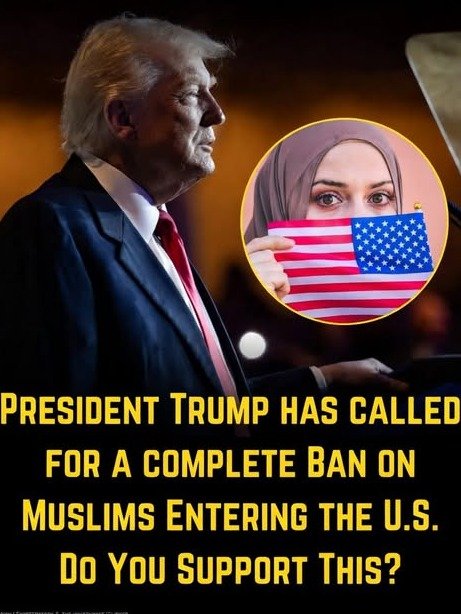
Few policies in recent memory ignited as much fervent debate, legal challenge, and public emotion as President Donald Trump’s temporary travel restriction. What began as a campaign promise quickly escalated into a series of executive orders that profoundly impacted individuals, families, and America’s standing on the global stage. But beyond the headlines and protests, what was this policy truly about, and did it achieve its stated goal of enhancing national security?
This article dives deep into the heart of the matter, exploring the origins, rationale, legal battles, and far-reaching consequences of one of the 21st century’s most contentious immigration policies. Get ready to uncover the complex layers of an executive action that sparked a nationwide conversation about security, discrimination, and the very definition of American values.
The Executive Order That Shook the Nation: A Swift and Sudden Change
In January 2017, just days into his presidency, Donald Trump signed Executive Order 13769, widely known as the ‘travel ban.’ This initial order immediately suspended entry for citizens from seven Muslim-majority countries: Iran, Iraq, Libya, Somalia, Sudan, Syria, and Yemen. It also halted the U.S. refugee program for 120 days and indefinitely barred Syrian refugees.
The rollout was swift and chaotic, catching many travelers and government officials by surprise. Passengers already en route were detained at airports, families were separated, and an immediate wave of protests erupted across the nation. Lawyers rushed to airports to offer pro bono assistance, and federal judges began issuing temporary restraining orders against the ban’s implementation.
The Stated Rationale: A Shield for National Security
The Trump administration consistently framed the travel restriction as an indispensable national security measure. The core argument was that the selected countries posed an elevated risk of terrorism due to their perceived inability to adequately vet their citizens traveling to the United States. President Trump often spoke of the need for ‘extreme vetting’ to prevent terrorists from entering the country.
Supporters of the policy emphasized the President’s constitutional authority to protect national borders and control immigration in the interest of national security. They argued that the temporary nature of the ban was designed to allow for a review and enhancement of vetting procedures, ensuring that only those who posed no threat could enter the U.S. The administration maintained that the measure was not a ‘Muslim ban’ but a targeted response to specific security threats.
A Firestorm of Opposition: Legal Battles and Public Outcry
The initial travel ban faced immediate and widespread legal challenges. Civil liberties organizations like the American Civil Liberties Union (ACLU), along with several state attorneys general, filed lawsuits arguing that the executive order was unconstitutional. Key arguments included violations of the Establishment Clause (prohibiting government endorsement of religion), due process rights, and the Immigration and Nationality Act.
Federal courts across the country issued injunctions, halting parts of the ban. In response, the administration issued revised versions of the executive order, ultimately leading to Proclamation 9645 in September 2017. This final version, which eventually went before the Supreme Court, removed Sudan from the list and added Venezuela and North Korea, ostensibly to counter the ‘Muslim ban’ criticism, though the majority of affected countries remained Muslim-majority.
The Supreme Court’s Verdict: A Landmark Decision
The legal saga culminated in the landmark Supreme Court case *Trump v. Hawaii* in June 2018. In a 5-4 decision, the Supreme Court upheld the third iteration of the travel ban. The majority opinion, authored by Chief Justice John Roberts, largely deferred to the President’s broad authority on immigration and national security matters.
The Court found that the government had offered a ‘facially legitimate and bona fide reason’ for the policy – national security – and that the plaintiffs had not demonstrated that the policy was primarily motivated by anti-Muslim animus. Dissenting justices, however, strongly argued that the ban was indeed discriminatory and violated the Establishment Clause, pointing to President Trump’s past statements about a ‘total and complete shutdown of Muslims entering the United States.’
Unpacking the Arguments: The Supporters’ Viewpoint
“The Supreme Court has upheld the President’s authority to protect the national security of the United States. Today’s ruling is a tremendous victory for the American people and the Constitution.” – White House statement, June 2018
Those who supported the travel ban often emphasized several key points. Firstly, they cited the President’s inherent constitutional and statutory power to control who enters the country, particularly when national security is at stake. The Immigration and Nationality Act grants significant authority to the executive branch in this regard.
Secondly, proponents argued that the ban was a temporary and necessary measure to address legitimate security vulnerabilities. They pointed to intelligence assessments and the instability in the designated countries as justification for enhanced scrutiny. The aim, they contended, was to improve vetting processes, not to permanently exclude specific groups of people.
Finally, many supporters believed that the President was fulfilling a core campaign promise to prioritize American safety and put ‘America First.’ They saw the policy as a decisive action against potential threats, rather than a discriminatory one, focusing on the security implications rather than the demographic composition of the affected countries.
Unpacking the Arguments: The Critics’ Perspective
Conversely, critics vehemently opposed the travel ban, labeling it discriminatory, ineffective, and harmful to American values. A central argument was that the policy amounted to a ‘Muslim ban’ in practice, despite the addition of non-Muslim-majority countries in later versions. They pointed to the President’s own rhetoric and the overwhelming number of Muslim-majority nations on the list as evidence of religious discrimination.
Many experts and former national security officials also questioned the ban’s effectiveness as a counter-terrorism measure. They argued that individuals from the listed countries had not been responsible for significant terror attacks in the U.S. and that such broad restrictions could alienate allies and fuel radicalization rather than prevent it. Furthermore, they highlighted the logistical nightmares and human suffering caused by the policy.
- Humanitarian Impact: Families separated, refugees stranded, and individuals denied critical medical treatment or educational opportunities.
- Economic Consequences: Damage to the U.S. tourism industry, universities losing international students, and businesses struggling with employee travel.
- Global Reputation: Critics argued the ban damaged America’s standing as a welcoming nation and a beacon of democracy and human rights.
The Human Cost and Global Ripples
Beyond the legal and political debates, the travel ban had a profound human cost. Thousands of individuals found their lives upended. Students couldn’t return to their studies, doctors couldn’t join their residencies, and families were torn apart for indefinite periods. Stories emerged of grandmothers unable to attend their grandchildren’s weddings, and scientists barred from critical conferences.
The policy also sent ripples across the globe, impacting international relations and America’s soft power. It fueled perceptions of the U.S. as unwelcoming and xenophobic, potentially hindering diplomatic efforts and scientific collaboration. Universities reported declines in applications from affected regions, and businesses faced challenges in attracting global talent.
Beyond the Ban: Legacy and Future Debates
While President Biden rescinded the travel ban on his first day in office, its legacy continues to shape discussions around immigration, national security, and executive power. The policy set a precedent for broad executive actions in immigration, pushing the boundaries of presidential authority and sparking ongoing debates about the balance between security imperatives and civil liberties.
The travel ban also highlighted the deeply polarized nature of American society on issues of immigration and identity. It forced a national reckoning with questions about who belongs, how America defines itself, and the extent to which fear can drive policy decisions. The legal battles laid bare the complexities of interpreting constitutional rights in the context of national security.
Was It Justified? The Enduring Question
So, was President Trump’s temporary travel restriction a correct and necessary national security measure? The answer remains fiercely debated. Supporters point to the Supreme Court’s upholding of the policy and the President’s inherent authority, arguing it was a legitimate exercise of power to protect the nation. They believe it served as a vital deterrent and a necessary step to improve vetting procedures.
Critics, however, maintain that the ban was discriminatory, ineffective, and caused undue harm, ultimately weakening America’s moral standing without genuinely enhancing security. They emphasize the human toll and the damage to international relationships. The policy remains a stark reminder of the challenges democracies face in balancing security concerns with fundamental rights and values.
The debate surrounding the travel ban underscores a fundamental tension in American society: how do we protect our nation while upholding our ideals of openness and inclusion? The answers are complex, and the conversation is far from over. What do you think? Did the travel ban truly make America safer, or did it come at too great a cost?
About the Author




