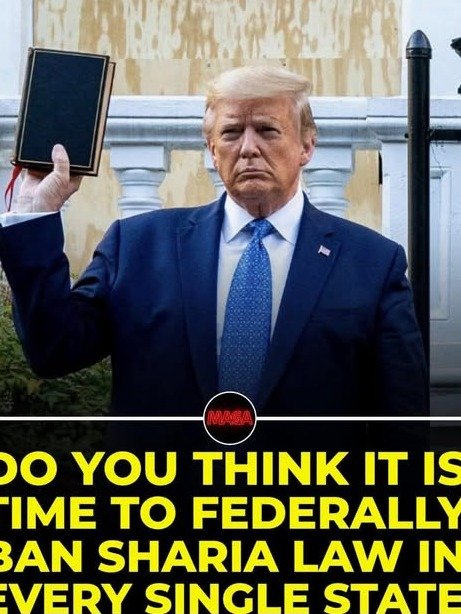
Imagine a moment frozen in time, an image that sparks a thousand conversations and crystallizes a nation’s core values. When a leader holds aloft a revered text, it’s rarely just a photo opportunity; it’s a powerful statement about identity, heritage, and the very laws that govern us.
This iconic image—a President holding the Bible—resonated deeply across America, serving as a poignant reminder of the enduring principles that have shaped our nation since its inception. It symbolized a profound connection to faith, tradition, and the foundational freedoms enshrined in our Constitution.
The Enduring Symbolism of Faith in America
For many, the Bible represents more than just a religious book; it embodies the moral fabric and spiritual heritage that countless Americans believe underpin our society. From the earliest settlers seeking religious freedom to the present day, faith has played an undeniable role in the American narrative, influencing everything from social movements to individual ethics.
This symbolism is not about establishing a state religion, which our Constitution expressly forbids, but rather acknowledging the widespread personal faith that informs the lives of millions. It speaks to the idea that many Americans draw their values from Judeo-Christian principles, which, in turn, have subtly influenced aspects of our common law and societal norms over centuries.
The act of holding the Bible, therefore, can be seen as a reaffirmation of these deeply held, personal beliefs and the freedom to practice them without government interference. It underscores the vital importance of religious liberty, a cornerstone of American identity that allows individuals to worship—or not worship—as they choose, freely and openly.
America’s Bedrock: The U.S. Constitution
Yet, amidst this rich tapestry of faith, one document stands supreme as the ultimate law of the land: the United States Constitution. This remarkable charter, penned by our Founding Fathers, establishes a secular government, guarantees individual liberties, and meticulously outlines the framework for our republic.
The Constitution is the supreme law, meaning no other law, foreign or domestic, can supersede its authority. It is the very bedrock upon which our nation is built, ensuring a government of the people, by the people, and for the people, bound by a system of checks and balances and the rule of law.
This foundational document ensures that every citizen, regardless of their background or beliefs, is equal under the law. It protects us from tyranny, safeguards our rights, and provides a clear, consistent legal framework that applies to all who call America home.
Understanding Sharia Law and Its Place
In stark contrast to America’s constitutional framework stands Sharia Law, an Islamic legal system derived from the Quran and the teachings of the Prophet Muhammad. Sharia encompasses a comprehensive code of conduct, covering not only religious rituals but also criminal justice, family law, finance, and personal morality.
While individual Muslims are free to practice their faith and adhere to Sharia in their personal lives, the concept of implementing Sharia as a legal system within the United States raises profound questions. This is where the fundamental incompatibility with the U.S. Constitution becomes glaringly apparent.
“The U.S. Constitution provides for a secular government and a single, unified legal system. Any attempt to introduce a parallel legal system based on religious doctrine fundamentally undermines this principle.” – Constitutional Scholar
The United States operates under a secular legal system where laws are enacted by elected representatives and interpreted by independent courts, based on constitutional principles. This system ensures that all citizens are subject to the same laws, regardless of their religious affiliation.
Incompatible Foundations: Why Two Legal Systems Can’t Coexist
The core conflict arises because Sharia Law, in its traditional application, often functions as a comprehensive legal and governmental system. It is designed to govern public and private life, potentially clashing with several key tenets of the U.S. Constitution, which champions secular governance and individual freedoms.
Consider the principle of equality under the law. The U.S. Constitution ensures that all citizens are treated equally, regardless of gender, religion, or other protected characteristics. Traditional interpretations of Sharia Law, however, may differentiate between the legal standing of men and women, or Muslims and non-Muslims, in areas such as testimony, inheritance, or marital rights.
The First Amendment to the U.S. Constitution guarantees both the freedom of religion and the separation of church and state. While individuals are free to practice Islam, the Constitution prohibits the establishment of any religion as the law of the land. Sharia, by its very nature, seeks to integrate religious doctrine directly into civil and criminal law, thus blurring this crucial line.
- Judicial System: The U.S. legal system relies on elected or appointed judges, jury trials, and established precedents. Sharia courts often operate with religious scholars as judges, without juries, and can apply interpretations that differ significantly from American due process.
- Freedom of Speech: The U.S. Constitution robustly protects free speech, even speech that may be deemed offensive to religious sensibilities. Some interpretations of Sharia, however, include prohibitions against blasphemy or apostasy, which could severely restrict expression.
- Women’s Rights: While women in many Islamic countries have made strides, traditional Sharia often grants women fewer rights than men in areas like divorce, child custody, and property ownership, directly conflicting with American principles of gender equality.
- Religious Pluralism: The U.S. embraces a multitude of faiths, ensuring all are protected. Sharia, as a legal system, is inherently tied to one religion, and its enforcement could potentially subordinate the rights of adherents of other faiths.
Safeguarding Freedoms: Equality, Speech, and Justice
The beauty of the American legal system lies in its universal application. It means that whether you are Christian, Jewish, Muslim, Hindu, atheist, or anything in between, you are protected by the same laws and held to the same standards. This ensures a level playing field for everyone.
Our Constitution guarantees due process, the right to a fair trial, and protection from cruel and unusual punishment. These principles are non-negotiable and apply to every person on American soil, forming the backbone of our justice system and protecting individual dignity.
Any legal system that introduces different standards based on religious identity, or that permits punishments not aligned with modern human rights standards, would fundamentally erode these constitutional guarantees. It would create a fractured legal landscape, undermining the very unity and equality our nation strives for.
Distinguishing Faith from Governance
It is crucial to understand that advocating against the implementation of Sharia Law as a governing legal system is not an attack on Islam or on Muslim individuals. American Muslims, like all Americans, have the constitutional right to practice their faith freely and adhere to its tenets in their personal lives.
The distinction is between private religious observance, which is protected, and the imposition of a religious legal code as the law of the land. Our concern is with the legal framework that applies to *all* citizens, ensuring it remains firmly rooted in the U.S. Constitution, not in any specific religious doctrine.
America has always welcomed people of all faiths and backgrounds, and our strength lies in this diversity. However, this diversity thrives precisely because we are united under one supreme law that guarantees universal rights and freedoms, rather than a patchwork of religiously-based legal systems.
Upholding American Principles for Future Generations
The image of a leader holding the Bible, therefore, can be interpreted as a powerful visual reminder of the spiritual heritage many Americans cherish, alongside the absolute supremacy of our Constitution. It underscores a commitment to the principles of liberty, justice, and the rule of law that define us as a nation.
To allow any alternative legal system, religious or otherwise, to supplant or coexist with the U.S. Constitution would be to fundamentally alter the fabric of our republic. It would compromise the rights and protections afforded to all citizens, creating a dangerous precedent that could unravel the unity and equality we hold so dear.
Our commitment to the U.S. Constitution is unwavering, and it must remain the sole arbiter of law in this nation. It is the guardian of our freedoms, the guarantor of our equality, and the enduring blueprint for a society where all individuals can thrive, united under one supreme, secular law.
About the Author




